Former journalist, now a grumpy old man
Does equality now come with an instruction manual available only to some?
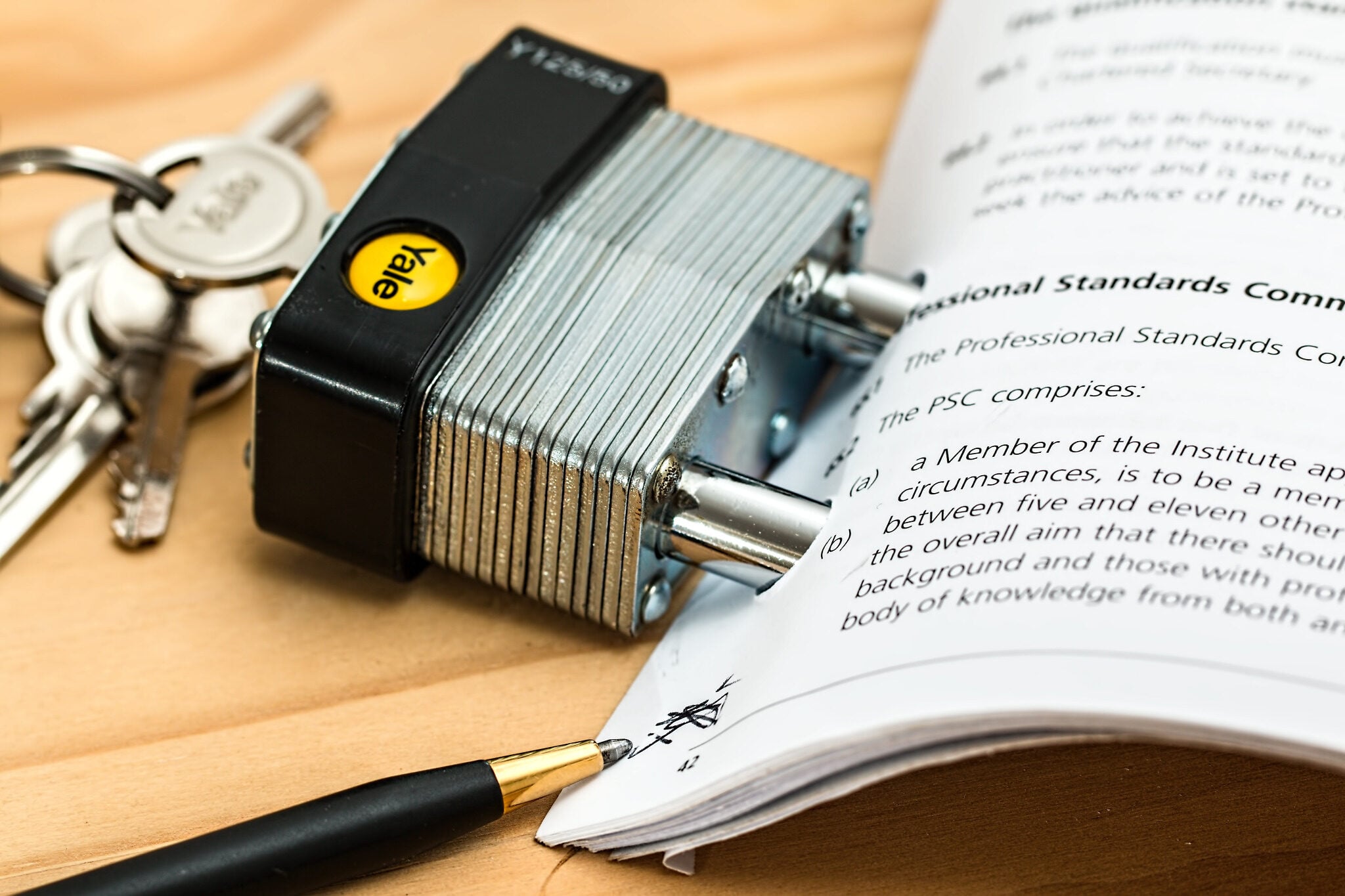
Image courtesy Stevepb of Pixabay
Let us take, as an example, two people in the UK posting something deeply offensive on social media. One is an ordinary member of the public, the other, a solicitor or barrister. The ordinary citizen may soon have police knocking at the door after a complaint that something quite facile they posted online constituted hate speech, harassment or some other offence.
The legal professional, however, seems to live and work in a different parallel world. There are professional regulators, investigations, arguments over context and the elephant in the room that is so convenient to hide behind: Article 10 of the European Convention on Human Rights. Used irrespective of it being genuinely antisemitic, racist or otherwise discriminatory, or just a strong political expression. And time drags on. Unless you are an ordinary member of the public, that is.
For journalist Alison Pearson, there was significant public concern about how easily an ordinary citizen can find themselves caught up in police action over allegedly offensive words. Whatever you thought of her comments, or the legal issues surrounding her case, the huge question is unavoidable.
Why does the system seem able to move at lightning speed when an ordinary person says something controversial? Serious complaints involving members of the legal profession, , however, can disappear into years of a morass driven by regulation. Examine the cases of legal professionals such as Farrukh Najeeb Husain, Mohammed Sarfraz and Dozk Khan. These three, among other legal professionals, generated controversy surrounding allegations of antisemitic or otherwise discriminatory conduct. And seemingly very overt forms of it too, to us mere non-legally trained members of the public.
These cases are not necessarily identical. People should not be declared guilty by editorial accusation. But there is accountability. In the UK, we are told repeatedly nobody is above the law. I’m OK with that. But when a false sense of entitlement leads a specific profession or demographic to believe they are above the law, I’m not OK with that. Especially when these people appear to have the tools to help them remain beneath the law’s radar.
A legal professional facing allegations over something they have said publicly is not just an ordinary member of the public defending themselves against a complaint. They have specialist training to identify where the boundaries lie. They fully understand the significance of what they say and how they may say it, the interpretation and evidential thresholds not to cross. And they know Article 10. They understand the difference between saying something that is offensive and something that is legally actionable. We, as ordinary citizens do not, and sometimes allow our mouths or fingers to rule our heads.
But most of all, legal people are professionally equipped to argue about it. It is not by any means corruption or conspiracy. It’s an extremely uncomfortable, and some might say, inequitable imbalance. A non-legal person may, and often does, write something angry, stupid or offensive. Unlike members of the legal profession, they will have little or no idea of the legal implications that may be applied to their words. Legal professionals are well aware of what those distinctions are. And they often push it to, and in some cases, over the limit, relying on a fake sense of entitlement both professionally and personally.
So, does equality before the law really mean that if one group is professionally trained to exploit every complexity of the system, everyone else is expected simply to know where these invisible lines are?
Freedom of expression and Article 10 for lawyers is the great defence, or some might even go as far as to say, the great get-out clause, regularly relied on in these instances. Yes, Article 10 protects speech that is offensive, shocking and disturbing. Political speech deserves particularly strong protection, but the state should not simply be able to silence an ordinary someone because their opinions are unpopular.
This is a problem, though. If free-speech protection can shield the legal profession from making provocative or deeply offensive political statements, why do ordinary members of the public sometimes seem so much more vulnerable to police intervention? Surely freedom of expression is not a professional qualification.
It does not belong exclusively to barristers or solicitors, nor is it something acquired after a law degree and legal training. Is it any wonder that the public thinks there are two systems? An ordinary member of the public makes an offensive remark and may find themselves dealing with the police. Meanwhile, a legal professional makes a controversial public statement; the issue can become a rigmarole of rights, context and legal definitions. The legal professional says sorry, and their regulatory body sends them on their merry way.
There may be a perfectly legal explanation for the difference, but is it really publicly acceptable? Greater trust should mean greater responsibility, not being able to shield just themselves.
There is another enormous problem. Barristers and solicitors are not just random social-media users. They occupy positions of exceptional trust and advise others about the law, representing people whose liberty, reputations and livelihoods may depend upon their professional judgment. Similar to train drivers, they must travel on a specific piece of track, not just divert along a prettier part of the countryside to do some sightseeing along the way.
So why does it sometimes seem that the higher the professional status, the longer and more complicated the route to accountability? Should they have the exclusive right to push the law to its boundaries irrespective of what the effect is that they cause because they believe in one particular cause, whether that cause is moral or otherwise? Are they really that entitled?
Surely the opposite principle should apply. If you are an ordinary citizen, the law should protect your freedom of expression. If you are a legal professional with a certain opinion from a personal viewpoint, why should that status seem to create an impression of professional immunity? The law should protect everyone’s freedom of expression, but not when some have the ability to use the law to overstep the mark. And saying “sorry, I’ve been a naughty person” is simply not good enough a get-out clause when what has been seen or said cannot be unseen or unsaid, a practice so well employed by many nowadays to support the frankly unsupportable.
Then there is the problem of the disappearing complaint. The Bar Standards Board and Solicitors Regulation Authority face substantial workloads and difficult cases. That should be acknowledged, but it is no excuse. If you can’t do the job efficiently and effectively, get someone in who can. It’s as easy as that. People gaining a track record of using the law nefariously, irrespective of how legal it may be to do so, deserve careful monitoring. Leopards do not change their spots to suit the particular occasion.
Yes, social-media complaints can be complicated, and evidence can be disputed. Yes, I admit that context, human rights and laws matter, and a fair process does take time. And I’m not suggesting that a legal professional be struck off merely because somebody dislikes their politics. But public confidence fails when serious complaints appear to take years to reach a conclusion, yet something less serious results in immediate action against a normal citizen.
The public is repeatedly reminded that justice must prevail carefully and in its own time. This may be the case. But what happens when the person in question is not legally trained, professionally represented or equipped with a sophisticated understanding of human-rights law? Perceptions matter enormously when public confidence in institutions is already declining, and someone with a false sense of entitlement comes along to eventually get around to stating their case.
The central issue is not rocket science. Nobody should be criminalised for expressing an unpopular political opinion. Neither should they be professionally punished simply because an organised campaign dislikes their views, nor should they be denied full legal process.
But legal qualifications must not become a defence against accountability. If something is genuinely protected political expression, that protection should be available to every ordinary citizen in the exact same way as it is available to a barrister or solicitor. If something genuinely crosses the line into unlawful hatred, harassment, incitement or serious professional misconduct, being legally trained should not make their accountability more difficult.
Britain cannot credibly operate a system in which ordinary people are expected to navigate speech laws they barely understand, while at the same time, legal professionals benefit from years of sophisticated argument over precisely the same principles. That is their bread-and-butter wage earner and is not equality before the law. At best, it is equality, but with an instruction manual only they have access to.
And that is why the cases involving Alison Pearson on the one hand, and lawyers such as Farrukh Najeeb Husain, Mohammed Sarfraz and Dozk Khan on the other, deserve to provoke a much wider debate. It’s not because lawyers and barristers should have fewer rights. The public at large deserves a clear answer to one increasingly obvious question. Why does the justice system sometimes appear able to act very swiftly against the ordinary citizen, yet for those involving trained legal professionals who understand and can navigate the law, it can take years to resolve?
Freedom of expression should not depend upon whether you have a law degree, and accountability should not become something you might be able to overcome simply because you do. And it does not mean they should be able to ostensibly get away with anything because they are professionally trained in the law.
The Oxford law graduate can be just as racist and antisemitic as the uneducated, professional hate march attendee. Or as flippant as someone claiming that a parent is irresponsible for allowing their son to identify as a tree with accompanying floral pronouns.
Related Topics
Related Posts