Teen Political Commentator and Pro-Israel Activist
Featured Post
Don’t talk about the sledgehammer. Talk about the monument
The outrage over Zvi Sukkot’s stunt obscured the question Israel should be pushing the world to ask: Why are terrorists being publicly commemorated?
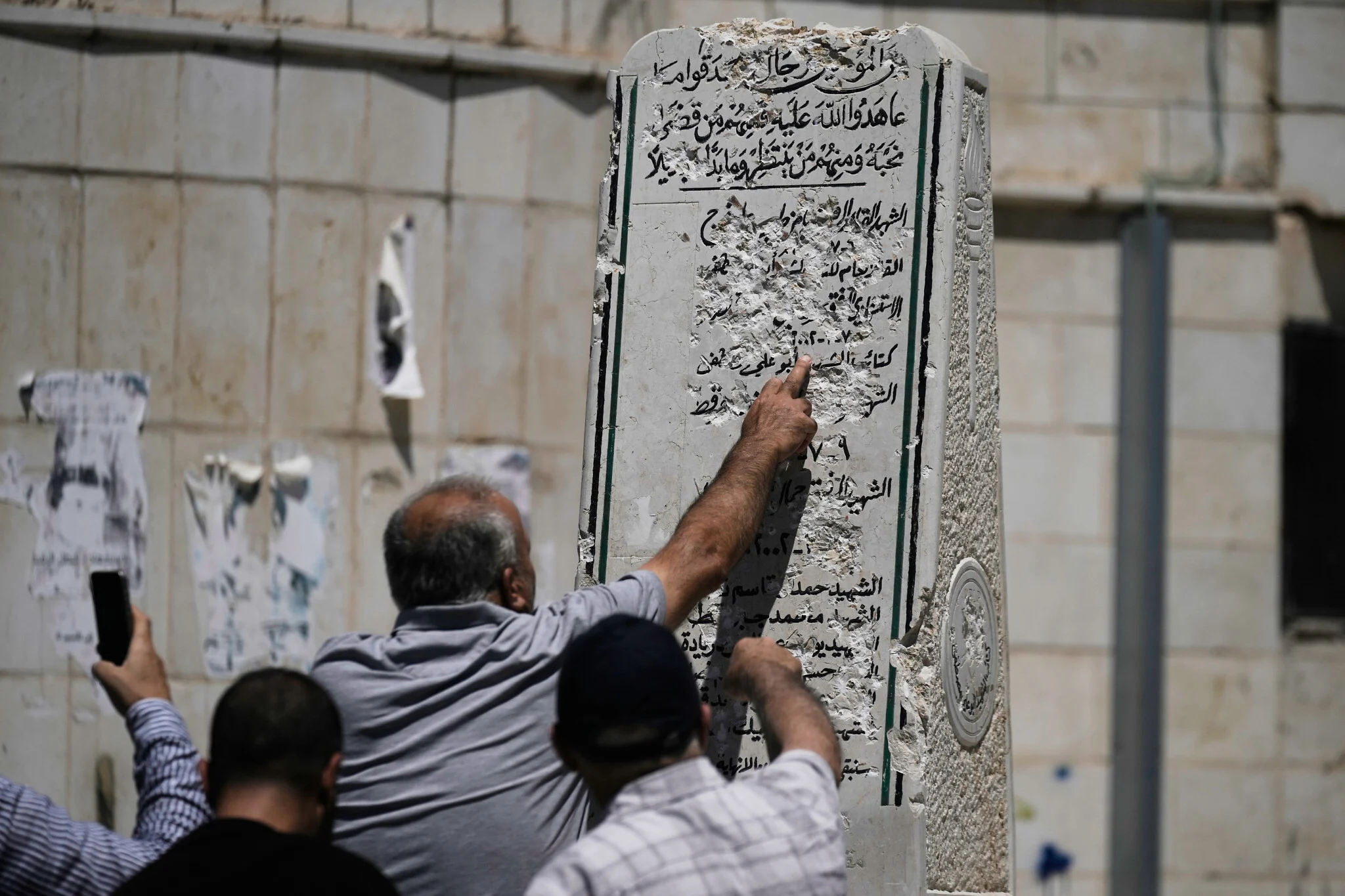
People look at a damaged "Martyrs Monument" in the West Bank village of Madama after far-right Religious Zionism MK Zvi Sukkot smashed it, August 25, 2026. (AP Photo/Majdi Mohammed)
A few months ago, I had the opportunity to ask Ben Shapiro a question. I had rehearsed it dozens of times. Out of thousands of submitted questions, mine was selected.
“My name is Shmuel. I’m 15 years old. I just started a pro-Israel Instagram page. What is the single most important thing young people like me can do to become better advocates for Israel?”
His answer lasted more than 10 minutes, but one lesson stayed with me long after the conversation ended.
Stop letting your opponents decide what the conversation is about.
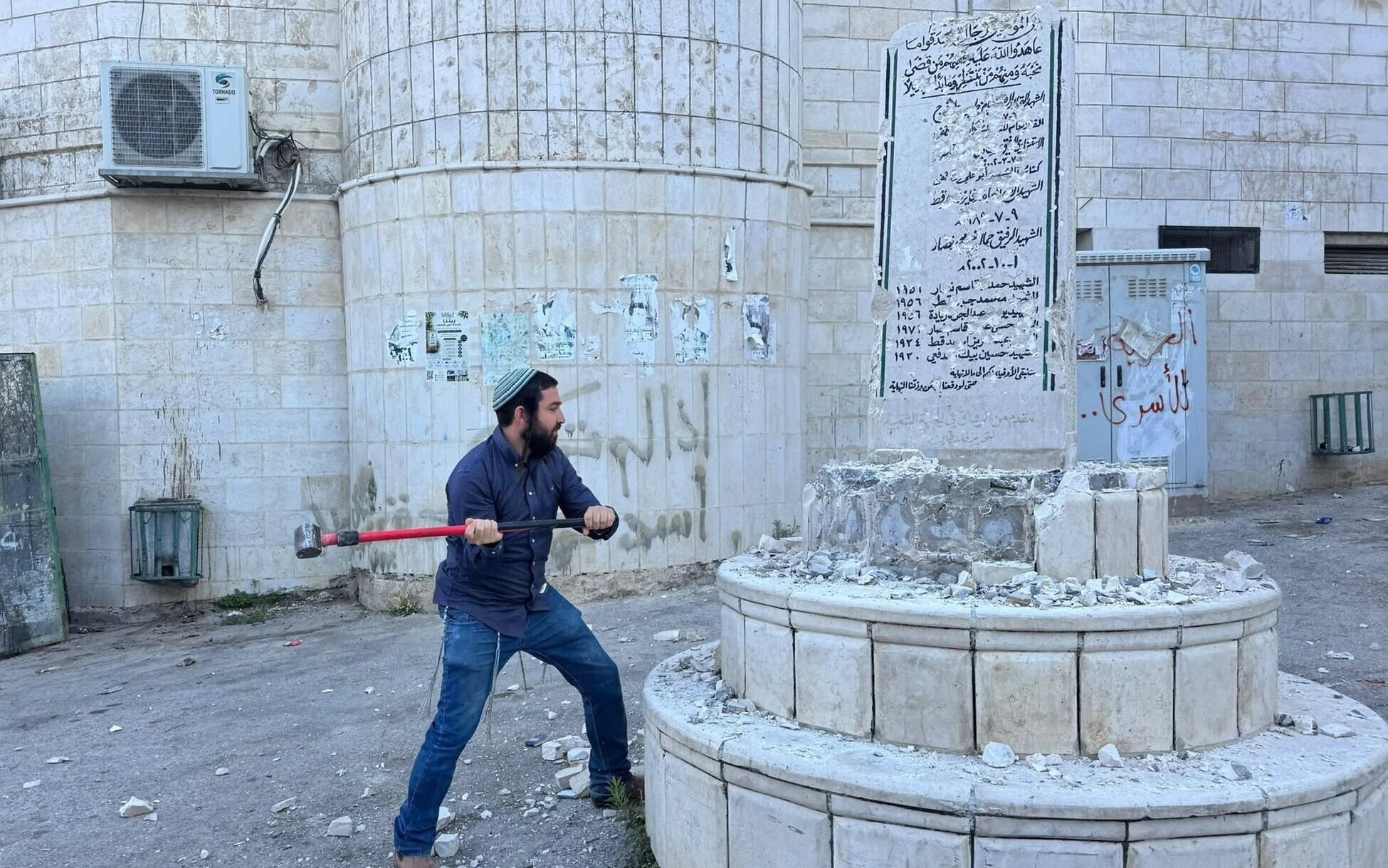
I didn’t fully appreciate what he meant until MK Zvi Sukkot walked into the Palestinian village of Madama carrying a sledgehammer and destroyed a monument erected by the Popular Front for the Liberation of Palestine commemorating Palestinian terrorists.
Within minutes, the headlines were everywhere. Politicians condemned him, commentators denounced him and social media exploded. Most people immediately concluded that this was an unmitigated disaster for the Israeli Hasbara. I came to the exact opposite conclusion.
Not because of the hammer. Because of the monument.
For years, Israel has fought the information war from a position of permanent defense. They accuse Israel of genocide, and then we rush to explain why it isn’t genocide. Someone calls Israel an apartheid state, then we spend weeks explaining why it isn’t. Someone says Israel is targeting civilians, then we publish statistics, investigations and legal analyses.
The pattern is always the same: Our opponents choose the subject! And only then we choose the response. That is not how successful communication works.
This is also a problem we face as a whole, particularly with college students. I experienced it firsthand at Harvard. People didn’t ask me, “What do you think about the war?” They asked me, “What do you think about the genocide Israel is committing in Gaza?”
Before I had spoken a single sentence, I was already on the defense. The problem wasn’t simply the question; it was the assumptions embedded within it. I was responding to someone else’s language, someone else’s assumptions and someone else’s narrative. That is exactly where Israel finds itself far too often. And that is why so many people misunderstood what happened in Madama.
People watched an Israeli politician swing a sledgehammer. I watched him force the world to ask a different question. What exactly was he destroying?
That question changes everything. Once we ask that question, the conversation is no longer merely about an Israeli politician with a sledgehammer. It is about the monument itself and the people it commemorated. Instead of Israel once again defending itself, the world is confronted with something it rarely discusses:
Why in the world are people responsible for terrorist attacks being publicly commemorated in the first place?
Whether Sukkot was right to take such action himself is a separate and legitimate question. But the communications lesson remains. They ask why it happened. They search for the underlying cause. We saw this after October 7. The debate quickly moved beyond the atrocities themselves to arguments about what supposedly caused them. Rightly or wrongly, people wanted an explanation. The same instinct applies here. When people ask why Sukkot destroyed the monument, they inevitably arrive at the larger issue the monument represented.
-
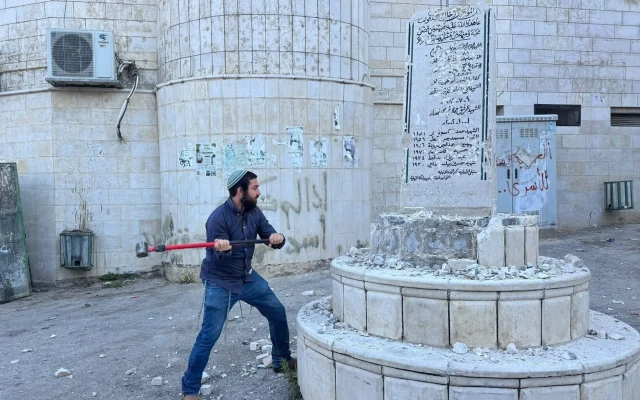
Religious Zionist Party MK Zvi Sukkot smashes a Palestinian monument to ‘martyrs’ in the West Bank village of Madama, August 25, 2026 (MK Zvi Sukkot’s office) - The lesson extends far beyond Madama. Israel needs to rethink the way it approaches Hasbara. We cannot spend every day explaining ourselves. We cannot build an entire communications strategy around answering accusations made by others. A country that is permanently defending itself eventually allows its opponents to define it.
Israel should continue correcting misinformation, investigating itself when necessary and holding itself to the standards expected of a democratic society. But that alone is not enough. Great communicators do not merely answer questions; they shape which questions the public is asking. That is where Israel has fallen behind: when critics define Israel with words like “genocide,” “apartheid,” or “occupation,” they have already chosen the battlefield before we even begin speaking.
Instead of constantly accepting those battlefields, Israel must choose the terms of the debate itself. That does not mean inventing narratives; it means directing the conversation toward the reality that is too often ignored. When a monument commemorates terrorists, that should become the conversation. When terrorist organizations openly declare their intention to repeat attacks against Israeli civilians, that should become an integral part of the conversation. And when children grow up surrounded by the glorification of people who murdered civilians, the world should be talking about that.
Those conversations should not begin only after someone swings a sledgehammer. They should be central to Israel’s public diplomacy every single day. I understand why many Israeli politicians condemned Sukkot. The IDF stated that the demolition itself had not been authorized and that the visit exceeded the framework approved by the military. Reasonable people can debate whether an elected official should ever take such action personally. That debate is legitimate.
But while everyone argued about the hammer, very few people asked about the monument. That, to me, is the real Hasbara failure. The information war is not won by having better explanations. It is won by ensuring the world is asking the right questions.
If Israel is always answering, someone else is always asking, and if someone else is always asking, someone else is always setting the agenda. The strongest advocate is not the one with the cleverest response. It is the one who understands that before you can win an argument, you must first decide what the argument is about.
The lasting lesson from Madama has very little to do with a sledgehammer. It has everything to do with a monument.
Don’t talk about the hammer. Talk about the monument.
Related Topics
Related Posts