
Eid ul-Adha and Abraham Accords 2.0
First off, Eid Mubarak to all the Muslims celebrating around the globe! As families come together for Eid ul-Adha — the Festival of Sacrifice — this special time serves as a beautiful reminder of faith, compassion, obedience, charity, and the lasting legacy of Prophet Abraham (peace be upon him). In a world filled with conflict, division, and increasing polarization, the profound message of Eid resonates more than ever: the importance of sacrificing for peace, showing patience in tough times, and fostering coexistence among all of humanity.
Prophet Abraham holds a remarkable place in our shared history. The three major Abrahamic religions trace their spiritual lineage back to him, making him a unifying figure of devotion, moral strength, and submission to God. For many years, religious scholars and interfaith advocates have emphasized that these common roots can act as a bridge for dialogue and peaceful coexistence among Muslims, Christians, and Jews.
This is precisely the symbolism behind the Abraham Accords.
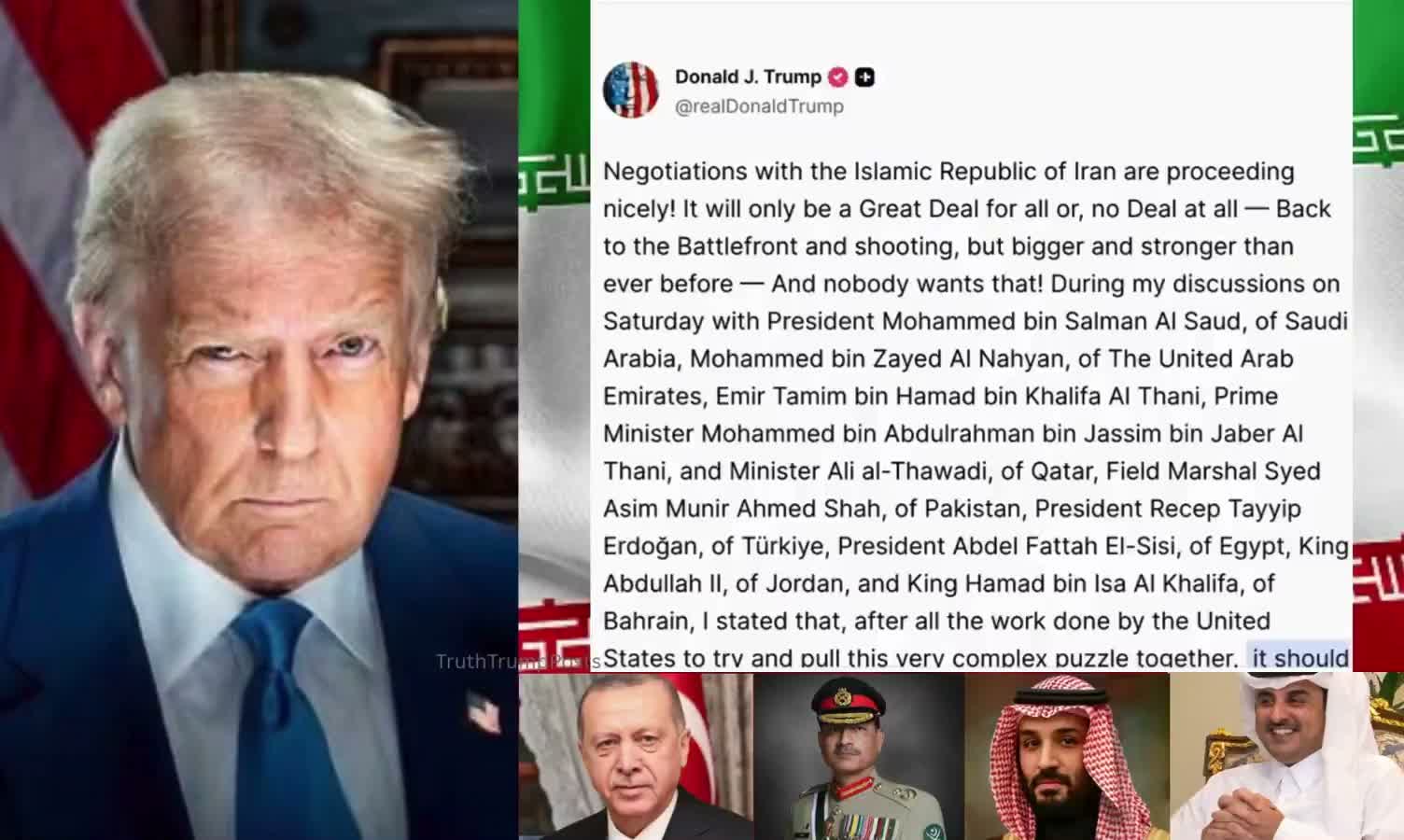
NOW: President Trump has just dropped the ultimate masterpiece of global diplomacy that will rewrite 5,000 years of Middle East history !!????????????
President Trump demanded that Saudi Arabia, Qatar, Pakistan, Turkey, Egypt, and Jordan must sign the historic Abraham Accord.… pic.twitter.com/fSTOs2Knkr
— Donald J Trump Posts TruthSocial (@TruthTrumpPost) May 25, 2026
When the Abraham Accords were first introduced in 2020 under US President Donald Trump, they were presented not simply as political agreements, but as an attempt to create a new atmosphere of peace, cooperation, coordination, and coexistence among the Abrahamic faiths. The accords normalized relations between Israel and several Muslim-majority countries, particularly the UAE and Bahrain, while opening pathways for trade, technology, investment, tourism, and security cooperation.
When the UAE joined the Abraham Accords, it did so with clarity: recognition of Israel + genuine people-to-people peace + continued support for the Palestinian people.
This is the Emirati model: realism and forward-thinking.
Many countries should learn from it. pic.twitter.com/YglXYK3Rns— سيف الدرعي| Saif alderei (@saif_aldareei) May 25, 2026
Now, the region appears to be entering what many are calling “Abraham Accords 2.0.”
This new phase is far more ambitious than the original agreements. Trump has publicly linked an emerging Iran peace arrangement to a broader regional normalization framework involving Saudi Arabia, Qatar, Pakistan, Türkiye, Egypt, and Jordan. In effect, Washington is attempting to expand the Abraham Accords from a limited diplomatic initiative into a wider geopolitical architecture for the Middle East.
While working to reacha deal with the Iranian regime, President Trump just demanded Saudi
Arabia, Qatar, Pakistan, Turkey, Egypt, and Jordan join the Abraham Accords.Expanding the Accords is the best way to isolate Iran and force it to agree to a deal on US terms that
would… pic.twitter.com/J3fdHkn7lk— Bassem Eid (@realbassemeid) May 25, 2026
Supporters view this as an expansion of peace itself.
The argument is pretty straightforward: if the countries in the region can shift from confrontation to collaboration, the Middle East might finally break free from years of instability, proxy wars, sectarian strife, and economic uncertainty. By fostering economic ties, engaging diplomatically, cooperating on energy, and coordinating security efforts, we could pave the way for a more stable regional landscape that benefits Muslims, Jews, and Christians alike.
In many respects, this idea embodies the essence of Prophet Abraham’s legacy — choosing dialogue over hatred, embracing coexistence instead of endless conflict, and prioritizing cooperation over division.
When the UAE decided to join the Abraham Accords, it did so from a position of principle and clarity: recognizing Israel, building genuine people-to-people peace, and continuing to support the Palestinian people (not Hamas, not terrorists).
The UAE is a model of rational… pic.twitter.com/SScsrxfMbh
— Loay Alshareef لؤي الشريف (@lalshareef) May 25, 2026
Despite the progress made, there are still numerous challenges and obstacles to overcome. Many Muslims feel that true regional peace is unattainable without justice for the Palestinians and the creation of a viable Palestinian state. This perspective is clearly reflected in Pakistan’s stance.
Pakistan believes that normalizing relations with Israel hinges on finding a fair solution to the Palestinian issue. This approach is grounded not just in diplomatic efforts, but also in public sentiment and a historical commitment to the cause. Additionally, Pakistan is taking on a more significant role in regional mediation, especially in the dialogue between Washington and Tehran.
The recent diplomatic mission by Field Marshal Asim Munir to Iran underscores Pakistan’s increasing importance in the global arena. Today, Pakistan is navigating a complex landscape, balancing its support for Palestine, its connections with Gulf nations, its relationship with the United States, and its aim to avert another devastating regional conflict.
It’s important to recognize the broader context of what’s happening. The Middle East seems to be entering a new phase where former enemies are starting to rethink their old beliefs. Nations that were once divided by ideology and conflict are increasingly being driven by economic needs, security concerns, and geopolitical realities toward more practical interactions.
There’s no denying that the Abraham Accords 2.0 signify something much bigger than just traditional diplomacy. They represent an effort to create a regional framework that’s not only based on strategic interests but also on the shared cultural heritage of the Abrahamic faiths.
President Trump’s most recent proposal requiring expansion of the Abraham Accords as part of a negotiated settlement to the Iran conflict is simply brilliant and would result in the most significant change in the Middle East in thousands of years.
With Saudi Arabia and others…
— Lindsey Graham (@LindseyGrahamSC) May 25, 2026
This symbolism becomes even more poignant during Eid ul-Adha.
The festival embodies values like sacrifice, compassion, generosity, and human solidarity. These ideals aren’t limited to a single religion or nation; they are universal principles that can help bring societies closer together. If the spirit of Prophet Ibrahim can foster greater understanding among Muslims, Christians, and Jews, then perhaps the essence of Abraham Accords 2.0 holds a significance that goes beyond mere politics.
Indeed, peace cannot exist without justice, dignity, and mutual respect. Achieving lasting stability in the Middle East will demand tough compromises, sincere dialogue, and a recognition of the legitimate hopes of all the peoples in the region.
However, amidst all the geopolitical strategies, one thing is crystal clear: the people of the Middle East are tired of war.
As Muslims celebrate Eid ul-Adha this year, there’s perhaps no greater aspiration than the aspiration for peace — a peace founded not on fear or coercion, but on coexistence, understanding, and the shared humanity that Prophet Abraham’s legacy signifies for billions around the globe.