
El-Sayed on the Foreign Relations Committee: A Disastrous Scenario
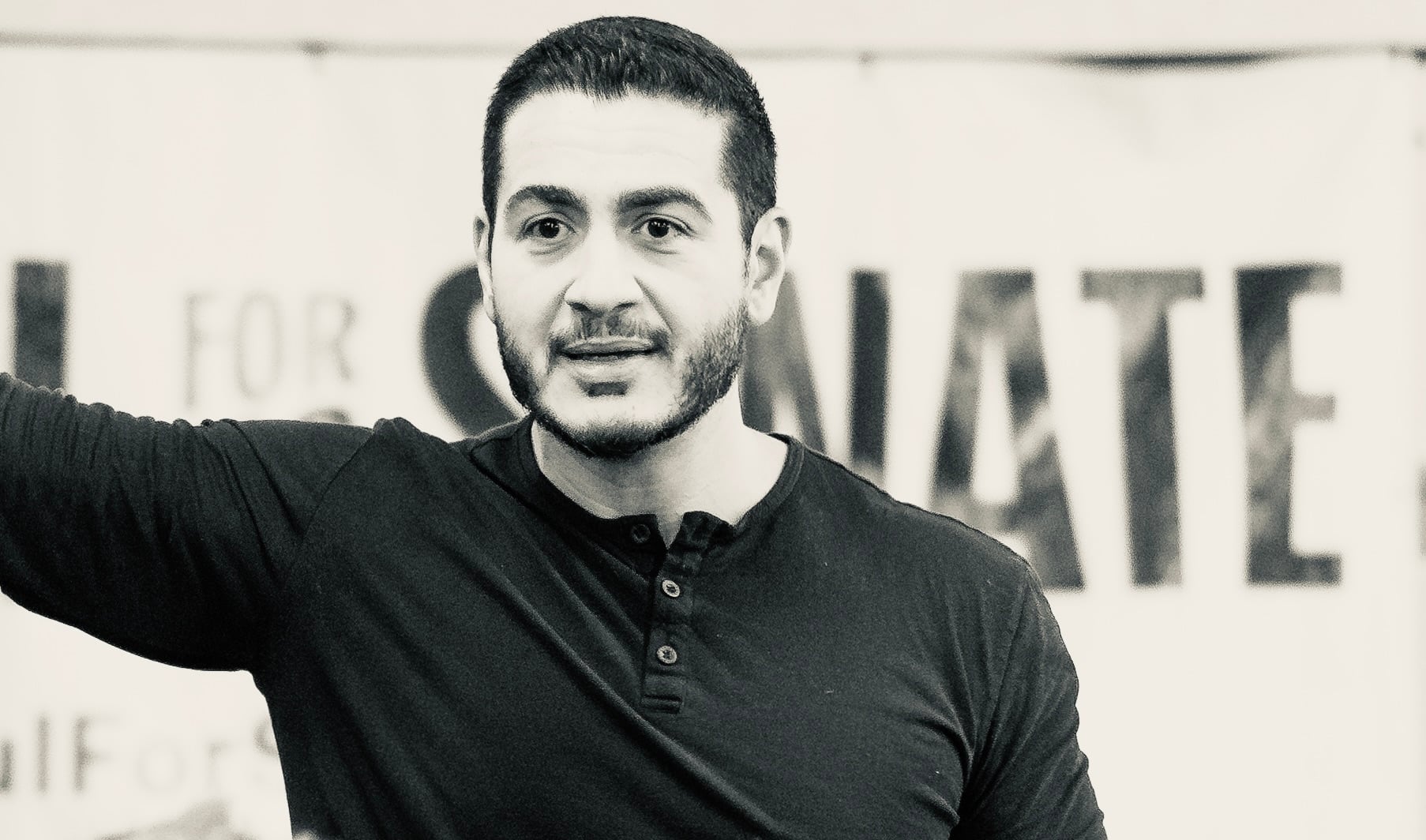
Imagine a sequence of events – a disastrous scenario – that could reshape American foreign policy: Abdul El-Sayed wins Michigan’s open Senate seat, Democrats regain control of the Senate, and El-Sayed secures a position on the prestigious Senate Foreign Relations Committee. Each development is possible, although none is assured. In a sequence, they would present a consequential test for the future of the American-Israeli relationship.
This scenario isn’t the only worrisome possibility for the November 3 election cycle, but it is useful to tweeze one out and consider the ramifications. We could also look to the House of Representatives where the antisemitic and anti-Zionist Squad will likely gain new and virulent allies. We could even think about the presidential ambitions of Congresswoman Alexandria Ocasio-Cortez. But let’s address the potential El-Sayed disaster scenario.
This imagining may inform those sitting on the fence or considering not voting at all as an impotent message to party leadership.
El-Sayed narrowly won the Democratic Senate nomination in August 2026 defeating Representative Haley Stevens, a more establishment-oriented Democrat. He now faces Republican Mike Rogers in a competitive general election that could help determine Senate control.
El-Sayed has called Israel’s conduct in Gaza “genocide,” opposed American military aid to Israel, including defensive assistance, and challenged the premise that Israel should exist specifically as a Jewish state. As late as October 2026, he also described Israel as an ally that takes American money while drawing the United States toward wars it should not fight. These are well documented political positions, not merely speculation about what he might do in office.
Along with his policy issues, Abdul El-Sayed receives scrutiny over allegations involving his family’s Muslim Brotherhood connections and his relationship with radical commentator Hasan Piker.
El-Sayed has publicly expressed interest in serving on the Foreign Relations Committee. Yes, Committee assignments remain subject to Democratic leadership decisions and conference approval. And yes, his recommendation would be a message that the Democratic Party has swung against the Jewish State.
Why should American supporters of Israel pay attention to this Michigan race and what would be the consequences?
The Foreign Relations Committee is not an ordinary congressional posting. It examines treaties, diplomatic appointments, foreign assistance, sanctions and major questions of national security. Its members influence the debate over America’s relationships with allies and adversaries. El-Sayed would join senators including Rand Paul, Tammy Duckworth, Chris Van Hollen and Chris Murphy, whose views on foreign policy and Israel are problematic. His presence would not determine committee policy, but it could give his radical positions a prominent platform. It would be a message of weakness that would be heard by Iran, North Korea, China and Russia…to name a few.
If he were to join the Foreign Relations Committee, he could press for conditions on military assistance, challenge arms transfers, scrutinize Israeli government policy and advocate a fundamental reassessment of the bilateral relationship. Whether those efforts translated into legislation or policy would depend on committee leadership, the Senate majority, bipartisan support and the administration’s response.
The stakes extend beyond Israel. The relationship encompasses intelligence sharing, missile defense, counterterrorism, regional deterrence and cooperation against threats from Iran and its proxies. Critics of El-Sayed’s approach would argue that weakening American military commitments could undermine deterrence and encourage adversaries to test the limits of U.S. resolve. Supporters of conditioning aid would counter that American assistance should carry enforceable standards and that Washington must retain leverage over its partners. The consequences would depend on the policies adopted. And, for every instance of diplomacy, conflict and support, a battle with the White House would ultimately be joined
This is where the El-Sayed on the Foreign Relations Committee scenario parallels Anne Jacobsen’s chilling books Nuclear War: A Scenario or Biological War: A Scenario. A catastrophe need not begin with a single dramatic decision; it can emerge from a chain of individually consequential choices, miscalculations and institutional failures. The analogy is not that El-Sayed’s election would trigger a nuclear war or spawn a pathogen crisis. It is that foreign policy can drift and can change incrementally before its cumulative consequences become apparent.
The responsible reaction is neither panic nor complacency. It is to examine candidates’ stated positions, understand the powers of congressional committees, and scrutinize the implications of proposed policy changes. If El-Sayed reaches the Senate and sits on the Foreign Relations Committee, the debate over Israel will become more consequential and problematic. The central question will be whether American policy can preserve the strategic partnership while addressing legitimate disputes over military assistance, regional security and Palestinian rights.
New York Jews have voted for Zohran Mamdani, and other Jews have chosen candidates whose woke, progressive doctrine threatens their best interests. They have been reluctant to appreciate President Trump’s unique and laudable support for Israel, his resolve to prevent a nuclear Iran, and his fight against antisemitism. Their foolishness can only be explained as some combination of pettiness, rigidity, forgetfulness or apathy.
In Washington, a scenario becomes history only when financial support and ballot box choices convert self-inflicting wounds into reality.