
Elections in Brazil: Political Tension and Impact on the Jewish Community
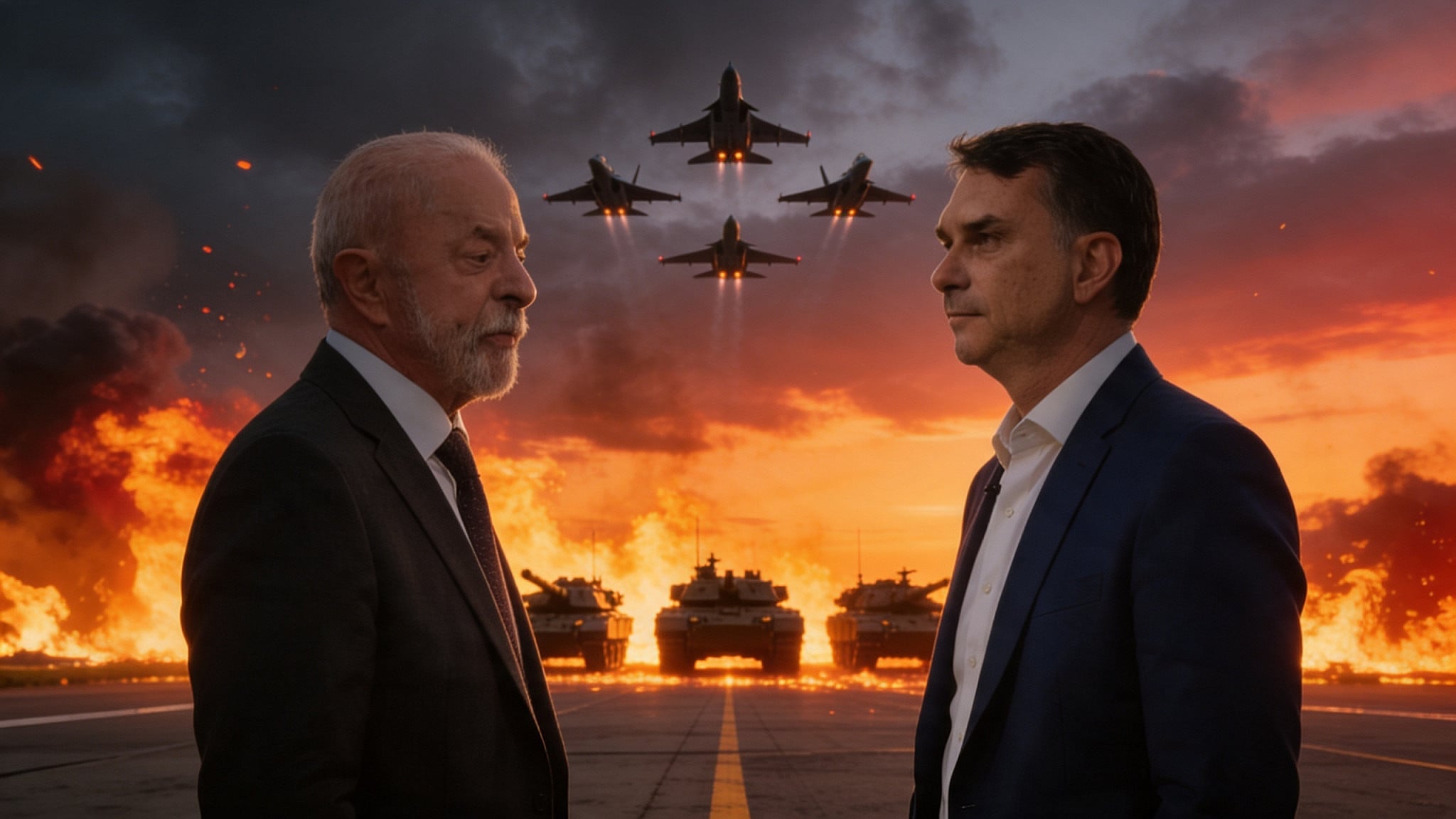
This Sunday, October 4, 2026, Brazil faces a decisive moment that may redefine not only the country’s future but also influence the entire Latin American region. The vote takes place amid a turbulent backdrop, marked by corruption allegations involving the Supreme Court, with diversions that could reach billions of reais.
Brazil’s elections have the potential to steer the region toward a new political trend — whether to the right or to the left. On one side stands Flávio Bolsonaro, a close ally of the United States, Israel, and evangelical groups. On the other, Luiz Inácio Lula da Silva, who maintains strong ties with Russia, China, Iran, and Palestine.
The Jewish Community in Focus
In recent years, Brazil’s Jewish community has undergone significant changes. Many shifted from the left to the right after Lula’s declarations of unconditional support for Palestine and harsh criticism of Israel, including calling Israel genocidal and drawing comparisons between the Jewish nation and Hitler.
Among the most prominent figures, physician Cláudio Lottenberg accepted Bolsonaro’s invitation to head the Ministry of Health if elected. His proposal includes bringing to Brazil’s public health system (SUS) the so-called “Einstein Standard,” with emphasis on technology and artificial intelligence. In contrast, Jewish groups aligned with the left published a list of 1,200 signatures in support of Lula, which gained national attention.
Growing Alarm Over Antisemitism
Political tension adds to an already delicate context for Jews in Brazil. The “Annual Report on Antisemitism in Brazil 2025,” released by the Brazilian Israelite Confederation (CONIB), recorded 989 formal incidents last year. Although below the peak of 1,700 attacks in 2024, the figure remains 149% higher than in 2022, consolidating what the report defines as a “new normal.”
This environment has led many Jews to change habits and reinforce security measures, especially after the October 7 events, which intensified the wave of antisemitism in the country.
International Repercussions
The outcome of the ballot will reverberate beyond Brazil’s borders. It is a contest that may redefine the role of global powers in the country: the U.S. and Israel on one side, Russia and China on the other. Israeli Prime Minister Benjamin Netanyahu publicly declared his support for Flávio Bolsonaro, emphasizing the friendship between the nations and the expectation of strengthened bilateral relations.
Tensions have also spilled into the military and diplomatic spheres. Recently, Argentine fighter jets flew over São Paulo’s airspace in joint operations with U.S. aircraft. Additionally, governments such as the United Kingdom and Canada issued security warnings to their citizens in Brazil. The U.S. and Australian embassies even suspended consular services, citing risks of violence and potential terrorism ahead of the first round of elections.