
Engaging Mamdani in the Fight Against Antisemitism
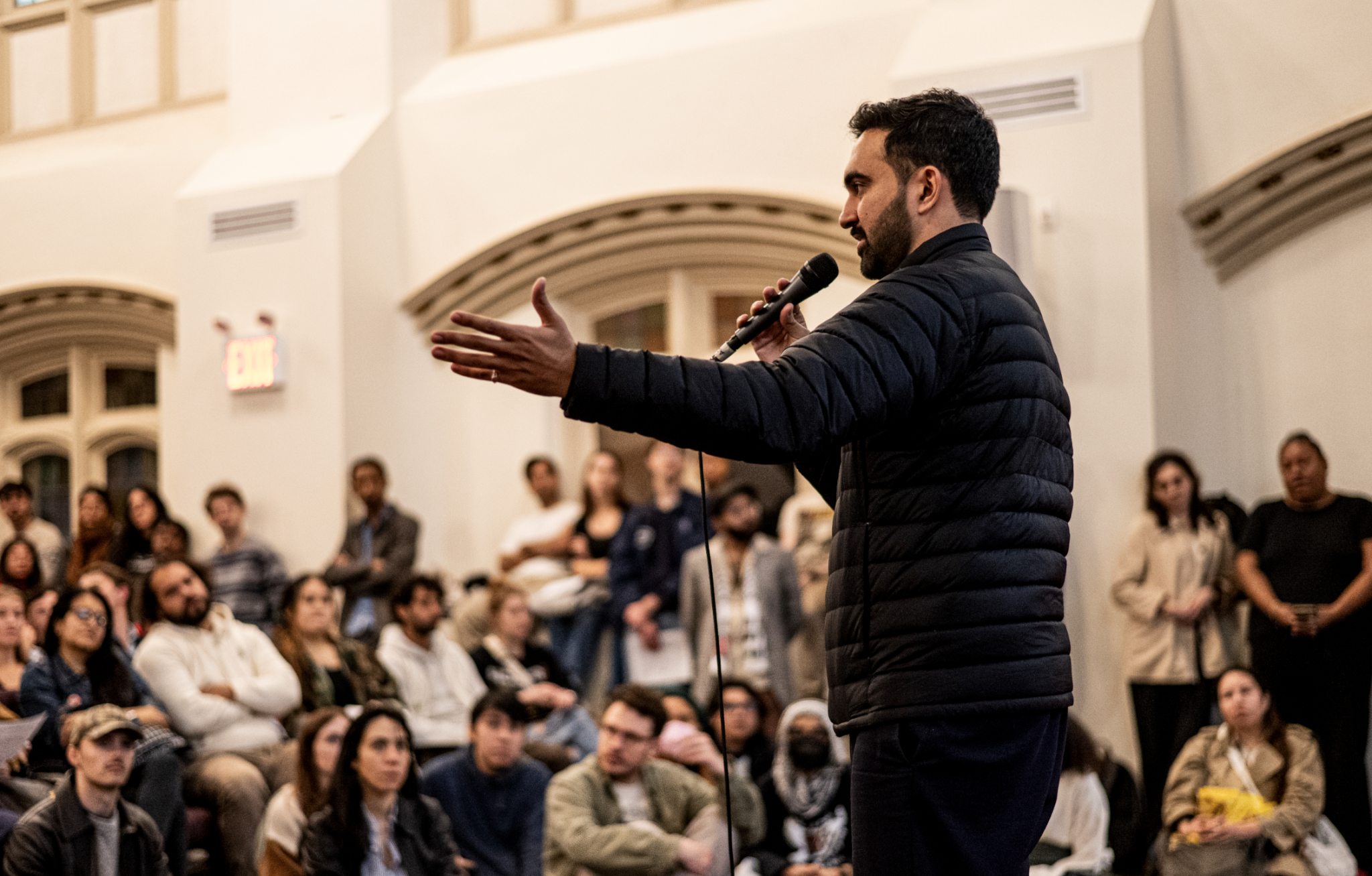
After New York Mayor Zohran Mamdani released a video last week calling for the arrest of Israeli Prime Minister Benjamin Netanyahu, several Jewish leaders responded by accusing him of fueling antisemitism and making Jewish New Yorkers less safe. Those accusations intensified after the brutal stabbing of a Jewish man outside a Manhattan synagogue.
Those responses, however heartfelt, continued a path of confrontation with Mayor Mamdani that had begun long before he took office. If we are to combat antisemitism effectively—and build the alliances necessary to counter every other form of hatred—we need to choose a different path.
Here is a letter from Jewish leaders that might have taken us in a better direction.
****
Dear Mr. Mayor:
Even before you were elected last November, many in our community were so concerned about your positions on Israel and Palestine that they publicly urged Jewish New Yorkers not to vote for you. It was not an auspicious beginning.
After your election, some continued to sound the alarm, announcing their intention to monitor your policies and actions even before your administration had taken shape.
Many Jewish communal leaders chose a path of confrontation rather than engagement. However understandable that choice may have been, there were, and are, better ways to begin a working relationship with the mayor of the city with the largest Jewish population in the world.
The events of last week make it clear that we need to reset that relationship. Your video calling for Prime Minister Benjamin Netanyahu’s arrest for war crimes and the brutal stabbings of an Asian man and a Jewish man that followed have heightened an already tense situation that cannot be resolved through confrontation alone. We need to sit at a table and work together to reduce those tensions and make all New Yorkers safer.
Let me begin by acknowledging the important steps you have taken to counter antisemitism since assuming office. You have increased funding for the Office for the Prevention of Hate Crimes and expanded the city’s investment in combating all forms of hatred, including antisemitism.
You have appointed a liberal Zionist to head your Office to Combat Antisemitism. That appointment sent a message to your constituents, including Zionists and anti-Zionists, that your efforts to combat antisemitism would not be ideologically driven.
You deserve credit as well for reappointing Jessica Tisch as police commissioner and allowing the legislation protecting access to houses of worship to become law.
On the other hand, I don’t think you have gone far enough in condemning incendiary language, like “Globalize the Intifada.” It may well be that many of those who chant that slogan are merely expressing support for Palestinian liberation and do not mean it as a call for violence. But other people hear it that way, and it is important to recognize the reaction the phrase itself can provoke.
This brings me back to your video. You called on the United States to enforce the International Criminal Court’s warrant and arrest the Prime Minister of Israel. You said he would not be welcome in New York and encouraged New Yorkers to protest when he came to address the United Nations.
I disagree with you and I know others in my community do as well. That is something we can and should debate. The fact that we disagree does not mean you should refrain from expressing your views. It is within your rights to state your opinion about Prime Minister Netanyahu and anything else related to Israel.
I also have no problem with you treating Israel as an issue deserving special attention. Indeed, that is a long tradition in New York politics. Successive mayors of New York, from John Lindsay to Eric Adams, have devoted extraordinary attention to Israel. Whether one agreed with what they said or not, few questioned why the mayor of New York was talking so much about Israel.
Expressing your views does not make you responsible for antisemitic attacks. But given how often Israeli actions are followed by increases in antisemitic animus – a phenomenon you yourself have called out when anti-Zionist rallies in NYC have turned antisemitic – you had reason to know that a public call for the arrest of the Israeli prime minister, now viewed more than 44 million times, might be heard by some in ways that reinforce anti-Jewish hatred. I concede that that’s a tough needle to thread. But I believe that someone with the media savviness and rhetorical acumen you have demonstrated should be able to thread it.
I accept that your commitment to the safety of all New Yorkers, including Jewish New Yorkers, is sincere. But the impact of words and actions matters as much as the intentions behind them.
Your video did not appear in a vacuum. It came after your June 18 description of AIPAC as “monsters,” a characterization that many in our community found deeply troubling. More recently, some of us were also concerned by reports that your New York City judicial advisory committee appears to include no Jewish members. None of these actions, viewed on their own, need be understood in the worst possible light. Taken together, however, they have reinforced the perception that Jewish concerns are not being fully heard.
As tensions rise in the Middle East and antisemitism spreads alongside Islamophobia, anti-Arab hatred, and other forms of bigotry in this country, it is especially important for all of us to talk about Israel and Palestine with care and respect for the complexity of the issues at hand.
That necessity becomes even greater when Israel acts in ways that generate outrage. Whether or not one believes those actions are justified, they inevitably shape how people talk about Israel and, too often, how they think about Jews. In those circumstances, elected officials—and all of us who speak publicly about these issues—have a special responsibility to consider not only what we intend to say but also how our words are likely to be understood.
At the same time, our community needs to do a better job distinguishing between criticism of Israel, even harsh and uncomfortable criticism, and hateful attitudes toward Jews. We must learn that conflating criticism of Israel with antisemitism makes it harder to recognize antisemitism when it does occur, drives a wedge between us and our fellow citizens, fuels the notion that Jews are collectively responsible for Israel’s actions, and ultimately weakens our ability to address it.
I know we have and will undoubtedly continue to have profound disagreements about Israel, Palestine, and other related issues. We should be able to debate those issues honestly and vigorously. But those disagreements should not prevent us from working together to confront antisemitism, oppose every other form of hatred, address social and political issues facing all residents, and ensure that New York remains a city where every community feels safe, respected, and fully part of its civic life.
Let’s break bread together and have that conversation.