Middle East Analyst
Featured Post
Epstein Files: FBI source alleged Israel, Russia, UAE influence on US officials
A newly released 2020 FBI memo contains explosive allegations — but it is raw, unverified source reporting, not established fact, and should be read as such
(by author)
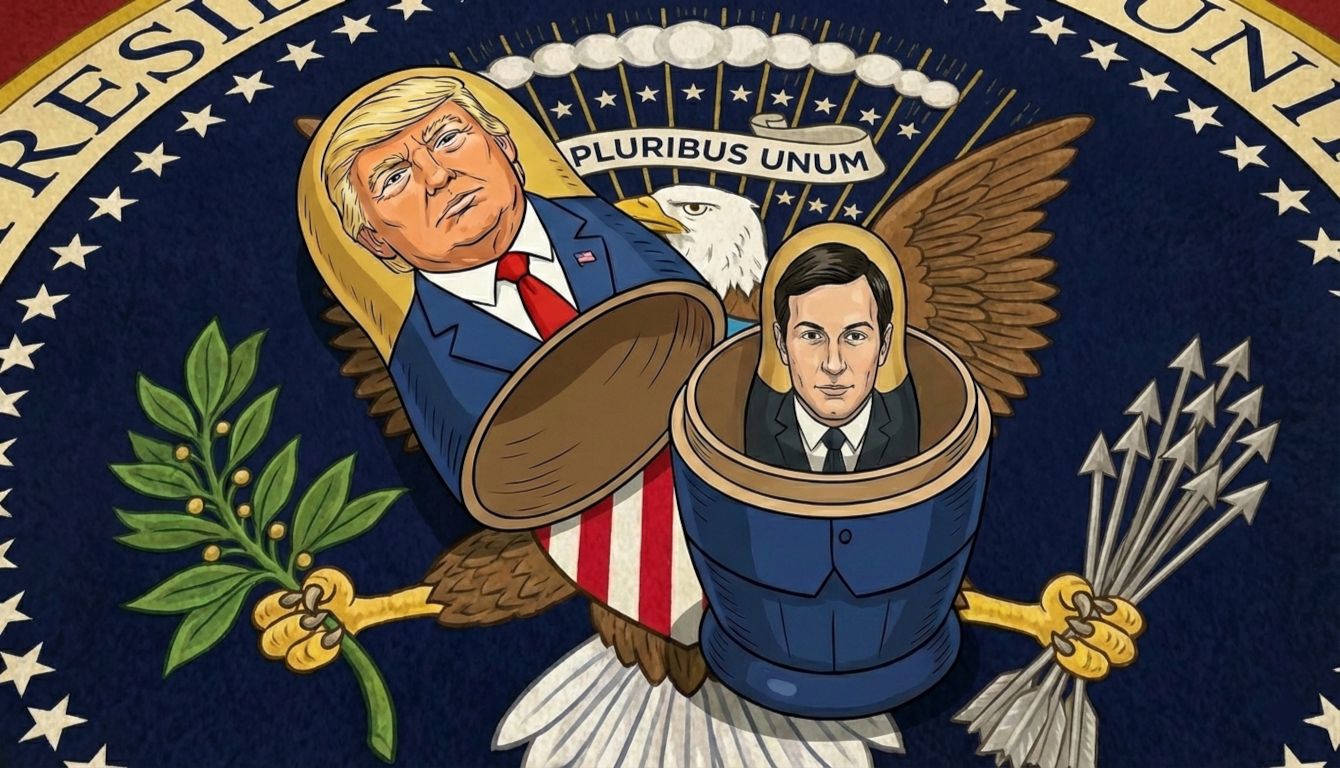
On Friday, the Justice Department’s release of Epstein-related files included a 2020 FBI memorandum that is already generating intense attention. The document contains a series of serious and incendiary allegations involving Donald Trump, Jared Kushner, Chabad Lubavitch, Israeli intelligence, Alan Dershowitz, and Jeffrey Epstein. Because of the names involved and the political terrain they occupy, the memo will almost certainly circulate widely and be interpreted through highly charged ideological lenses.
Before examining the content, one point must be made explicit at the outset: All allegations summarized below are solely the perceptions and claims of a single Confidential Human Source (CHS), as recorded by the FBI. They do not represent findings, conclusions, or assessments by the FBI, the Justice Department, or the author. The FBI’s role in this document is limited to recording what the source said. Any analytic observations regarding source credibility, bias, or political context are the author’s alone. A link to the original memo is provided so readers can review the source reporting directly and draw their own conclusions.
What this memo is — and what it is not
This document is raw human source reporting, the earliest and least vetted form of intelligence. It consists of information provided verbally or electronically by a confidential human source and recorded by the Bureau. Such reporting is, by definition, unverified, uncorroborated, and unevaluated at the time it is written.
Analysts treat all CHS reporting with skepticism until it has been subjected to a rigorous, multi-agency, multi-domain evaluation process. Even then, different agencies may assign different confidence levels based on their own analytic standards and access to corroborating information. In short, this memo is a collection of unverified data points — tips, not conclusions.
What we know about the source
The memo provides limited information about the CHS’s identity, but the substance of the reporting suggests the individual is socially connected, well placed, and familiar with elite political, donor, and intelligence-adjacent networks. That level of access can make a source valuable, but it also increases the risk of factional bias, selective exposure, and personal or political agendas.
Washington is saturated with interpersonal rivalries, bureaucratic turf battles, and long-running political grievances. Information moving through these channels can be accurate, distorted, exaggerated, or shaped by animosity. Well-connected sources are often both informed and opinionated — a combination that requires disciplined skepticism.
The memo itself includes references that suggest possible intra-administration tensions, including accounts involving individuals close to former Secretary of State Rex Tillerson, who was widely reported to have clashed with Jared Kushner over foreign policy authority. From an analytic standpoint, this raises the possibility that some allegations may reflect factional infighting or personal animus rather than objective reporting. This is not an FBI judgment, but a contextual observation relevant to source evaluation.
What the source actually claimed
According to the CHS, as recorded in the 2020 FBI memorandum:
-
Donald Trump was “compromised by Israel.” The CHS asserted that Israeli interests had leverage over Trump and that this influence shaped his presidency.
-
Chabad Lubavitch was attempting to “co-opt the Trump presidency.” The CHS described Chabad as a politically active network with influence channels into both Israeli and Russian power structures.
-
Jared Kushner was the central conduit of this influence. The CHS claimed Kushner was “the real brains behind [Trump’s] organization and his Presidency,” and that his ideological and personal ties to Chabad positioned him as a key vector of foreign influence.
-
Ivanka Trump and Jared Kushner visited the grave of Rabbi Menachem Mendel Schneerson on the day Trump was elected, which the CHS interpreted as a symbolic act of alignment with Chabad’s leadership lineage.
-
Kushner moved large amounts of Russian investment money. The CHS recommended that the FBI investigate Kushner family charities for potential money laundering activity, asserting that Chabad charities are routinely used for this purpose.
-
Jeffrey Epstein “belonged to” U.S. and allied intelligence services, including Israel’s Mossad. The CHS stated that Epstein was close to former Israeli Prime Minister Ehud Barak and claimed Epstein trained as a spy under him. Based on these beliefs and interactions, the CHS became convinced Epstein was a “co-opted Mossad agent.”
-
Alan Dershowitz was “co-opted by Mossad.” The CHS reported that Dershowitz influenced wealthy students at Harvard, including Jared Kushner and his brother. The CHS claimed Dershowitz told them that if he were younger, he would be “holding a stun gun as an Israeli intelligence agent.”
-
Dershowitz told then-U.S. Attorney Alex Acosta that Epstein “belonged to intelligence,” which the CHS claimed explained Epstein’s unusually lenient 2008 plea deal.
-
The Kushner family had deep ties to Israel and a history of questionable business practices, citing a 2004 article referenced by the CHS.
-
A Beverly Hills real estate transaction involving Donald Trump contained what the CHS described as anomalies and red flags, including a below-market purchase price, a subsequent all-cash sale, and the involvement of a Swiss entity linked to the Widjaja family.
These claims are presented here exactly as they appear in the memo: unverified, uncorroborated, and originating from a single human source.
How these allegations will likely be used and perceived
The memo touches on themes — Israel, intelligence services, Trump, Epstein, Kushner — that already sit at the center of polarized narratives. As a result:
-
Anti-Israel or anti-normalization groups are likely to treat the memo as confirmation of long-held suspicions, regardless of its evidentiary limitations. Some will present the CHS’s claims as established fact; others may privately acknowledge the lack of verification while still using the memo as rhetorical ammunition.
-
Pro-Israel groups will likely dismiss the memo as unverified hearsay, potentially attributing it to bias, factional motives, or antisemitic framing. They will emphasize the lack of corroboration, the unknown credibility of the source, and the absence of any FBI validation.
In both cases, the memo is unlikely to change entrenched views. Instead, it will be absorbed into pre-existing narratives and used to reinforce prior beliefs.
Bottom line
Incendiary raw intelligence of this kind should neither be suppressed nor accepted at face value. Suppression often fuels suspicion and can be interpreted as confirmation. Blind acceptance, on the other hand, transforms unverified allegations into conspiracy theories with real-world consequences.
The disciplined approach is to treat this memo exactly as it is: a record of what a single confidential human source told the FBI at a specific moment in time. Its existence is relevant. Its accuracy remains unproven. The responsible task is not to validate or dismiss the claims, but to understand how such allegations move through the information environment — and to resist mistaking raw reporting for validated intelligence.
Related Topics
Related Posts