
Political Consultant
Europe and the Manama Dialogue: Bridging the Understanding Gap
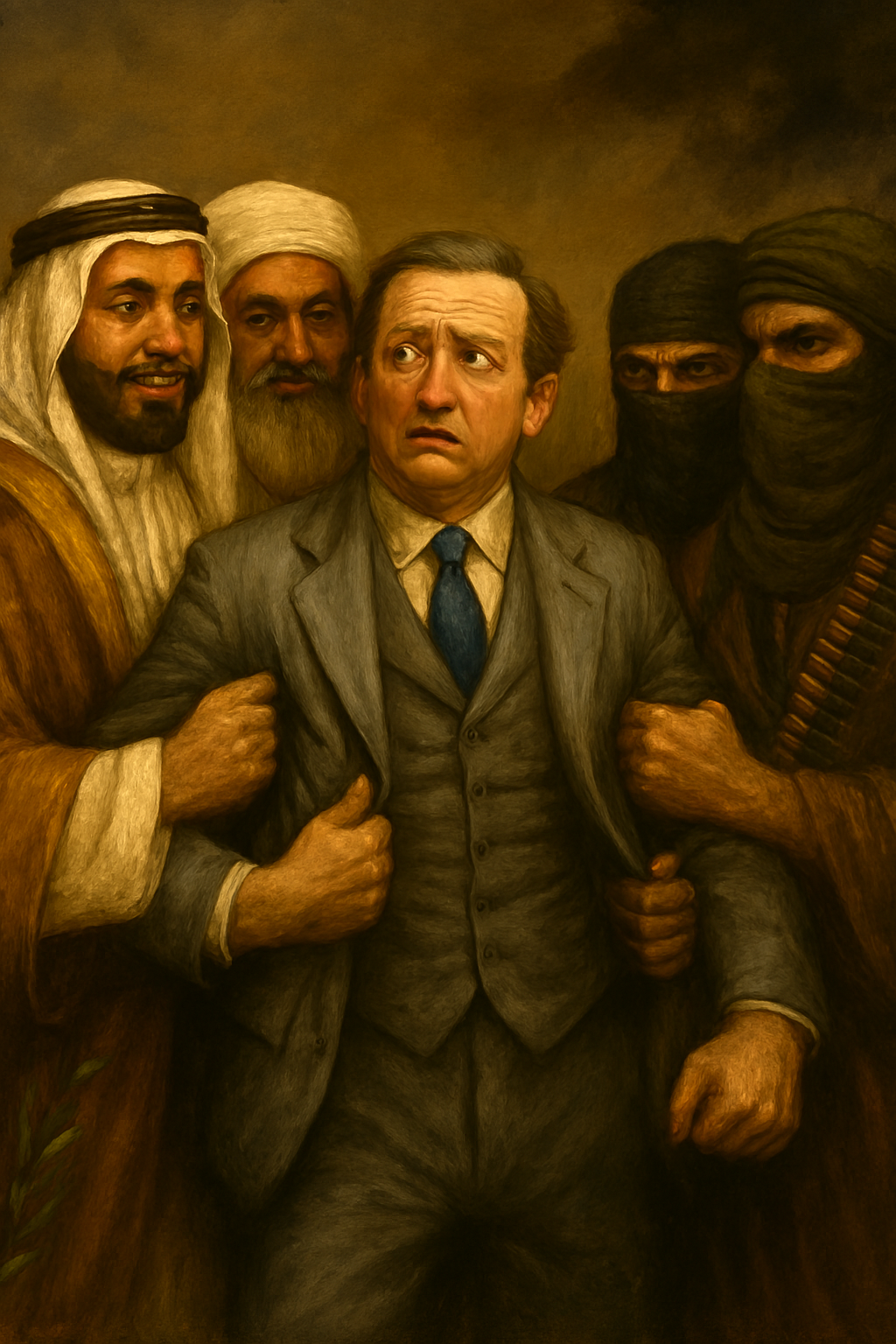
Europe torned between Moderate and Extreme Arabs - Ai generated
The twenty-first edition of the Manama Dialogue, the most prominent security and strategic platform in the region, witnessed in-depth discussions on the complexities of the international and regional landscape. While security issues and strategic shifts in the Middle East dominated the agenda, the relative lack of European effectiveness in the core of these files was noticeable, despite the high-level diplomatic presence. This retreat raises a fundamental question, “Has the European Union lost its connection to the regional reality?”
Amidst the rapid transformations in the Middle East, a fundamental question arises about the European Union’s position in this complex scene, “Has the European continent lost its regional compass?” This question is no longer merely theoretical contemplation; it forcefully asserted itself during the latest edition of the Manama Dialogue earlier this week, where the European presence, despite its diplomatic sobriety, appeared marginal in the security and strategic discussions that dominated the agenda. This retreat not only reflects a weakness in effectiveness but also reveals a deeper crisis of role, requiring multi-dimensional deconstruction and analysis.
The internal European division constitutes one of the most prominent structural obstacles to formulating a unified foreign policy toward the Middle East. The divergence in the positions of member states, especially on sensitive issues such as the Palestinian matter or the Syrian crisis, prevents the crystallisation of a collective position capable of influence. This fragmentation weakens the Union’s tools, making it content with symbolic reactions, without a genuine ability to affect the course of events. At the same time, the region has become an arena for fierce competition among more determined and flexible international powers, such as the United States, Russia, and China, which possess effective military and economic pressure tools, while the European Union remains confined to its role as a humanitarian funder or a diplomatic mediator with limited influence.
The gradual withdrawal of Britain and France from the Middle East marked a pivotal turning point in Europe’s relationship with the region, as it was not merely a military or administrative retreat, but the beginning of a cognitive and strategic separation from the reality and complexities of the Middle East. These two countries, which formed the backbone of European influence in the region since the colonial era, played a central role in shaping regional balances and forming European patterns of understanding of the Middle East. With the reduction of their military and political presence, the direct links that had allowed Europe a deeper understanding of the region eroded, and the relationship turned into a pattern of distant observation, lacking local details and contexts. This separation contributed to the decline of the European Union’s ability to read internal transformations in the region’s countries and understand their political and social dynamics, which led to the adoption of general and abstract policies that lack cultural sensitivity and realism, and consequently produce limited impact on the ground. The British and French withdrawal, in particular, left a vacuum that was not filled by new European tools, but was replaced by institutional hesitation and the absence of a unified vision, deepening the crisis of the European role in the Middle East.
Furthermore, the repercussions of the war in Ukraine contributed to adding a new dimension to this retreat, as it reoriented the compass of European attention toward the East, where issues of energy, migration, and internal security took priority, at the expense of active engagement in Middle East files. This strategic inward turn made the Union deal with the region from the perspective of its security repercussions on Europe, rather than from a standpoint of partnership or influence, which led to a gradual erosion of its regional presence.
Restoring the European role in the Middle East is no longer a diplomatic option, but a strategic necessity that requires political will, a unified vision, and effective tools of influence. It is essential to overcome narrow national calculations and adopt an effective mechanism for foreign decision-making that reflects Europe’s collective interests. Moreover, redefining the relationship with the region’s countries has become urgent, as the Union possesses enormous economic and commercial tools that can be leveraged to build strategic partnerships encompassing security, energy, and technology, instead of being limited to providing aid.
Despite the high-level official presence of EU member states at the Manama Dialogue, the discussions at the conference clearly revealed a widening gap between the European discourse, which adheres to the principles of multilateralism and cooperation, and the regional reality where other international powers are moving with confident steps, building bases of influence, concluding strategic agreements, and redrawing maps of influence on the ground. This discrepancy between European ambition and the actual scene reflects a crisis of perception, which is no less important than the crisis of role.
This impression was reinforced for me through side meetings I held with European officials participating in the Manama Dialogue, where I sensed a clear eagerness on their part to listen directly to the viewpoints of the concerned countries and absorb the complexities of the regional reality. Some explicitly expressed the importance of this kind of interaction in correcting the European understanding of the region and benefiting from the experiences of countries that have succeeded in achieving stability and development amidst a turbulent regional environment. It seemed to me that this communication represents a real opportunity for the European Union to rebuild its analytical tools and develop more realistic and effective policies.
Furthermore, many Middle Eastern powers view the European retreat in the region as an indicator of a lack of unified vision and weak strategic commitment, which pushes them to reorder their priorities and alliances away from Europe. Regional states, having become more self-aware and conscious of their role, are no longer waiting for hesitant or conditional European initiatives but are moving toward more realistic and equal partnerships with other international powers that have proven their active presence on the ground. This regional awareness does not stem from hostility toward Europe, but from accumulated disappointment with policies that have failed to keep pace with the region’s transformations and have not shown a genuine willingness to understand its complexities or make serious investments in its stability. From this perspective, Europe’s return to the region requires not just a diplomatic presence, but a radical review of its way of thinking about the Middle East, based on mutual respect, listening to the region’s experiences, and dealing with it as a partner, not as a secondary external file.
In this context, the participation of EU member states in platforms like the Manama Dialogue acquires double strategic importance, as it offers them a rare opportunity to recover some of that lost understanding, through direct communication with the concerned countries, listening to their viewpoints, and interacting with their successful experiences in crisis management, achieving stability, and formulating advanced development models. This type of dialogue is not limited to exchanging diplomatic pleasantries; it constitutes a vital space for correcting misconceptions, overcoming stereotypes, and building a more realistic and in-depth understanding of the nature of the region’s transformations. Through this interaction, the European Union can rebuild its analytical tools and develop more coherent and effective policies, based on direct knowledge, not on distant perceptions or imported models.
Moreover, the European presence in the Middle East represents a vital element for imparting strategic balance in a regional scene contested by international powers with divergent agendas. EU member states, with their economic and value weight, are capable of playing the role of a balanced mediator and partner, away from the sharp polarisations that characterise the relations of some major powers. Its presence—the European Union, represented by its member states—is not limited to achieving its self-interests; it contributes to establishing a multilateral approach that enhances opportunities for peaceful solutions and limits the dominance of the logic of force over international law. Amidst rising geopolitical tensions, the European role becomes a necessity to ensure balance, especially in regional security, energy, and development files, where the Union can constitute a factor of stability and a bridge for dialogue between East and West, instead of remaining a spectator to the region’s restructuring without its active contribution.
Based on the above, restoring an active European presence in the Middle East is not impossible, but it requires genuine political will, a deep understanding of the complexities of the regional reality, and overcoming the central bureaucracy that impedes swift and flexible movement. The region waits for no one, and those who do not participate in shaping its equations today will find themselves on its margins tomorrow, observing from afar without the ability to influence or initiate.
Related Topics
Related Posts