Faint Praise
In the world of older adult services, one of the phenomena that we notice is that there are many people who feel, somehow, that elders have become children. We hear this often when a family members says that they have reversed roles with their parent. We hear it, and quickly correct it, when a staff person speaks to an elder in a “babyish” way, whether using terms of endearment or tone of voice.
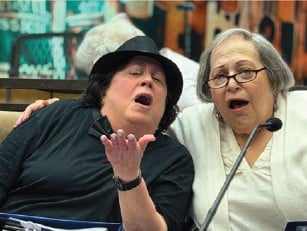
In the past two weeks, a group of nearly 20 older adults with whom I have the privilege of working, took part in the performance of a modified, but still complete, Broadway show. The age range was mid-60’s to late 90’s and all the performers were completely dedicated, making rehearsals a priority, learning their lines and their music and how to work as an ensemble.
What struck me is that no one greeted their performance with a (virtual or actual) pat on the head or hand. No one used childish sounding words of praise. Instead, the audience applauded and cheered and then rose from their seats in an enthusiastic standing ovation. No one said “Oh, isn’t that cute,” or words to that effect, words that strip dignity and reinforce stereotypes. Rather, they filled the room with clapping and cheering and each performer basked in the glow of the recognition.
There is a huge difference between looking at, for example, art created by an elder and saying “oh, so pretty” and saying “Wow, I really like the way you used contrast.” One takes away a sense of agency from the elder and one enhances it.
Older adults are not children, they are not being parented by their children, there is no reversal of roles. Our elders, regardless of age or stage, ability or disability, are individuals who have lived full lives, who have contributed to society, who have value and purpose. When we fail to acknowledge that, to either the elder or ourselves, we have disenfranchised these valuable human beings, and we have deprived ourselves of a deeper relationship and the benefit of their life experience and their wisdom.