
A Jewish Trans academic in recovery from academics.
Fan Girl Harsher: The Life of a Zionist Music Fan
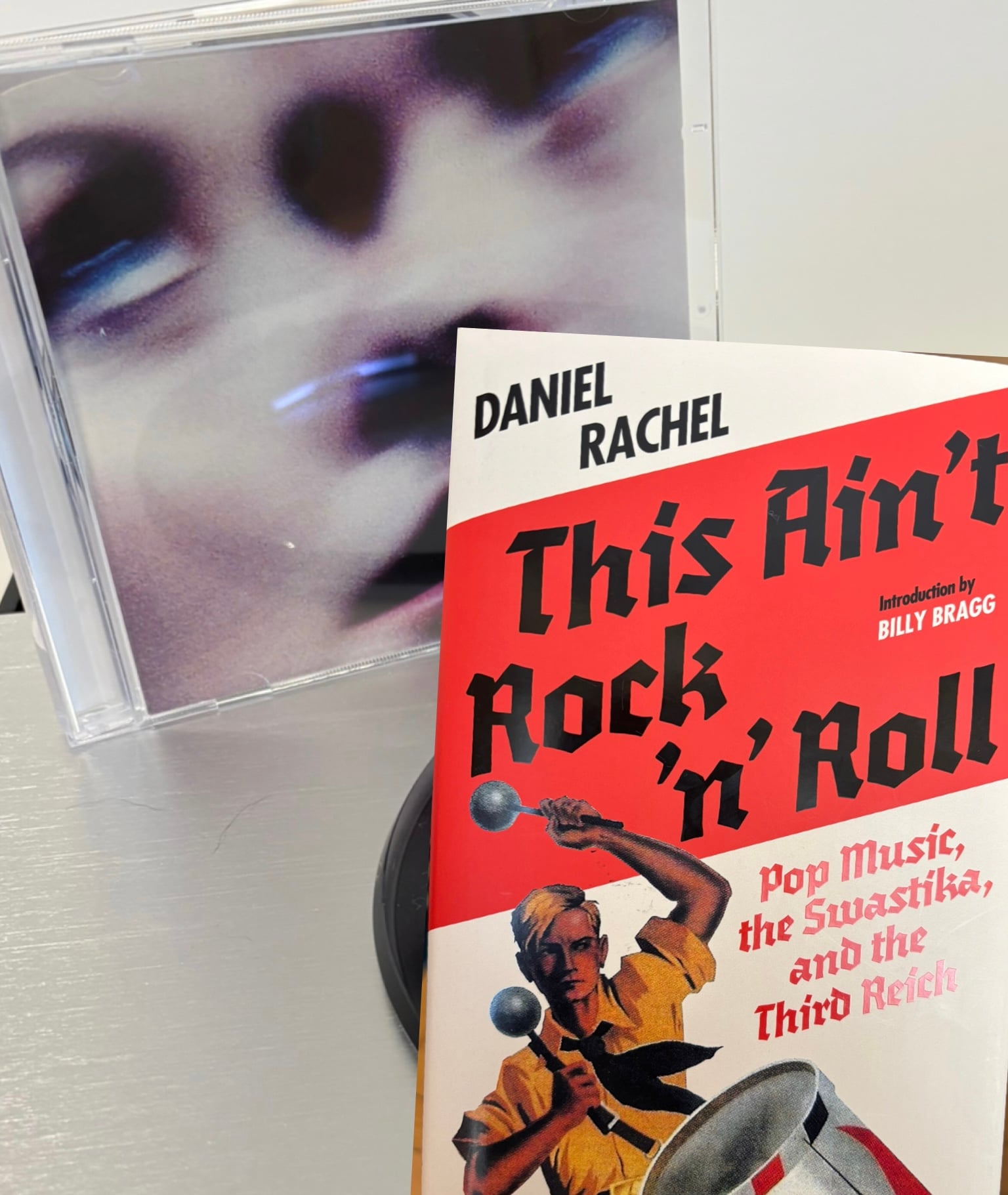
My copy of Boy Harsher’s latest CD, GET MEAN, and my copy of Daniel Rachel’s excellent book, This Ain’t Rock ‘n’ Roll.
I am feeling guilt and shame for something I did, and I am having a difficult time unpacking it. Back in August, a friend invited me to go with him to a concert here in Montréal at the 2300-capacity MTelus. I had never heard of the band before, but my friend, a music producer and artist in his own right, insisted that they were just the kind of vibe I needed and that this would probably be the last time this band played such a small venue. He played me bits and pieces of a few tracks, and I agreed to go. Before I knew it, my friend texted to remind me about the gig coming up early the following week. It had totally slipped my mind, but I responded to the text with an “of course” when questioned about whether I would still be joining him and a group of friends for the show; then I did something I would never have done years ago. I googled to see where the band stood on the issue of Palestine and Israel. Truth is I was hoping not to find anything because they are a relatively young band, then again, I was also expecting to find something because they are a relatively young band.
The band, an American duo originally from Savannah, Georgia, is called Boy Harsher, and they play a style of music called darkwave, which traces its sound back to the goth and new wave movements of the 1980s. Exactly my vibe. The goth and new wave scene were always welcome of outsiders, and as a teenager I lost myself in the soundscapes created by bands like The Sisters of Mercy, The Damned, The Cure, and The Cult. So, I was quite dismayed and put-off to discover that Boy Harsher had signed the No Music For Genocide Campaign that asks artists to remove their music from streaming platforms in Israel. Now what do I do? I told a friend at my synagogue about it, and she decided to sell her ticket. I mentioned it to the friend I was attending the concert with, and he was quite upset by it as well. However, he reassured me with big laugh and said, “Don’t worry. We’re on the guest list.” Thankfully, my need to get out of the house and into public spaces after three years of lost trust in “friends” and colleagues prevailed.
This past summer, I read Daniel Rachel’s excellent book, This Ain’t Rock ‘n’ Roll, about the history of Third Reich and Nazi imagery in popular music. It reminded me how disappointed and angry I was a teen when I would listen to an album by the current British band of the moment only to later see them wearing the latest Vivienne Westwood swastika emblazoned fashion statement on the cover of the NME (New Musical Express). I was relieved when bands like The Clash would take part in Rock Against Racism events that used the “NO swastika” symbol on their adverts. But it wasn’t until I read Rachel’s book that I learned that the anti-nazi symbols at the heart of Rock Against Racism had absolutely nothing to do with lending support to Britain’s Jews, still traumatized by Jew-hatred, but everything to do with anti-black racism in the late 1970s. Jews simply were not part of an equation where the most terrifying antisemitic emblem of the twentieth century was co-opted by movements accused of fascism and racism, as well as those fighting it.
Over the past few years, the OG “just because I like the way the swastika looks on a red oversized t-shirt doesn’t mean I hate Jews” has been repurposed in the colours of the Palestinian flag. Drag queens are wearing it with sequins, has-been white rappers are wearing it over their fake-fur pimp coats. The erasure of Jewish suffering and victimhood during the late 1970s and early 1980s by activist punk artists has found a new outlet in the 2020s keffiyeh couture of the “Free Palestine” movement.
The adopters of this latest fashion trend, like those before them, will argue that wearing these symbols does not mean they are antisemitic, and that may be true. But it does make them insensitive and ignorant as self-appointed arbiters of moral accountability.
Last night a friend mentioned to me that actors never utterly convince anyone either way when it comes to politics. That had me thinking about how music is different. Music easily lends itself to mob mentality. We saw this during Woodstock 1999. And we are seeing it now when previously unknown bands like Bob Vylan encourage audience participation to the tune of “Death to the IDF” without consideration that Jewish fans are hearing “Death to the Jews.”
Somewhere in the multiverse, I would like to believe that this form of disconnect we “as a Jews” experience between artist and audience is reversed, where the crowd would have been encouraged to “Release the hostages,” and they would have returned the call in kind. But back in our reality, Jewish music fans have created a list of bands that we cannot bear to listen to (if we ever did to begin with) because their aggressive stance feels beyond repair: Primal Scream, Sam Fender, Massive Attack, Fontaines D.C., Rage Against The Machine, Roger Waters, Eric Clapton, and Brian Eno, to name a few.
This brings me back to my initial feelings of guilt and shame for not-only attending Boy Harsher’s Montréal concert, but for dancing and laughing and having an all-around great night out with my friends. I rationalize my guilt and shame by convincing myself that there may be artists out there who, if given the chance, could sit down and have an intelligent conversation about their current position on the conflict. Maybe those conversations could help move the dial even slightly more towards compassion for Israelis and the Jewish community? Perhaps there are musicians who signed on to this campaign of artistic exclusion in silence thinking that it would insulate them from criticism and protect them from charges of not picking a side? I feel this way because there was no flag waving in the crowd, there were no statements made from the stage. Just music. And dancing. And this Jew really needed to dance again.
Related Topics
Related Posts