Fighting Antisemitism by Increasing Jewish Light
There is an old saying that darkness cannot be driven away with a stick. You need to turn on the light.
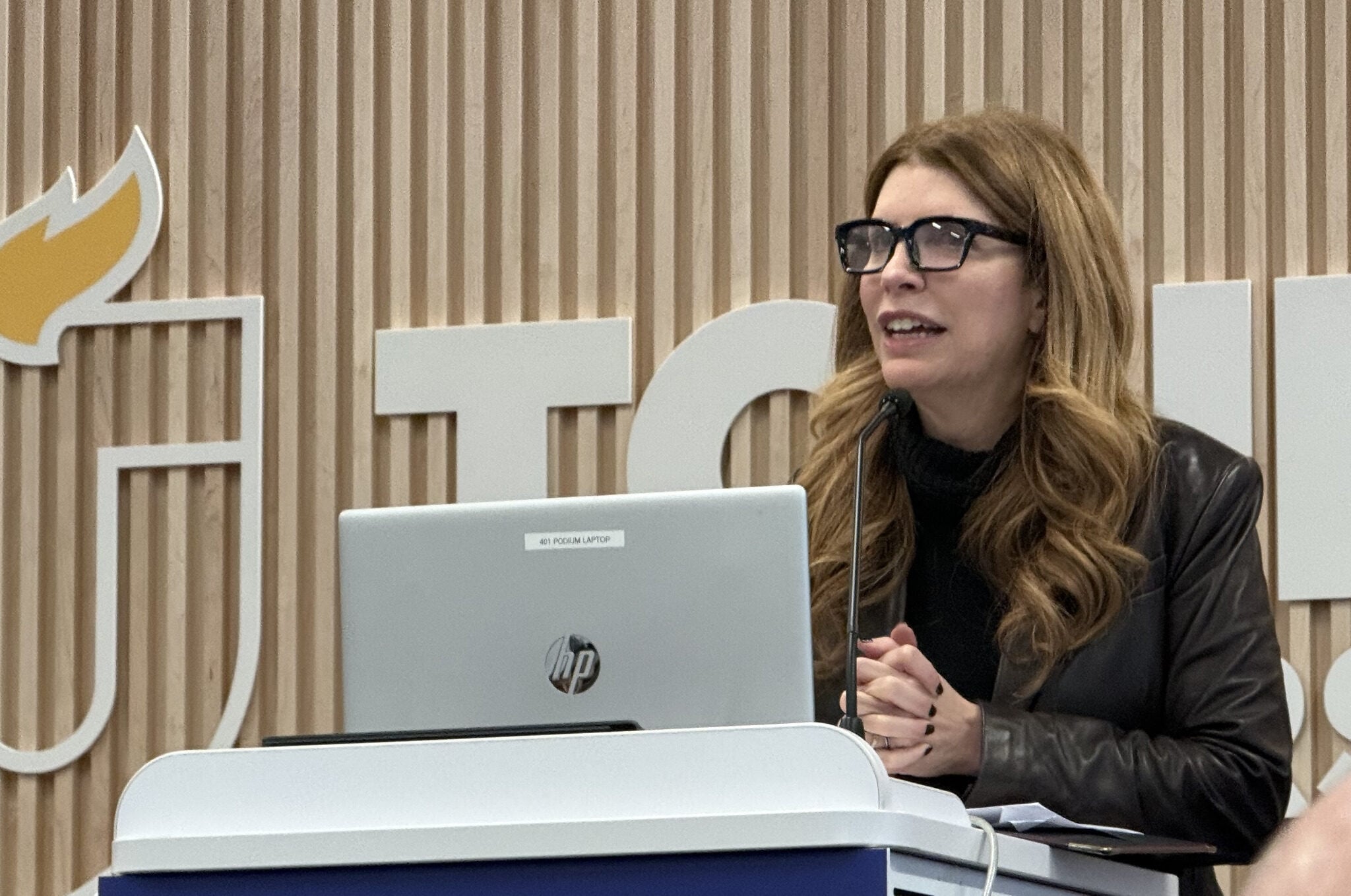
That thought stayed with me as I attended Touro University’s important Symposium on Antisemitism, held November 16 in New York City’s Times Square.
The symposium’s theme, “Tackling the World’s Oldest Hatred in New Ways,” could hardly have been more timely.
At a moment when antisemitism is once again challenging the security and confidence of Jewish communities, Touro assembled an extraordinary gathering of political leaders, legal authorities, scholars, researchers, and educators to examine not only the growing problem, but what can actually be done about it.
I came away deeply impressed by the seriousness of the discussions, the caliber of the participants, and the determination to translate concern into action.
But I also left with a thought that I believe deserves an equally prominent place in the conversation:
The Jewish future must be built on something far greater than the fight against antisemitism. It must be built on the joy and pride of being Jewish.
An Extraordinary Gathering of Leadership
The symposium was hosted by Ambassador Ido Aharoni Aronoff, Touro University’s Global Distinguished Professor of Business, with opening remarks from university president Dr. Alan Kadish.
New York City Council Speaker Julie Menin delivered special remarks, underscoring the importance of political leadership in confronting hatred.
The gathering featured an impressive array of prominent voices, including Dr. Charles Asher Small, president of the Institute for the Study of Global Antisemitism and Policy; Kenneth Marcus, founder of the Louis D. Brandeis Center for Human Rights Under Law; and Mort Klein, CEO of the Zionist Organization of America.
Research into antisemitic attitudes in the Western world was presented on behalf of Cameron “Cam” Fink of AARU Market Research, with concluding observations from David Harris, Executive Vice Chair of ISGAP.
The international perspective was equally compelling, with contributions from Dr. Larisa Buhin-Krenek and Dr. Peter Klein of Touro University Berlin, Dr. Oren Stier of Florida International University, and Daniel Rosenberg of Piro.
A panel examining the historical and legal relationship between anti-Zionism and antisemitism brought together Professor Thane Rosenbaum, Professor Anne Bayefsky, investigative journalist Richard Behar, and philosopher Dr. Andrew Pessin.
The program concluded its substantive sessions with an emphasis on practical education and training, featuring Rabbi Dr. Mark Goldfeder, director of Touro’s Antisemitism Law Clinic, and Malka Fleischmann, director of the university’s Antisemitism Institute.
The breadth of expertise was remarkable. Law, politics, diplomacy, journalism, philosophy, Holocaust studies, and education were all represented.
This was a serious gathering addressing a serious challenge.
The Danger of Becoming Accustomed to Hatred
One of the strongest themes I took away from the symposium was the danger of allowing antisemitism to become normalized.
History has repeatedly demonstrated that prejudice rarely begins with its most extreme manifestations. It often develops gradually, through stereotypes, social acceptance, institutional indifference, and the failure of decent people to speak out.
The discussions surrounding Jewish students on university campuses were particularly troubling.
How can institutions dedicated to knowledge, tolerance, and intellectual freedom permit Jewish students to feel intimidated or marginalized because of their identity?
How can universities celebrate diversity while failing to protect the dignity of Jewish students?
And how do we ensure that statements condemning antisemitism become meaningful policies rather than reassuring words?
The message I recorded in my notes was simple:
Words are not enough. We need action.
Legal protections matter. Institutional accountability matters. Political courage matters. Education matters.
And antisemitism must never be viewed as a Jewish problem alone. It is a moral challenge to the entire society.
When prejudice against one community becomes acceptable, the principles protecting every community are weakened.
What Are We Teaching the Next Generation?
Another important theme was education.
We need young people to understand the Holocaust, recognize antisemitic stereotypes, challenge misinformation, and appreciate the dangers of intolerance.
But I found myself considering another question.
Are we teaching young Jews enough about the beauty of Judaism itself?
A young Jewish student may learn about centuries of persecution, the Holocaust, and the frightening resurgence of antisemitism.
All of this knowledge is necessary.
But does that student also know the meaning of Shabbat? The joy of a Jewish holiday? The wisdom of Torah? The extraordinary spiritual inheritance carried by every Jewish soul?
We cannot allow Jewish identity to become primarily a reaction to those who hate us.
Being Jewish is not simply about what we have survived. It is about what we have been given to contribute to the world.
That distinction is fundamental.
The Rebbe’s Revolutionary Response
As I listened to the presentations, I kept returning to the teachings of the Lubavitcher Rebbe, Rabbi Menachem M. Schneerson, of righteous memory.
The Rebbe understood the dangers confronting the Jewish people. Yet his approach was never to allow fear to become the defining force of Jewish life.
Instead, he encouraged positive action.
Put on tefillin. Light Shabbat candles. Affix a mezuzah. Study Torah. Help another person. Reach out to a fellow Jew.
At first glance, someone might ask: What do these actions have to do with fighting antisemitism?
The answer is profound.
Antisemitism seeks to intimidate Jewish people into hiding, withdrawing, or questioning their identity.
Every act of Jewish pride and commitment moves in the opposite direction.
A Jewish student who proudly embraces Jewish life is making a powerful statement.
A family celebrating Shabbat is strengthening the next generation.
A child learning the Aleph-Bet is becoming another link in a chain that has endured for thousands of years.
None of this replaces the need for security, legal action, or political advocacy.
But it addresses something equally essential: the spiritual strength and confidence of the Jewish people.
We must defend Jewish life, certainly.
But we must also make Jewish life worth celebrating.
From Times Square to Mineola
Returning from the symposium, I thought about the work we do every day at Chabad of Mineola.
Our programs may seem modest compared with the major institutions represented at the conference.
A Torah class. A Shabbat gathering. A visit to someone who is lonely. A public menorah lighting. A conversation with a Jewish person who has become disconnected from their heritage.
Yet these moments possess extraordinary power.
They build relationships. They create belonging. They strengthen identity. They transform indifference into involvement.
And they remind us that the Jewish people are not merely a community bound together by a history of suffering.
We are a people united by a living mission.
We also have a responsibility to build friendships beyond the Jewish community, working with neighbors, educators, civic leaders, and people of all faiths who recognize that hatred has no rightful place in a decent society.
The symposium reinforced the importance of these partnerships.
It also reminded me that the work of strengthening Jewish identity is not separate from the effort to confront antisemitism. It is an indispensable part of securing our future.
The Chanukah Answer
Perhaps it is no coincidence that this symposium took place as we approach Chanukah.
The Chanukah story is not simply about a people who survived an attempt to extinguish their faith.
It is about a people who refused to surrender their spiritual identity.
And the central symbol of Chanukah is not a sword or a shield.
It is a candle.
The menorah teaches a remarkable lesson.
On the first night, we light one candle. On the second, two. Each night, we add more light.
Why?
Because yesterday’s light, however beautiful, is not enough for today.
We must always grow.
That is the profoundly optimistic philosophy of Chabad.
We do not ignore darkness. We do not minimize hatred. We do not abandon the responsibility to defend ourselves and others.
But we refuse to allow darkness to determine our mission.
Our task is to illuminate.
More Jewish education. More Jewish pride. More acts of kindness. More mitzvot. More friendships. More opportunities to bring goodness into the world.
I left Touro University’s symposium grateful for the extraordinary people working to confront antisemitism and encouraged by their dedication.
Yet I also returned with an even stronger conviction about our positive Jewish mission.
Our greatest victory will not simply be a world in which Jews have less to fear. It will be a world in which Jews have ever more reasons to celebrate who they are.
That is the Rebbe’s vision.
That is the message of Chanukah.
And that is the future we must continue building, one candle, one mitzvah, and one human being at a time.
Rabbi Anchelle Perl is the director of Chabad of Mineola, New York, where he works to strengthen Jewish education, identity, and community engagement.