A Moroccan Journalist
Final Nail in Polisario’s Coffin: Iran’s Terror Proxy Faces Global Extinction
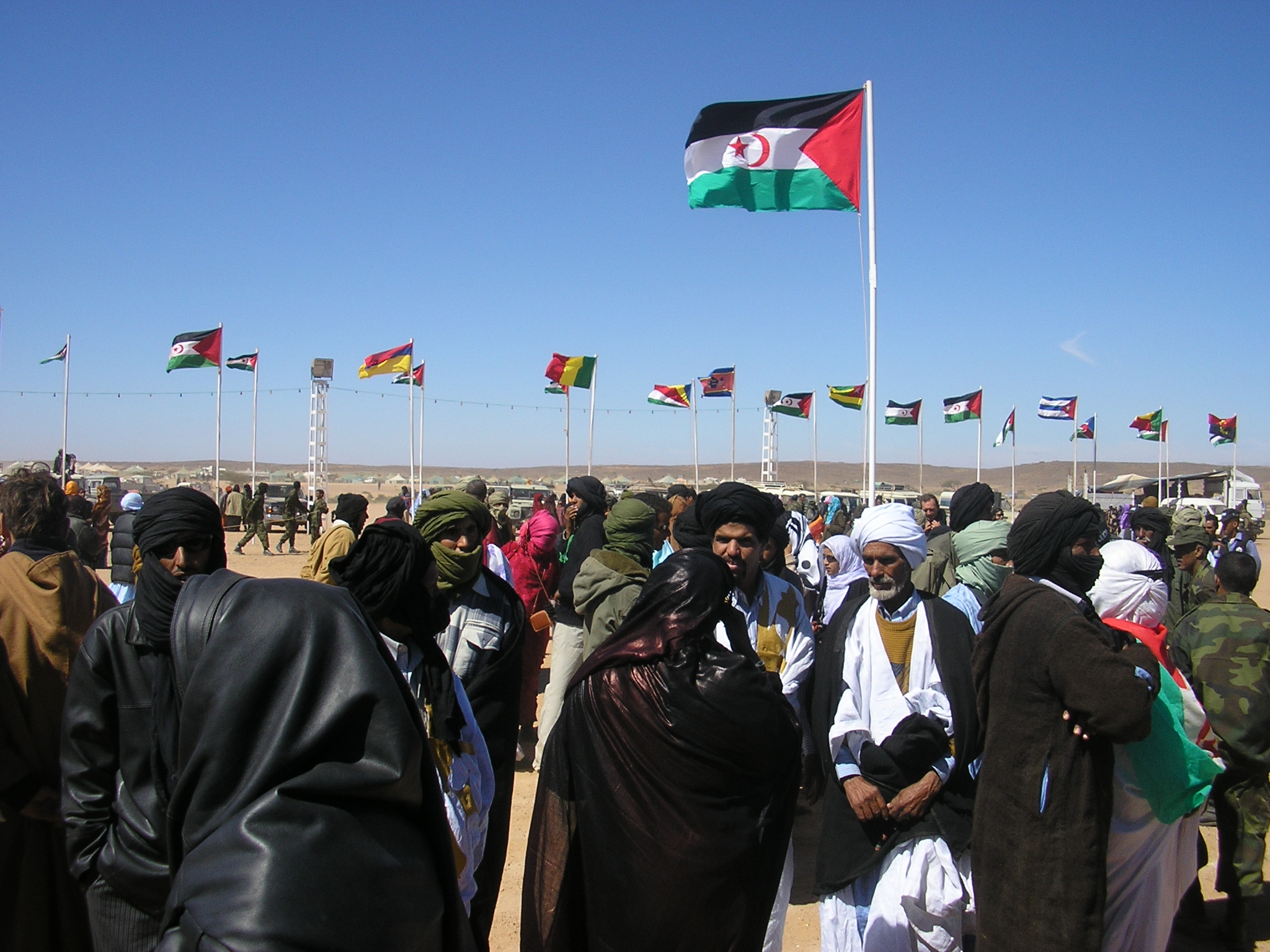
The Polisario Front has long sought to undermine Morocco’s territorial integrity through separatist claims and foreign-backed propaganda. (Wikipedia)
The bipartisan “Polisario Front Terrorist Designation Act” now before the US Congress represents the culmination of decades of evidence exposing the Algerian-backed separatist militia’s true nature. This legislative hammer, if approved, would shatter the final remnants of international legitimacy for what multiple American security experts have conclusively identified as a dangerous proxy in Iran’s expanding terrorist network across North Africa.
Despite overwhelming historical evidence that the land belonged to Morocco long before colonialism – including the allegiance of Sahrawi tribes to Moroccan sultans – the Polisario continues to undermine the kingdom’s territorial integrity. Colonial powers artificially severed Morocco from its southern lands – dividing the country into northern, central, and southern zones, with Spain occupying large stretches of the Sahara – a legacy that fuels today’s manufactured dispute.
Republican Congressman Joe Wilson and Democratic Representative Jimmy Panetta formally submitted the bill to the House of Representatives on June 24, sending it to both the Foreign Affairs and Justice Committees for what promises to be a watershed examination of the Polisario’s deadly activities, extensive criminal enterprises, and dangerous geopolitical alliances.
Wilson’s description of the Polisario as “a Marxist militia backed by Iran, Hezbollah and Russia providing Iran a strategic outpost in Africa” strips away decades of carefully constructed propaganda that had portrayed the group as freedom fighters rather than what security experts now recognize them to be: a critical node in transnational terrorist infrastructure threatening both regional stability and American interests.
The “freedom fighter” mythology surrounding the Polisario now faces the same unraveling that obliterated Hezbollah’s carefully cultivated “resistance” narrative in the early 2000s. Just as Hezbollah’s terror designation shattered decades of academic apologia and media romanticism, the Polisario’s mask is being torn away to reveal the blood-soaked reality beneath.
This pattern of disillusionment follows the same trajectory that exposed the PKK’s Marxist revolutionary pretensions as nothing more than a veneer for drug trafficking, extortion, and indiscriminate violence.
The Polisario now stands at this same precipice of ideological collapse – its failed strategy mirroring the catastrophic miscalculations of movements like FARC in Colombia and the Tamil Tigers in Sri Lanka, which sacrificed generations on the altar of unattainable separatist fantasies before their inevitable disintegration.
The terrorist designation, if enacted, would trigger a cascade of catastrophic consequences for the Polisario that experts describe as “terminal and irreversible.” All Polisario assets in the US financial system would be immediately frozen, while any individual or entity providing material support to the group would face severe criminal penalties.
International financial institutions would be compelled to sever all banking relationships, cutting off the group’s access to global financing. Foreign governments and NGOs would be forced to terminate all contact or face secondary sanctions, eliminating what remains of the group’s diplomatic channels.
The Polisario’s integration into Tehran’s axis of regional proxies was definitively exposed in 2018 when Morocco severed diplomatic relations with Iran after presenting concrete evidence of Hezbollah’s military support to the separatist militia.
This revelation confirmed what security analysts had long suspected: the Polisario had become another link in Iran’s chain of proxy militias stretching from Lebanon’s Hezbollah to Yemen’s Houthis, Iraq’s Popular Mobilization Forces, and now across North Africa.
For Morocco, this Iranian interference represented a triple transgression – violation of national sovereignty, meddling in the Sahara issue, and deployment of proxy groups to destabilize the kingdom – prompting Rabat’s decisive diplomatic rupture with Tehran and reinforcing its alignment with the US-led counter-terrorism coalition.
Perhaps most consequentially, Algeria now risks being designated a state sponsor of terrorism – a label that would cripple its economy and erode its diplomatic standing – unless it fully dismantles its ties to the separatist movement.
The Polisario’s Transformation: From Cold War Relic to Iranian Terror Proxy
The Polisario Front, founded in 1973 with Algeria’s financial backing and strategic sponsorship, has evolved from its Cold War origins into something far more dangerous. What began as a separatist movement has metamorphosed into what the Hudson Institute calls “a destabilizing militia” deeply embedded in arms smuggling, youth indoctrination, and the strategic agendas of America’s most determined adversaries: Iran, Russia, and China.
The Washington Post’s explosive April 12 revelations documented hundreds of Polisario mercenaries dispatched by Iran to fight alongside the Syrian regime. “Iran has trained fighters from the Polisario Front,” the paper reported, citing direct testimony from security forces and Western diplomats that “hundreds of these fighters are currently detained by the new Syrian security forces.”
This irrefutable evidence confirms the long-suspected operational relationship between Tehran’s Islamic Revolutionary Guard Corps (IRGC), Hezbollah, and the Polisario, facilitated through Algerian channels that provide both sanctuary and strategic direction.
Robert Greenway, director of the Allison Center for National Security, laid bare the group’s operational capabilities in a detailed May analysis for The Daily Signal: “Today, Polisario fighters field Iranian-type drones, share desert corridors with Russian proxies’ supply convoys, and tax smuggling routes that feed Sahel jihadists. All this takes place within missile range of the Strait of Gibraltar, one of the world’s most critical maritime choke points.”
The analysis traced the Polisario’s three-pillar support structure: “Iranian military assistance, a growing Russian influence network, and a mature trans-Sahel illicit economy that overlaps with jihadist financing streams.” This operational architecture explains how the group maintains approximately 8,000 fighters while retaining the capacity to mobilize up to 40,000 – a reserve force that, as Greenway notes, “jihadist recruiters have already probed.”
Bloody Legacy: Polisario’s History of Atrocities
The Polisario’s bloody history stretches back to its earliest days, when its fighters conducted brutal raids on civilian populations across southern Morocco. Their tactics have included indiscriminate bombings, hostage-taking, and summary executions of those who refused to join their cause.
In 1988, Polisario missiles brought down two US Agency for International Development aircraft, killing five Americans – yet inexplicably, the US failed to respond with sanctions at that time. This long history of targeting civilians and international personnel has continued to the present day, with the group’s 2020 unilateral withdrawal from the UN-brokered ceasefire and subsequent declaration of Western Sahara as a “zone of war.”
The separatists resumed rocket attacks along Morocco’s defensive berm and explicitly warned that “foreign consulates, airlines, and companies were legitimate targets” – a clear statement of terrorist intent. Their pattern of violence and intimidation has created a climate of fear throughout the region, while their collaboration with international terrorist organizations has transformed them from a local insurgency into a global security threat.
Tindouf: From ‘Refugee Camps’ to Terrorist Training Grounds
The Polisario’s camps in Algeria’s Tindouf region represent one of the most successful deceptions in modern geopolitics. Far from humanitarian refugee centers, these installations function as what the Hudson Institute accurately terms “militarized enclaves” where the Polisario “enforces strict control over a population of approximately 90,000 people.”
Human Rights Watch has documented the systematic absence of elections and free press, alongside the brutal practice of forced conscription backed by imprisonment. More disturbing still are credible reports suggesting that “some refugees under Polisario control may be enslaved” – a human rights catastrophe hidden behind the façade of a liberation movement.
The European Anti-fraud Office’s investigations have exposed the Polisario’s industrial-scale theft of humanitarian aid “to sustain its militias while residents suffer.” A 2015 OLAF report covering 2003-2007 documented that “separatist group leadership has long been directly involved in selling humanitarian aid provided in the Mauritanian and sub-Saharan markets to buy weapons.”
This criminal enterprise has created what the Tindouf Autonomy Support Forum describes as a “severe health crisis in the camps” due to the “widespread smuggling of medical equipment and supplies” that were intended for civilian relief.
The camps’ true demographics further expose the fraudulent foundation of the Polisario’s claims. Former members Mustafa Salma Ould Sidi Mouloud and Hamada El Bihi have revealed that “more than 80% of the population in the Tindouf camps is composed of Tuareg people and individuals from countries across the Sahara Desert, including Mali, Algeria, Libya, Niger, and Chad” – explaining Algeria’s adamant refusal to permit an independent census despite international demands.
Recent uprisings within these camps have torn away the last pretense of Polisario legitimacy. A massacre by Algerian army forces against civilians left two dead and nine wounded, triggering unprecedented protests amid what informed sources describe as “widespread condemnation of the silence of the Polisario Front leadership and its failure to play any role in protecting the camps’ residents from repeated attacks.”
The American Security Assessment: Clear and Present Danger
The Hudson Institute’s exhaustive analysis confirms that the Polisario Front indisputably meets all three statutory criteria for designation as a Foreign Terrorist Organization under Section 219 of the Immigration and Nationality Act:
First, it operates entirely outside American jurisdiction, with its leadership and infrastructure concentrated in Algeria’s Tindouf region.
Second, it systematically engages in terrorist activities as legally defined, including attacks violating ceasefire agreements, violence against civilians, and operational coordination with designated terrorist organizations like Hezbollah – a connection so concrete that Morocco severed diplomatic relations with Iran in 2018 over confirmed Hezbollah training camps in Tindouf.
Third, its activities directly threaten American nationals and security interests by undermining Morocco – a major non-NATO ally and counterterrorism partner – while enabling hostile powers to expand influence in the strategically vital Sahel region.
The American Enterprise Institute (AEI)’s Michael Rubin delivered a devastating critique of the outdated UN peacekeeping mission in Western Sahara (MINURSO), characterizing it as a prime example of “failed UN peacekeeping operations” that “may actually preserve conflict.” His scathing assessment noted that “thirty-four years and billions of dollars later, MINURSO has not even conducted a census.”
In a March op-ed for the Washington Examiner, Rubin ridiculed MINURSO’s effectiveness with surgical precision: “Today, the best way to find MINURSO officials in Western Sahara is to visit one of Laayoune or Dahkla’s bars, where MINURSO vehicles are ever-present.”
He called on the US end financial support that sustains the status quo in Western Sahara. Furthermore, he labeled the Algerian-backed Polisario Front a “Marxist” group that “holds wives and children as hostages” in the Tindouf camps to block Sahrawis from returning to Morocco. “By funding these camps and inflating Polisario legitimacy,” Rubin wrote, “the UN perpetuates the problem.”
The AEI scholar has urged the UN to cease recognizing the Polisario Front as the legitimate representative of the Sahrawi people, describing the group as “a vestige of the Cold War” in a policy analysis published on April 7. In his piece on the Middle East Forum, Rubin challenged the international community’s stance on Polisario’s legitimacy, asserting that “no one has ever elected them to such a position and no one has given the Sahrawi any say.”
The Atlantic Council’s resident senior fellow Sarah Zaaimi concurred, describing MINURSO as being in “spectator mode” and serving only to maintain a “state of paralysis throughout the years.” The think tank noted how MINURSO personnel “remained spectators, even during the rare skirmishes that were reignited along the sand wall, when Morocco decided to retake the strategic Guerguerat crossing in November 2020.”
The Diplomatic Revolution: Morocco’s Sovereignty Triumph
The Wilson-Panetta legislation arrives at a moment of tectonic shift in international recognition of Morocco’s sovereignty over Western Sahara. During an April 8 meeting in Washington, US Secretary of State Marco Rubio delivered an unequivocal declaration to Moroccan Foreign Minister Nasser Bourita: the US recognizes Morocco’s sovereignty over its southern provinces and backs the autonomy proposal “as the only basis for a just and lasting solution to the dispute.”
This definitive statement destroyed Algeria’s dismissive characterization of Trump’s initial recognition as “just a tweet,” demonstrating instead that Washington’s position has solidified into an institutional pillar of American foreign policy. The State Department’s subsequent diplomatic communiqué reinforced this commitment, stating: “The United States would contribute to any progress toward achieving this goal.”
The most devastating diplomatic blow to the separatist narrative came from UN Secretary-General’s Personal Envoy Staffan de Mistura, who abandoned his previous partition proposal and acknowledged Morocco’s Autonomy Plan as “the only viable path to a lasting and politically feasible resolution” of the artificial, prolonged conflict.
Morocco’s Autonomy Plan, first presented to the UN in 2007, offers the Saharan population full self-governance under Moroccan sovereignty with their own local government, parliament, courts, and economic development programs, while Morocco would maintain authority over defense, foreign affairs, and constitutional matters.
This comprehensive framework guarantees cultural rights, political representation, and economic integration while preserving territorial integrity – exactly the balance that has resolved similar conflicts worldwide.
De Mistura’s position represents a complete reversal of his October 2024 stance. This dramatic shift effectively confirms there is no feasible solution to this Algeria-engineered dispute outside the parameters of the Moroccan Autonomy Plan.
Most recently, the UK’s position on Western Sahara was clarified in June, when Foreign Secretary David Lammy issued an unambiguous statement recognizing Morocco’s sovereignty and explicitly endorsing the Autonomy Plan as “the only credible, serious, and realistic approach.”
This marked a historic correction of Britain’s role in the 1904 Anglo-French secret agreement that had artificially separated the Saharan territories from Moroccan sovereignty during the colonial era – a historical injustice that the UK has now formally acknowledged.
This complete abandonment of Britain’s decades-long policy of neutrality carries exceptional weight given its status as a permanent Security Council member and former colonial power whose past actions directly contributed to the territorial dispute.
Even more surprising has been Kenya’s shift toward supporting Morocco’s position – a development that has sent shockwaves through the African diplomatic community, given Kenya’s longstanding alignment with the African Union’s outdated stance on the Sahara issue.
As one of the AU’s founding members and a traditional champion of the now-obsolete “self-determination” narrative, Kenya’s realignment signals a potential tipping point. Kenya’s reversal has fractured the dwindling anti-Morocco bloc within the AU. If Rabat succeeds in collecting a two-thirds majority within the pan-African bloc, it could pave the way for expelling the separatist entity from the organization altogether.
This pivot suggests a broader realignment taking place across the continent, as more nations recognize the futility of clinging to Cold War narratives in the face of contemporary geopolitical realities, which is a clear indication of Morocco’s aggressive diplomacy under King Mohammed VI since rejoining the AU in 2017.
Instituto Coordenadas de Gobernanza y Economía Aplicada’s June 11 analysis concluded that America’s firm stance, combined with mounting pressure on Algeria to dismantle the Tindouf camps, “marks the beginning of the end for the separatist narrative” and signals the approaching conclusion of “one of Africa’s most unnecessarily prolonged and politically manufactured territorial falsehoods.”
Algeria’s Diplomatic Implosion: The House of Cards Collapses
As international support for the Polisario collapses, Algeria finds itself in what analysts describe as “risky and uncharted territory, an increasingly untenable situation it has never encountered before.” The Algerian regime’s desperate attempts to maintain relevance have resulted in diplomatic catastrophes on multiple fronts.
The regime recently launched what observers characterized as a “vicious assault” on the United Arab Emirates through state television, hurling insults that branded the UAE as an “artificial statelet” and “hybrid entity” while repeatedly calling Emirati leaders “dwarves.” This extraordinary breach of diplomatic norms followed an interview on Sky News Arabia where Algerian historian Mohamed Amine Belghit discussed Amazigh identity – triggering a disproportionate attack on the UAE merely because the channel receives Emirati funding.
Algeria’s increasingly erratic foreign policy reflects what experts identify as the “conspiracy narrative” adopted since the popular Hirak movement challenged the ruling elite. This narrative attempts to explain away mounting internal and external crises by blaming foreign and domestic actors allegedly seeking to destabilize the country.
The result has been diplomatic isolation across multiple fronts. Algeria has severed ties with Morocco, maintains frosty relations with Mali, Niger and Burkina Faso, and faces growing global isolation as major powers exert consistent pressure to abandon its obstructionist stance on Western Sahara.
Algeria once relied on multiple strategic cards to undermine Morocco’s momentum, including France’s historically lukewarm support for Moroccan sovereignty and Russia’s position within the UN Security Council. Today, both cards have been dramatically devalued. Paris’ recognition of Moroccan sovereignty over the Sahara represented a game-changing reversal of its historical stance, while Russia’s geopolitical priorities have shifted amid the Ukraine conflict, potentially sacrificing Algeria “on the altar of geopolitical expediency.”
The Algerian regime now finds itself trapped in a diplomatic house of cards, with each support structure collapsing in sequence. Its decades-long investment in the Polisario as a geopolitical chess piece has yielded nothing but international isolation, economic strain, and the growing resentment of its own population who witness billions diverted to a failing separatist cause while basic domestic needs go unmet.
The Inevitable Conclusion: Polisario’s Terminal Decline
The balance of power in Western Sahara has decisively shifted toward Morocco, leaving the Polisario politically, diplomatically, and militarily crippled. While the terrorist group has not completely disappeared, it exists today only through Algeria’s increasingly desperate support. The so-called “Sahrawi Arab Democratic Republic (SADR),” mockingly referred to by many as the “Tindouf Republic,” exists only in Algeria’s fevered imagination – a phantom state with no actual territorial control, as the entirety of Western Sahara remains firmly under Moroccan sovereignty and administration.
The actual reality on the ground could not be clearer: Morocco controls 100% of the economically and strategically valuable territory, has built thriving cities and infrastructure across the region, and continues to integrate the Saharan provinces into its national development strategy through massive investments in renewable energy, agriculture, and tourism. Meanwhile, the Polisario’s leadership grows old in Algerian hotel rooms, disconnected from the territory they claim to represent and increasingly irrelevant to its future.
Wilson’s legislative push culminates his methodical campaign against the separatist group. He previously exposed the network of enablers, declaring: “War criminal Putin, Iran, and Cuba are actively destabilizing West Africa by supporting the Polisario Front, a threat to the Kingdom of Morocco.”
The congressman maintained unwavering determination throughout the process, vowing on May 22 that “the legislation is coming soon” and that “Trump will fix it.” He fulfilled that promise on June 24, delivering a bill that would impose catastrophic consequences on the Polisario, including complete asset freezes, prohibition of financial interactions, and targeted sanctions that would effectively terminate its international operations.
For Algeria, the legislation creates an impossible dilemma: either abandon its proxy terrorist group or face severe international repercussions, including potential designation as a state sponsor of terrorism.
With the UK joining the US, France, and Spain in recognizing Moroccan sovereignty, and over 120 countries now backing the Autonomy Plan as the only credible resolution path, the Polisario Front faces imminent extinction as a relevant political or military actor.
A recent report by the Migration Research Institute indicates that “the coming months” could see both China and Russia “approve Moroccan advance in the so-called ‘Moroccan Sahara’” at the UN Security Council.
The terrorist designation would simply formalize what security experts have long recognized: the Polisario represents not a legitimate independence movement, but a dangerous terrorist proxy threatening regional stability and international security.
As Morocco approaches the 50th anniversary of the Green March on November 6, Morocco’s Permanent Representative to the UN, Omar Hilale, has previously voiced optimism that this manufactured regional dispute approaches definitive resolution, potentially extinguishing Algeria’s fabricated conflict and its invented proxy state.
Related Topics