Five Coins Against the Fire
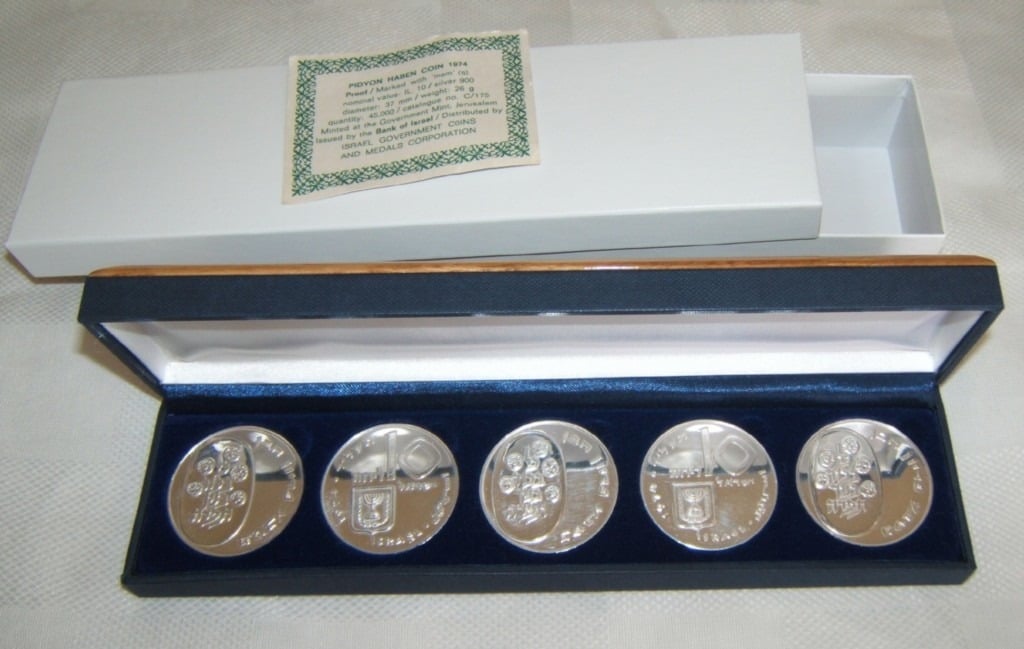
The most important legal transaction of my life took about 30 seconds and cost five silver coins.
My son was 31 days old. We gathered at our shul on California’s Central Coast, poured wine, and stood him before a kohen. And then the kohen asked me a question that Jewish fathers have been asked for something like a thousand years, in Aramaic, a language nobody in the room spoke: Mai baʿit tefei—which do you want more? Your firstborn son, or the five coins you owe for his redemption?
There is a script. The father says: I want my son; here, take the coins. The kohen takes them, declares the redemption accomplished, blesses the boy, and everyone drinks. On the surface it is the gentlest comedy in Jewish life. Somebody always jokes about the exchange rate. The baby sleeps through the whole thing.
I practiced law for more than 20 years, and transactions were my trade, and I know a real one when I see it. This was a real one. A redemption implies a claim. A receipt implies a debt. When the kohen took my coins and gave me back my son, we were settling an account opened long before either of us: a claim on the firstborn, recorded in the oldest strata of our law, that some ancient hand converted from blood into silver. My new book, The Stayed Hand, is about that claim and about the civilization that was built to make sure the debt would never again be paid in the original coin.
Because it was once paid in the original coin.
Our own scripture says so. When Mesha, king of Moab, was losing his war against Israel, he took his firstborn son, who was to reign in his place, and offered him up on the city wall and the siege broke, and the armies went home. The text does not say it failed. That was the world: not a monstrous exception but the emergency protocol of an entire age, the thing a city did when the plague came or the enemy came. Judah knew it intimately. The Tophet where children burned stood in the Valley of Ben-Hinnom, directly below the Temple Mount. Jeremiah did not sail anywhere to deliver his indictment. He walked downhill.
The claim of the book is simple to state and takes 400 pages to argue. The Torah prohibits child sacrifice, and the prohibition is the smallest part of what it does. Read whole, from Moriah to Nebo, it can be read as built around the refusal and Judaism as the ongoing practice of that refusal. The Aqedah, the binding of Isaac that we read on Rosh Hashanah, is the founding scene: a man walks three days believing he has heard what his whole world would have heard, the standard invoice, and at the top of the mountain the God of Israel is distinguished from every god of that world by one act. The countermand. Do not send your hand against the boy. The law then ratifies the mountain: redeem the firstborn, count the Levites against him, price the surplus at five shekels, and keep the receipt ceremony running for three thousand years, so that the father of every firstborn is asked the mountain’s question out loud and scripted to answer it correctly. In cash.
The shofar remembers the ram that took the place of the son. The seder tells of the night the destroyer passed over houses marked by the blood of a lamb. A lamb, not a child. And the watchword we say morning and evening is not “obey” but Shema. Hear. A tradition whose founding trauma was two voices on one mountain made hearing correctly the test of everything, and the test never closes.
I wrote this book as a lawyer lays out a case, with the exhibits marked and the worst evidence on the table, because a tradition confident enough to preserve Mesha’s victory and Jeremiah’s fury can survive its readers looking straight at them. But I did not write it only as an exercise. Anyone paying attention knows this is a hard hour to be a Jew. There are readers. I have met them, I have taught them, on some mornings I have been them who are tired, who have been asked once too often what any of this is for. One answer is the answer I found that runs through a valley below the Temple and up a mountain in Moriah, and it is older and stranger and better than the one I was looking for. We are the people who kept the belief that the firstborn belongs to God and changed the payment. Prayer stands where the offerings stood. The claim was never denied. It was converted and every morning, every spring, every thirty-first day, the conversion is renewed.
On the wall at Kir-hareseth a father was argued by his own beliefs into breaking nature’s most sacred bond. On the mountain, a hand was stayed. Between that wall and my shul runs a single argument, and my son, who is 16 this summer, redeemed for five coins he has never seen, is its living receipt.
The Torah set itself against a functioning, respectable institution, and it won. That is what we are still doing here. That, at least, is one reason to stay.