
5 years of the Abraham Accords: Shared identities
Five years ago, on September 15, 2020, the signing of the Abraham Accords stunned the world, breaking decades of diplomatic inertia in the Middle East. Equally remarkable has been their endurance, as the agreements have held firm through regional upheavals and shifting political winds. The contrast with earlier history could not be sharper: 50 years and a day before the Hamas assault of October 7, 2023, the Yom Kippur War erupted with a devastating surprise attack on Israel. Then, the fallout was immediate and severe — dozens of countries severed ties with Israel, while Arab nations imposed an oil embargo that shook the West.
Despite the ongoing war in Gaza, the Abraham Accords have largely held. Cooperation and trade continue. I experienced this personally: when I missed a connection flight in Europe on my way home for my son’s wedding, the only route back to Israel was through the United Arab Emirates. That such a path exists says something profound about the endurance of these ties.
Skeptics often argue the accords are driven mainly by converging interests — security, economics, and regional strategy. Undoubtedly, interests’ matter. But if shared interests alone were enough, the Middle East would have found stability long ago. Interests always suffer in times of war. Something more is at play. Just as each of us sees with two eyes, we also live with two “I’s”: Interests and Identity. The promise of the Abraham Accords lies not only in common interests but in a deeper sense of shared identity.
This raises the central question of Jewish-Muslim relations: Will our core identities pit us against one another, or can they become the foundation of a shared future? Can religion — so often exploited as a source of division — be transformed into a source of healing?
The very name of these agreements points the way. Unlike Camp David or Oslo, named after distant places, the Abraham Accords root peace in shared heritage. Abraham, revered as patriarch by Jews, Christians, and Muslims, represents not foreign diplomacy but familial connection. What was once a wedge can now be a bridge.
This approach is grounded in tradition. Jews often call themselves the “people of the book,” but few realize the phrase originates in the Qur’an. And fewer still know that its more precise translation is “Family of the Book.” Jews and Arabs are not just neighbors — we are family, linked as Semites, as inheritors of the Abrahamic path.
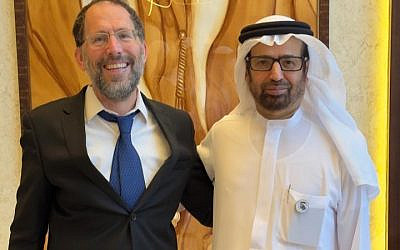
This vision is not abstract. Days after October 7, Dr. Ali Rashid Al Nuaimi chairman of Defense, Interior and Foreign affairs of the UAE declared: “We want everyone to acknowledge and accept that Israel is here to exist, and that the roots of Jews and Christians are not in New York or Paris but here in our region. They are part of our history, and they should be part of our future.”
Our sacred texts echo this truth. The Bible recounts tensions between Isaac and Ishmael, Jacob and Esau, Joseph and his brothers. These stories capture the painful complexity of family. But again and again, reconciliation triumphs, teaching us that brotherly love can overcome rivalry.
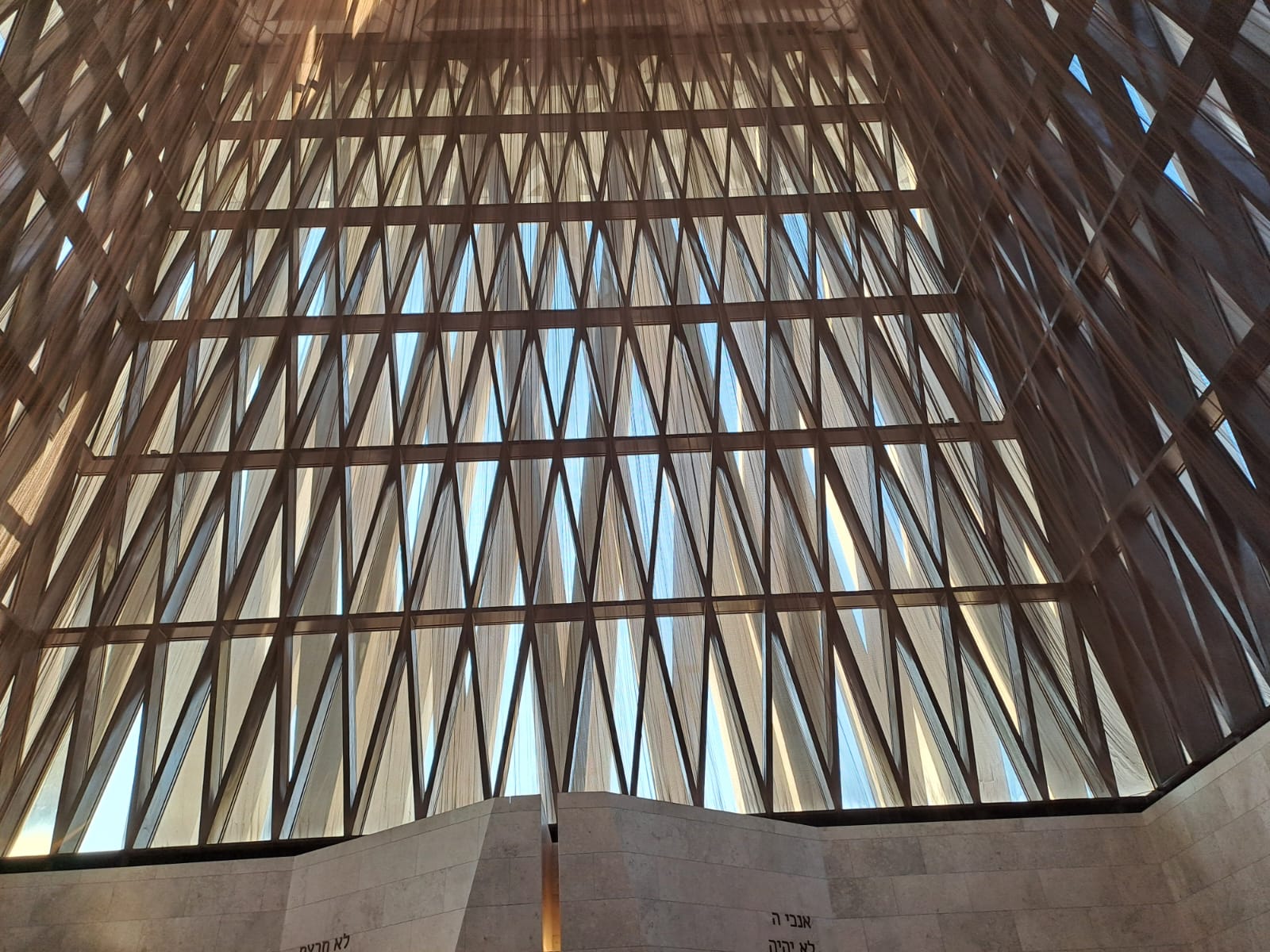
The Abrahamic Family House in Abu Dhabi embodies this message: a mosque, a church, and a synagogue standing side by side, proclaiming that those who share Abraham’s legacy are kin. Family ties may be fraught, but they hold the potential for fraternity.
My organization, the Ohr Torah Interfaith Center, together with Muslim partners across the Middle East and beyond, has launched the Jewish-Muslim Fraternity Project to make this vision real. We draw inspiration from the historic Nostra Aetate declaration of 1965, which transformed Jewish-Christian relations. As we approach its 60th anniversary in 2025, we seek to build on its legacy — this time, to strengthen Jewish-Muslim fraternity.
The significance of a narrative of shared identity cannot be overstated. The central question now is whether Saudi Arabia will join the Abraham Accords. For the land of Muhammad — where Islam began — to establish relations with the Jewish state, the issue will be whether this is perceived as a betrayal of Islam, or as a step toward healing in the spirit of the seventh-century Constitution of Medina, initiated by Muhammad himself, which established coexistence between the Jewish and Muslim tribes of the region.
Some argue that the Abraham Accords have sidelined the Palestinian question. In fact, they may offer the best hope for a breakthrough. The tragedy of the Israeli-Palestinian conflict — and the reason it has endured for so long — lies largely in the weaponization of religion and identity. Hamas and other extremists believe they are spearheading a holy war to annihilate the Jewish state. Israelis, for good reason, feel threatened by hostile forces surrounding them. This dynamic has made the conflict intractable.
A less volatile Middle East could help break this deadlock: Palestinians might move beyond the vision of destroying Israel, while Israelis might begin to shed their deep sense of insecurity. Together, this could open the door to genuine peace.
The Abraham Accords are not just a political arrangement; they are an experiment in identity. If nurtured, they can shift the narrative of the Middle East from conflict to kinship. In a region — and a world — in desperate need of hope, that is their greatest promise.