Knesset Insider
Flipping the Pyramid: From Draft Exemptions to Actual Enlistment
Flipping the Pyramid: From Draft Exemptions to Actual Enlistment
Israel needs to put those who serve first, bring the Haredim into meaningful military service and give reservists their lives back.
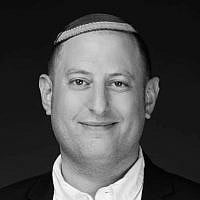
I am an Orthodox Jew, a husband, a father of four and a major serving as a company commander in the IDF reserves. Born in Chicago, I made Aliyah at 11, served during the Second Intifada, and have spent two decades in the reserves. Since October 7th, I have served more than 630 days in uniform.
Growing up in America, I learned that citizenship comes with both rights and responsibilities. President John F. Kennedy famously challenged Americans to ask not what their country could do for them, but what they could do for their country.
For me, that principle carries particular meaning in Israel. As a religious Jew living in our ancestral homeland, I believe we must embrace not only the privileges of Jewish sovereignty but also the responsibility to sustain and defend it. I believe deeply in Torah study and in the obligation to defend the Jewish state. These commitments are not contradictory. Both are part of living in a sovereign Jewish state.
After three years of war, hundreds of days away from our families and at a time when the IDF says it is short of 20,000 troops, putting our security at risk, we must ask two fundamental questions. How do we move from a system that supports those who avoid military service to one that puts those who serve first? And how do we move from endlessly discussing Haredi enlistment to actually bringing Haredim into the IDF?
Answering these questions is at the heart of Naftali Bennett’s enlistment plan, which I support because it seeks to bring about a revolution and fundamentally fix a broken system.
For decades, Israel has maintained just that: a broken system of incentives that works in the wrong direction. Those who enlist at age 18, and those who serve in the reserves and interrupt their education, postpone careers, leave businesses and spend months away from their families—they pay the price. Meanwhile, individuals who dodge the draft continue benefiting from state subsidies.
This is about more than fairness. It endangers Israel’s security. It harms Israel’s economy and the social fabric of Israeli society. And this draft dodging is the direct result of behavior the State of Israel has decided to encourage.
Bennett proposes reversing that structure. His plan puts those who serve first. The principle is simple: reward service rather than subsidize dodging it. The pyramid needs to be flipped. Those who serve at the top, draft dodgers at the bottom. Period.
We have spent years debating quotas, exemptions, sanctions, and deadlines. We have been dragged along by career politicians and power brokers who have never had any intention of enabling Haredi enlistment. This has damaged Israel’s security and economy as a whole. By refusing to provide a path through education, enlistment and the workforce, they have also put generations of Haredi Israelis on a path towards a lifetime of poverty and dependency on the state. It doesn’t have to be this way.
While sending tanks into Bnei Brak to enlist the Haredim isn’t a solution, the State of Israel hasn’t taken the most obvious, simple step: saying that, fine, one may choose not to enlist. One may choose not to work. One may choose to send their kid to a school that doesn’t equip them with the skills necessary to support themselves. But we, the State of Israel, choose not to pay the price for those choices. We choose not to provide a single shekel to support those choices.
Simply reversing this broken incentive structure—not giving a single shekel to draft dodgers and the institutions that enable draft dodging—is the first step towards bringing our Haredi brothers and sisters into our shared Israeli story. Into military service and the workforce.
8-8-8: Eight hours of Torah, eight hours of service, eight hours of rest
Alongside this “flipping the pyramid” to put those who serve before those who dodge the draft, we need practical solutions for Haredi enlistment that empower the IDF to meet Israel’s security needs. One of Bennett’s proposals approaches the problem differently: establish Haredi yeshivot along Israel’s borders with Jordan and Egypt, where students dedicate eight hours to Torah study, eight hours to military guard duty, and eight hours to rest each day.
Eight. Eight. Eight.
The idea is not to demand that the Haredim abandon their religious identity, but to create a framework where they can preserve it while defending their country.
For generations, Religious Zionist Hesder yeshivot have combined serious Torah study with military service. Their structure differs from Bennett’s proposal, but they demonstrate that Torah and IDF service are not mutually exclusive.
As someone who lives in both the religious and military worlds, I find this essential. Recent remarks by Rabbi Dov Landau, one of the most influential Haredi religious leaders, illustrate the divide. Speaking about Religious Zionist soldiers who fell in battle, he declared that they had been killed because their rabbis teach them a distorted Torah. As an Orthodox Jew and reserve officer, I find those words deeply insulting. I respect religious scholarship, including that of rabbis whose outlook differs from mine. But I reject the suggestion that the Torah taught by Religious Zionist rabbis is responsible for the deaths of soldiers defending their people and homeland. The silence from the current coalition parties was deafening.
It all begins with education
The real solution to bringing about Haredi enlistment and participation in the workforce, vital for the future of Israel’s security and economy, begins with repairing the Haredi education system. Simply put, children who are taught that it’s “better to die than enlist” are not suddenly going to enlist at age 18. Children who don’t learn math, English and science will have limited future opportunities in the workforce.
The solution to this will take time, but it is straightforward: instead of spending state money on private education systems, often run by the Haredi parties, that don’t teach core subjects and discourage enlistment, we should spend that money on strengthening the few existing “Mamlachti Haredi” schools and creating more high-quality schools of this kind—like Mamlachti and Mamlachti Dati schools, but for Haredi students—that are under state supervision and teach core subjects. This will allow Haredi students to learn in an environment that allows them to maintain their identity, just as Mamlachti Dati schools do for so many religious students, while also equipping them for enlistment, employment and participation in Israeli society.
By investing in these schools and not putting a shekel into the aforementioned flawed private education systems, we will create a strong alternative that Haredi parents will want to choose for their kids. Ultimately, education, employment, and enlistment are interconnected. Sustainable change requires addressing the institutions and incentives shaping young Haredim’s choices long before draft age.
More soldiers means fewer reserve days
The IDF has said it again and again. Raised red flag after red flag. We need more soldiers. Period. For our security but also to relieve the burden on reservists—a burden that, I can tell you, is having not only social and economic impacts but operational ones as well.
The math is simple: a regular army battalion that serves all twelve months means that twelve reserve battalions don’t each have to serve for a month.
For me, this is personal.
As a reserve company commander, I have seen what repeated service demands from soldiers and their families. Every call-up disrupts civilian life: children without a parent, employers without workers, spouses managing households alone.
Some soldiers under my command have already left Israel. Others are still undergoing military medical committees, including mental health evaluations. These are real people who answered the call, whose lives have been profoundly affected by the demands placed upon them. Israel cannot rely on them at this level indefinitely.
What Bennett’s plan is—and isn’t
Our objective is not to force Haredi society to change its way of life or its religious identity. It is to make sure every Israeli, while maintaining their own identity and way of life, is part of our one shared Israeli story, with the same rights and responsibilities. This begins with education, continues with enlistment and leads into the workforce.
Our success will be measured by what actually changes.
How many people enlist? How much can we reduce the load on reservists? How much public funding is redirected toward those who serve? How many kids are equipped with the skills necessary to enter the workforce? And more.
I am a candidate for the 26th Knesset on Naftali Bennett’s B’Yachad list, whose ballot letters are רק. I support Bennett’s plans laid out above as an Orthodox Jew, a father, an IDF reserve company commander and a veteran Knesset policy advisor.
Those who have carried the burden of defending Israel have done their part. Now it is time for the State of Israel to do its part. To do so, we need as many people as possible to vote רק.
Related Topics
Related Posts