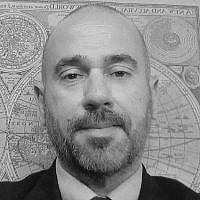
Founder of Anti-Ikhwan Front: My Testimony
On the 13th Anniversary of 30 June: My Testimony as the Founder of the Popular Front Against the Ikhwanization of Egypt
Today marks thirteen years since 30 June 2013 the day millions of Egyptians took to the streets in protest against the rule of the Muslim Brotherhood, in one of the defining moments of modern Egyptian history.
I was not merely an observer of those events; I was one of their participants.
On 21 February 2012, I coined the term “Ikhwanization” in a statement published by the Egyptian newspaper Al-Shorouk. Several months later, on 30 August 2012, together with a small group of colleagues no more than twenty people at the time I founded The Popular Front Against the Ikhwanization of Egypt.
Within only a few months, that small group had grown into a movement of thousands. This transformation was not solely the result of our efforts; it was equally driven by the Muslim Brotherhood’s own mistakes: its relentless pursuit of monopolizing power, its exclusionary approach, its obsession with Ikhwanization, and a political discourse consumed by fantasies of “mastership” over society and nostalgic dreams of a restored Caliphate rather than the practical responsibilities of governing a modern state.
Our work extended across Egypt’s cities, towns, and public squares. The Front played a significant role in mobilizing broad segments of Egyptian society, including many whom few believed would ever join the popular movement. I believed deeply in what we were doing. That conviction led me to travel, at my own expense, to the European Parliament to defend the popular uprising of 30 June. I spoke to European policymakers in the language they value most: facts, figures, documents, and evidence. Together, we prepared a multilingual report documenting the Brotherhood’s history and demonstrating how violence had consistently remained one of its preferred political instruments.
Upon my return, I was offered the opportunity to run in the 2015 parliamentary elections, with guarantees not only of victory but also of becoming either Chair or Deputy Chair of the Foreign Affairs Committee, while being presented as “the loudest opposition voice” in Egypt. I declined. By then, the picture had become unmistakably clear: I had come to realize that many political actors were being used to manufacture a new façade for the military republic that has governed Egypt since the 1952 coup.
I refused to become part of that project. Neither the rewards of power nor its threats could persuade me otherwise. In early January 2016, during a televised interview with Al Araby TV from inside Egypt, I publicly called for early presidential elections under full United Nations supervision and monitoring.
A campaign to silence me soon followed. I was banned from writing and from appearing in the media. Nevertheless, I continued to publish my views on the military establishment and Abdel Fattah el-Sisi. Their dilemma was obvious: I was internationally known as the founder of The Popular Front Against the Ikhwanization of Egypt, making my immediate imprisonment politically more complicated.
At the end of December 2017, after twenty-one years of service, I was dismissed from my position in Egypt’s petroleum sector. My final post had been in the Public Relations Department of SIDPEC. I lost both my position and my financial entitlements, marking the beginning of a new phase of intimidation.
I was repeatedly summoned to the National Security headquarters in Smouha, Alexandria.
During my second visit, I was instructed to climb a narrow side staircase leading to the office of the officer responsible for my summons. To this day, I still remember the cries and moans of people being tortured somewhere inside the building. As soon as I entered his office, I surprised him by asking for a cup of coffee a deliberate attempt to break the atmosphere of intimidation and deny them the psychological impact they sought to create.
We spoke at length. At one point he told me, in words very close to these: “What is happening to you is not our decision. We know who you are, and we know what you have done. But other agencies are handling your case. What is happening is beyond our authority.”
Shortly afterward, I met my mentor and dear friend, Amin Al-Huda. His advice has never left me:”Leave… you must leave. They are distancing themselves now. If you remain in Egypt, you will be killed.”
A few months later, I left Egypt, leaving behind what mattered most: my wife and my children. We would not live together again until two years, three months, and eleven days had passed a period that remains, without exaggeration, the most painful chapter of my life.
I do not claim heroism, nor did I make these choices in pursuit of personal glory. I acted only to remain true to myself, faithful to my convictions and my principles. If history were to begin again, I would make the very same choices and take the very same path, whatever the cost.