
France recognized Palestine — and lost me
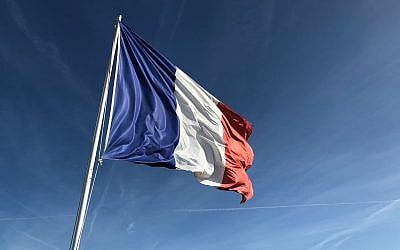 A former Francophile reflects on language, identity, and the betrayal of liberal ideals
‘Écoutez et répétez…’ These were the first words I learned in French. Translated as “Listen and repeat,” they were part of a recorded lesson I heard through my oversized headset in the spanking-new language lab back in junior high. I was enrolled in the European School for three years — a well-meaning but ultimately failed experiment by my parents in “Europeanizing” their daughter. They still rue those years when I schlepped two hours each way just to get there.
I was learning French the audio-visual way, which was certainly more engaging than copying sentences mindlessly from the board. The guttural rs and flattened word endings enchanted me. I was determined to master my first foreign language.
By the time I was 15, I was nearly fluent. A student exchange to Nantes gave me full immersion in French life—supercharged by tarte aux pommes (paper-thin apple slices baked on melt-in-the-mouth pastry), brière, and pain au chocolat.
The French were the neighbors we Brits tried to ignore or avoid. Although French was a compulsory subject in schools, few Brits felt any urge to master it. Being able to count to sixty-nine—seventy, inconveniently, being soixante-dix (“sixty-ten”)—and say merci and au revoir sufficed for most of my classmates. But I wasn’t going to be like them. I was a budding polyglot, embracing French culture and whiling away many happy school holidays exploring Paris, skiing in the Alps, or vacationing with friends in a gîte in the south of France.
I viewed the French language, cuisine, history, and culture as worthy of respect—especially the cuisine- to die for.
I insisted on reading Madame Bovary and The Stranger in the original French, even when perfectly good translations were available. I wouldn’t let my love affair with France be tainted by the inconvenient truths of the Dreyfus Affair or Vichy France.
I knew, of course, that France was more than the Louvre and the Tuileries. I had been warned not to travel alone to Marseille as a young woman and had already learned the rules of the Paris metro: eyes down, keep your bag in sight.
What disturbed me more at the time was the noisy emergence of the French far right—particularly Jean-Marie Le Pen. For me, “far right” conjured ghoulish images of goosestepping and swastikas. I was young and naïve, with no real grasp of the complex social dynamics in France. The EU was on the horizon, the Chunnel was under construction, and there was something about the effortless elegance of the French that convinced me they were on to something. And yes, I probably felt a little inadequate in my Britishness.
As I entered my twenties, I became preoccupied with other languages—German and Czech among them—and my French began to rust.
My passion was rekindled when I became friends with a young French Jewish woman working as an au pair in London. She was marrying her childhood sweetheart and invited me to the wedding in Lyon. A weekend of French culture and celebration—too tempting to miss.
The young woman, whose name I’ve conveniently forgotten (though I still think of her from time to time), was of Moroccan Jewish descent. I, of Polish descent, was unprepared for three overwhelming days of Moroccan-Jewish hospitality. Her extended family had traveled from far and wide for the occasion, squeezing into every spare corner of her family’s modest 14th-floor apartment in a shabby part of Lyon. I recall copious amounts of couscous being served at all hours, and her mother conducting constant sorties from the kitchen, always smiling.
At a certain point, desperate to escape the packed apartment, I walked down all fourteen flights of stairs (I was then Shabbat observant and wouldn’t operate the elevator) and went exploring. I passed rows of high-rise buildings and soon found myself in what I assumed was a market—but it wasn’t. It was a souk. I could have been in Ramallah or Hebron: headscarves, baklava, hookah pipes, and vendors yelling in Arabic. No pain au chocolat in sight.
It was then I realized that France had more than one face. Different populations were living radically different experiences in the same country. The trip didn’t sour my relationship with France, but it did provide a necessary and sobering dose of realism.
Since that epic wedding weekend, I haven’t been back to France. Not intentionally, exactly—but it’s no longer a figurative hop, skip, and jump from where I live. The last time I passed through Paris was in the late ’90s, on a connection flight from New York. I had two hours at Charles de Gaulle airport. I stepped into a thick cloud of cigarette smoke (smoking was still permitted indoors back then) and returned to Israel smelling like a pack of Gauloises.
I hadn’t given up on France altogether. My husband and I once planned a biking holiday along the French coast. I was excited about the cheese and wine I would richly deserve after hilly 45k rides, and happy to be traveling somewhere I actually spoke the language. But somehow, those plans were shelved.
And then, October 7th happened.
Israel has been my home for the past 31 years. I now teach Diplomacy Studies to high school students, and one of the highlights of our curriculum is a deep dive into “The Veil Affair” in France. In a nutshell, it’s a case study in the clash between minority identity, cultural norms, politics, and history—centered on the 1989 controversy over the wearing of hijabs in public schools.
Teachers love to talk. I am no exception. This unit lets me weave in all sorts of stories: my souk experience in Lyon, the French Revolution, the separation of church and state, and even my own memories of the Salman Rushdie affair. What I want my students to grasp is that conflicts like these can be examined through multiple lenses—cultural, political, social, and economic—and that each lens holds validity. It’s a powerful way of thinking that can transform how they see the world. But it also transformed how I view France.

I can’t believe the Lyon souk was over thirty years ago. Another generation has been born—perhaps two.
France today isn’t just grappling with EU immigration policy. It’s grappling with a population that, even after 75 years, has never truly felt it belonged.
This isn’t a critique of Muslim identity or faith. It’s a reckoning with a country that welcomed mass immigration, failed to integrate its newcomers, and now attempts to paper over the consequences with hollow foreign policy gestures.
Somewhere between écoutez et répétez and teaching the veil debate, I found myself reassessing everything I thought I understood about France.
Now France is in the news again. Not because of the far right—but because Macron has recognized a Palestinian state.
The timing couldn’t be worse. And in this case, context is everything.
I’d love to believe Macron was duped into some French-style, Disnified version of Palestinian sovereignty and statehood—a simple narrative of an oppressed people seeking self-definition.
But France’s recognition of a Palestinian state, especially after October 7th, feels far less like a diplomatic gesture and far more like a concession to domestic pressures and a surge in anti-Israel sentiment. For many Israelis like me, this move risks legitimizing groups like Hamas—whose charter explicitly calls for Israel’s destruction—at a moment when the wounds of terror are still raw.
Moreover, there is no democratically elected Palestinian delegation shaking hands with leaders of the free world, proposing economic growth plans or actively condemning terror (unless I’ve missed something—and I really wish I had). The only representatives of the Palestinian people right now are those who want Israelis, Jews, Zionists—call us what you will—wiped off the face of the earth. If that sounds extreme, feel free to read the charters of both Hamas and the Palestinian Authority.
The French government can sugarcoat it all they want. My response? Let them eat cake.
Many of the victims of October 7th were not extremists. They weren’t settlers or soldiers. Some actively supported Palestinian independence and believed in a two-state solution. And yet, they were butchered all the same. That’s why I find it incomprehensible—offensive, even—that Palestinian sovereignty has become the international issue of the day. If anything, perhaps it’s time the world paused to reclaim its moral clarity—or at the very least, its sanity.
The shooting, raping, burning, and kidnapping of innocent civilians does not deserve a prize. Not even a consolation one.
There are many theories as to why Macron has turned his back on us. The EU is weakening. France may be trying to reposition itself as a global power. There’s plenty of money to be made trading with the right people, particularly in arms deals.
In truth, I don’t think Macron’s recognition of a Palestinian state has much to do with Israel, the Palestinians, or even Hamas. The French state has found itself cornered by its own increasingly resentful and radicalized minority. In this case, distraction has become a necessary political weapon. The Charlie Hebdo massacre, the Bataclan attacks, and even the 2005 riots exposed just how powerless the French security establishment is in the face of Islamic radicalism.
France now has a Muslim population of around 6.8 million. By 2050, even conservative estimates suggest that 10% of all French citizens will be Muslim. And resentment—on all sides—is brewing.
The French have a long tradition of revolution, often modeling how popular unrest can spark national change. But while the world waxed poetic about the 1968 student protests, embers of rage had already been smoldering in the margins. The Algerian population of the banlieues had not forgotten the bodies left at the bottom of the Seine—a chilling legacy of the brutal police suppression of a peaceful protest in 1961. That massacre revealed a deeper systemic rot, one that predated the student uprisings by nearly a decade.
France may pride itself on its intellectual and political elite, but many immigrants from former French colonies were relegated to a permanent underclass. Liberal migration policies, rather than healing these divisions, have often deepened them. Today, a large percentage of Muslims—citizens and non-citizens alike—live in impoverished neighborhoods where crime is rife and the police rarely enter. Discrimination is widespread across employment, housing, and education. The statistics are stark: the Muslim minority suffers from high unemployment and limited access to higher education.
And for those who do attend school—what future awaits them? What is the French blueprint for multicultural integration in a republic that claims to value liberté, égalité, fraternité? Will Muslim children study the Qur’an or Molière? Will Vogue France feature Chanel or a new burkini line?
In short, it’s no surprise that appeasement to the more radicalized edges of French society has taken the form of recognizing a non-existent Palestinian state. Because if France were to turn its gaze inward, it might have to reckon with a far more volatile domestic crisis.
The dwindling French Jewish population saw the writing on the wall long ago. A wave of Islamic terror attacks, coupled with a sharp increase in antisemitic incidents over the past two decades, prompted the largest French aliyah—immigration to Israel—since the aftermath of the Second World War. Some of these Jews were the children of Holocaust survivors; others, descendants of families who had fled North Africa in the wake of decolonization, only to find themselves once again unwelcome. Antisemitic assaults, vandalism of synagogues and Jewish schools, and open hostility on the streets became part of daily life. France, once viewed as a haven for Jews after the Shoah, began to feel increasingly hostile—and unsafe.
And so, I finally get to brush up on my French. French bakeries have mushroomed across Israel, competing to produce the best croissants and pain au chocolat.
It’s time to say farewell to the France of my teenage years. I’m sad, but not heartbroken. I wish them bonne chance with the bed they’ve made. As for me, I’ll take a plate of Gruyère and Brie—I can’t imagine they’ll stop exporting cheese to us anytime soon—and raise a quiet farewell toast with a glass of Israeli Merlot.
—
Notes
Affaire du foulard (The Veil Affair), began in 1989 when three Muslim girls were suspended for refusing to remove their headscarves in a public school in Creil, near Paris. The case ignited a national debate on secularism and the role of religion in French public life. See: Joan Wallach Scott, The Politics of the Veil (Princeton University Press, 2007).
Hamas Charter (1988) explicitly calls for the destruction of Israel and promotes jihad. See: “The Covenant of the Islamic Resistance Movement (Hamas),” Yale Avalon Project, https://avalon.law.yale.edu/20th_century/hamas.asp
Palestinian Authority Charter (1968, amended 1996/2009) still includes ambiguous clauses regarding recognition of Israel, though revisions have been proposed but not formally ratified by a national referendum. See: The Institute for Middle East Understanding (IMEU), and Jewish Virtual Library, https://www.jewishvirtuallibrary.org/the-palestinian-national-charter
France’s Muslim population is estimated at around 6.8 million in 2023, roughly 8–9% of the total population. Projections suggest it could reach 10% or higher by 2050. Pew Research Center, “Europe’s Growing Muslim Population,” November 2017. https://www.pewresearch.org/religion/2017/11/29/europes-growing-muslim-population/
The 1961 Paris Massacre occurred when French police attacked Algerian protesters during a peaceful demonstration. Official estimates suggest up to 200 people were killed, with many bodies dumped into the River Seine. See: Jean-Luc Einaudi, La Bataille de Paris: 17 octobre 1961 (Seuil, 1991); and BBC News, “Paris 1961: A massacre of Algerians in the heart of the city,” Oct. 17, 2021. https://en.wikipedia.org/wiki/1961_Paris_massacre
The 1968 French student and worker protests paralyzed France and became symbolic of cultural and political upheaval. See: Julian Jackson, May 1968: Rethinking France’s Last Revolution (Palgrave Macmillan, 2011).
A 2017 report from France’s National Institute of Statistics and Economic Studies (INSEE) found that unemployment among immigrants from North Africa was 18.5%, nearly double the national average. Discrimination and marginalization remain entrenched. https://www.insee.fr/en/statistiques
The 2005 French riots were sparked by the deaths of two teenagers in a suburb of Paris and quickly spread to over 300 towns. The violence highlighted tensions between police and second-generation immigrants in the banlieues. See: The Guardian, “Timeline: French riots,” Nov. 8, 2005. https://www.theguardian.com/world/2005/nov/08/france.jonhenley
The Charlie Hebdo shooting (2015) and the Bataclan theatre attacks (2015) were among the deadliest Islamist terrorist incidents in French history. The former was a targeted attack on freedom of speech; the latter was a mass killing at a concert venue in Paris. See: The New York Times, “Paris Attacks,” 2015 coverage; and Charlie Hebdo Attack Fast Facts, CNN. https://www.cnn.com/2015/01/14/europe/charlie-hebdo-attack-fast-facts/index.html
Between 2012 and 2020, over 50,000 French Jews made aliyah (immigration to Israel), many citing rising antisemitism as a key factor. The Jewish Agency reported that 2014 marked the largest single-year wave of French Jewish immigration in Israeli history. See: Haaretz, “Record Number of French Jews Immigrate to Israel,” Dec. 31, 2014. https://www.haaretz.com/jewish/2015-01-01/ty-article/.premium/record-number-of-french-jews-immigrate-to-israel/0000017f-ea83-da9b-a1ff-feef89e10000