Tell the Truth
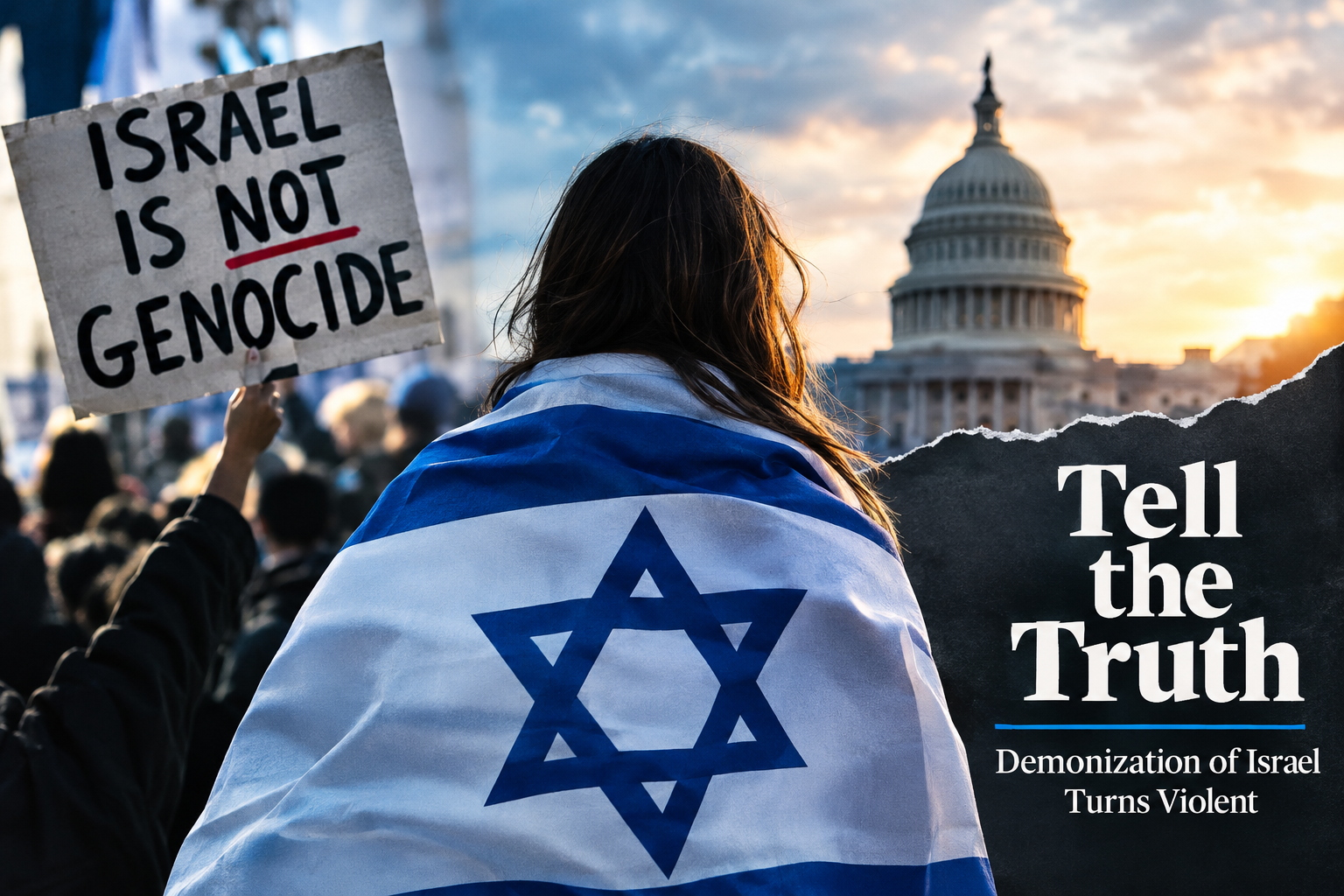
Over the past several weeks, I have been meeting with Democratic politicians—some currently holding public office, others running for office. From conversations with the governor to discussions with local political leaders, I have repeatedly expressed my concern that the increasingly widespread accusation that Israel is committing genocide in Gaza is fueling a dangerous wave of antisemitism.
And what I have heard in response has been deeply disturbing. I have explained to these elected officials and candidates that while I appreciate their efforts to combat antisemitism, including legislation aimed at protecting synagogues and Jewish institutions in New York City, such measures can accomplish only so much when the rhetoric helping to fuel the hatred goes unchallenged.
Consider what happens when a young, idealistic person is repeatedly told that Israel is deliberately targeting Palestinian children and carrying out genocide against an entire population. What would you expect that young person to do?
If you genuinely believed that a country was systematically exterminating innocent people, wouldn’t you feel a moral obligation to oppose it? Wouldn’t you protest, boycott, confront its supporters, and do everything in your power to stop what you believed was a monstrous evil?
And if you were also told that Zionists support this supposed genocide, wouldn’t you begin to see Zionists themselves as morally complicit?
The distance between demonizing Israel as a genocidal state and directing hostility toward Jews and Zionists is frighteningly short. Not everyone who believes these accusations will engage in antisemitism, of course. But when Israel is portrayed as an evil state engaged in the deliberate extermination of a people, it should surprise no one when some begin treating its supporters as legitimate targets of intimidation and hatred.
I see the consequences of this rhetoric among young people. For nearly three decades, I have worked with Jews in their 20s and 30s through Manhattan Jewish Experience (MJE), the organization I founded to help young Jews connect more deeply with their heritage. I know how seriously this generation takes questions of justice and human rights. Their idealism is something to admire.
But idealism without accurate information can be dangerously misdirected. That is why I have been asking Democratic politicians to make one simple public statement:
Whatever your views on Prime Minister Benjamin Netanyahu, the Israeli government, or the conduct of the war, we do not believe that Israel is committing genocide in Gaza.
You can criticize Israel’s government. You can disagree with its military strategy. You can express profound anguish over the suffering of Palestinian civilians, as we all should. But you must distinguish between the tragic consequences of a war and the deliberate intention to destroy a people.
That distinction is not a minor semantic point. It is at the very heart of what genocide means.
Israel did not choose the events of October 7. Hamas terrorists invaded Israeli communities, massacred civilians, and took hostages into Gaza. Israel was confronted with the obligation to protect its citizens and dismantle the terrorist organization responsible.
The resulting war has brought terrible suffering and Palestinian civilian casualties. Those losses must never be minimized. But civilian casualties do not by themselves establish genocidal intent.
Israel’s military has undertaken operations against an enemy that embeds itself within densely populated civilian areas. Israeli forces have conducted dangerous ground operations, where soldiers have fought and died, rather than relying exclusively on aerial bombardment. Israel has also employed evacuation warnings and other measures intended to reduce civilian casualties.
These realities deserve to be part of the public conversation. Yet when I ask Democratic politicians to say publicly that they reject the accusation of genocide, I keep encountering the same response: not disagreement, but fear.
One politician explained that taking such a public position would make it impossible to work effectively with colleagues in the Democratic Party. Another worried about the political consequences of such a statement. Others made clear that publicly challenging the genocide narrative could jeopardize their electoral prospects.
But one conversation stands out above all the others. A Democratic candidate for public office actually agreed with my characterization of the genocide accusation as a modern-day blood libel. “Rabbi, it’s a blood libel,” he told me. “Of course it’s not true.”
Then came the qualification. “But I can’t afford an incident between now and the election.”
An incident. That was the word he used to describe the potential political fallout from publicly stating what he had just told me he believed to be true.
I appreciated his candor. But I was stunned by the implications. I asked him a simple question: If you cannot afford to tell the truth before you are elected, why should I believe you will tell the truth once you are in office?
After all, once elected, won’t you want to remain in office? Won’t you face another election, another primary, another political calculation? When exactly does the moment arrive when telling the truth becomes politically convenient?
The answer is never. That’s why I’m writing this article. I want the public to understand what I have been hearing behind closed doors: politicians who privately reject the genocide accusation but believe they cannot afford to challenge it publicly.
Think about what that means. We have reached a point where some political leaders believe that publicly defending Israel against an accusation they themselves consider false could cost them their careers. What does that say about the direction of our political discourse? And what does it say about the moral courage we should expect from those seeking to lead us?
I raise these questions not as someone who has spent his life opposing the Democratic Party. Quite the opposite.
I grew up a proud Democrat.
In my college years, I worked for Congressman Gary Ackerman, a liberal Democrat who understood that support for Israel and commitment to progressive values were not mutually exclusive. Later, I had the privilege of working for the late Senator Daniel Patrick Moynihan, one of the great intellectual and moral voices of American political life.
Moynihan famously stood against the United Nations’ disgraceful 1975 resolution equating Zionism with racism. As America’s ambassador to the United Nations, he denounced that resolution with extraordinary moral clarity. He understood that there are moments when silence is not an option. There are moments when a public official must speak the truth, even when that truth is unpopular.
I cannot imagine Daniel Patrick Moynihan privately acknowledging that an accusation against Israel amounted to a blood libel and then refusing to challenge it publicly because he feared losing votes. Nor can I imagine Gary Ackerman doing so.
These were Democrats who understood that political leadership demands something more than calculating which positions will win the next election. It demands conviction.
And that is precisely what I am asking of today’s Democratic leaders.
I am focusing on Democrats because their voices are important in challenging this narrative among young progressives. When a Republican politician rejects the accusation of genocide, many on the progressive left simply dismiss the statement as partisan. But when a respected Democratic governor, congressman, mayor, or candidate challenges that accusation, it has the potential to reach an entirely different audience.
Young people need to hear from leaders they admire and trust that it is possible to care about Palestinian suffering without demonizing Israel. They need to hear that criticism of Netanyahu is not the same as accusing the Jewish state of attempting to exterminate an entire people.
There is a teaching in the Talmud: Shtika k’hoda’ah dami—silence is tantamount to acquiescence. When an accusation is repeated day after day, and those who privately reject it remain publicly silent, their silence allows the accusation to become accepted as fact.
And once that happens, antisemitism becomes easier to rationalize. After all, if Israel is truly a genocidal state, why shouldn’t its supporters be ostracized? Why shouldn’t Zionist students be excluded from campus organizations? Why shouldn’t Jewish institutions that support Israel become targets of hostility?
That is the poisonous logic we must confront.
I am grateful for every public official who supports increased security for synagogues, stronger hate-crime enforcement, and meaningful protections for Jewish students. But we cannot simply protect Jewish communities from the consequences of hateful rhetoric while refusing to challenge the rhetoric itself.
In Washington, two Israeli Embassy employees were murdered outside a Jewish museum by a gunman who declared, “I did it for Palestine, I did it for Gaza.” In Boulder, Colorado, an attacker shouting “Free Palestine” hurled incendiary devices at people gathering to support Israeli hostages. Unfortunately, these are not isolated incidents.
Security guards can protect the doors of our synagogues. They cannot correct the lies being absorbed by the next generation. Legislation can punish acts of antisemitic violence, but it cannot undo the moral demonization that helps make such violence conceivable.
For that, we need leaders willing to speak clearly, publicly, and courageously.
I am not asking Democratic politicians to abandon their principles. I am asking them to live up to them. I am not asking them to defend every Israeli policy. I am asking them to distinguish legitimate criticism from an accusation they themselves believe to be profoundly false.
To those officials who have privately told me they do not believe Israel is committing genocide, I have one request:
Tell the truth.
Tell it before the election, not only afterward. Tell it when your colleagues disagree. Tell it when activists threaten to protest. Tell it even when it may cost you votes.
Because if the people entrusted with political leadership cannot speak what they believe to be true when the stakes are this high, then what exactly are they leading?
The next generation is listening.