Working to protect people and our shared planet.
From Auschwitz to Annapolis: Ruth Berlin’s Battle for Health & Climate
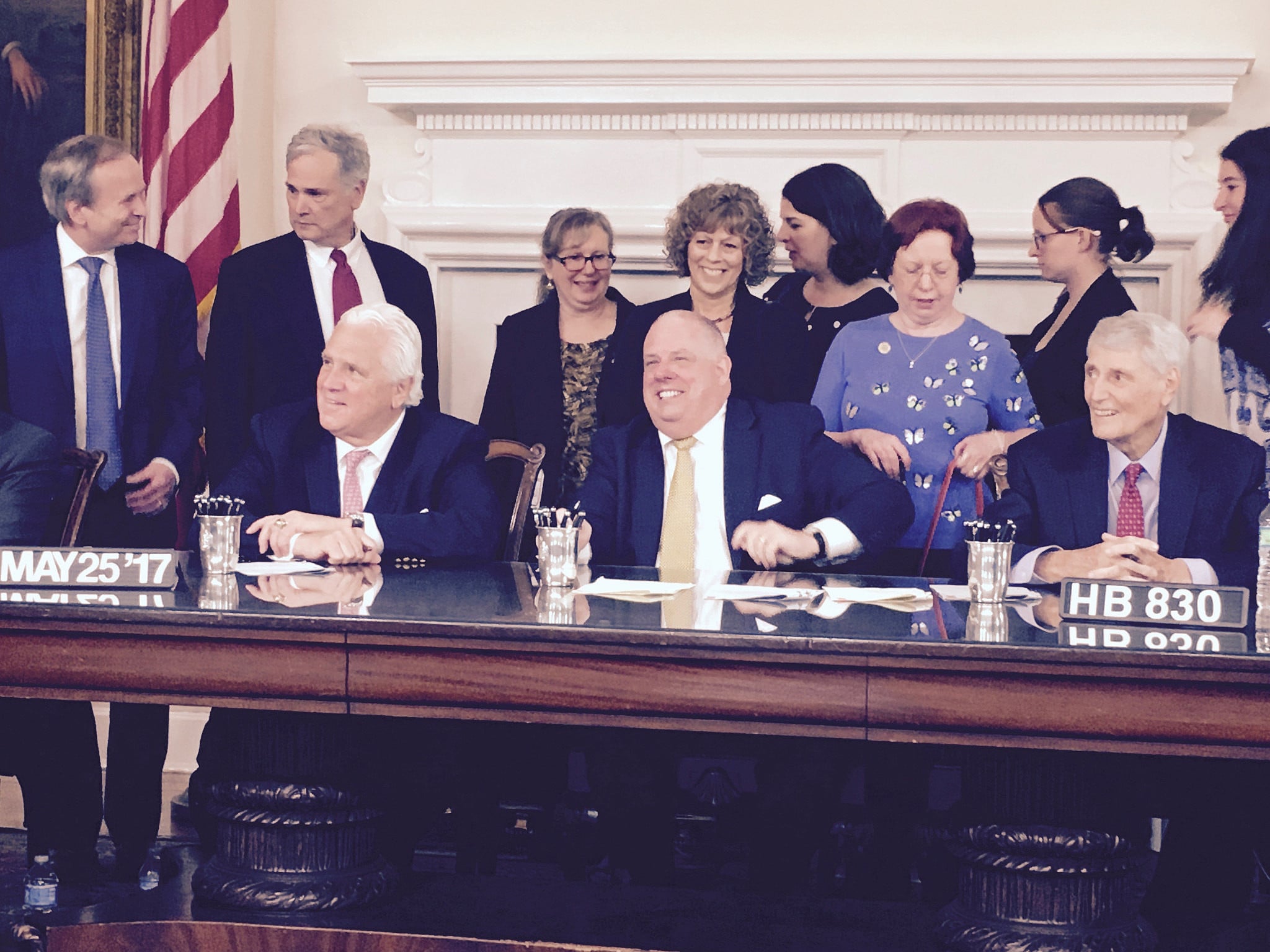
Ruth Berlin, founder of the Maryland Pesticide Education Network (MPEN), stands behind then Maryland Governor Larry Hogan as he signed the pollinator bill. Later Berlin helped pass the first US state ban on bee-killing neonicotinoids in consumer lawn and garden products and a statewide ban on chlorpyrifos, a pesticide known to cause brain damage in children. Photo courtesy of MPEN.
When we think of the Holocaust, we often think of bullets, gas chambers, and starvation. But for Ruth Berlin, an Israeli-born psychotherapist now leading a tiny but mighty environmental health organization, pesticides are also a chilling part of her family’s story.
Ruth’s grandparents, uncles, aunt, and cousins were murdered in Nazi concentration camps. They were gassed to death with Zyklon B, a neurotoxic pesticide produced by Bayer—a subsidiary of the notorious IG Farben conglomerate that profited from the Holocaust. That a company known for aspirin also became a supplier of poison to kill Jews is a reminder of how “ordinary” industries can be complicit in extraordinary evil.
Decades later, Ruth herself became pesticide-poisoned in California. In 1990, aerial spraying of malathion, a Bayer neurotoxic pesticide, left her ill and sent her 4-year-old son into anaphylactic shock. When the family moved to Annapolis, Maryland, Ruth’s health worsened—until she discovered that the same pesticide was being sprayed for mosquito control. Instead of being defeated by this cruel irony, Ruth launched a second career as an environmental activist. Her first victory: banning malathion for mosquito control in Maryland.
Turning Tragedy Into Action
In 1994, Ruth founded the Maryland Pesticide Network, which later became the Maryland Pesticide Education Network (MPEN). For the past three decades, Ruth has channeled her training as a psychotherapist and the trauma of her family’s Holocaust story into protecting children, families, workers, and ecosystems from the dangers of toxic pesticides.
One of her most groundbreaking wins came after her son was poisoned a second time—this time at school, when exterminators sprayed pesticides during class hours. Ruth discovered this was common practice. It took five years of relentless work, but she and her coalition succeeded in passing the first-in-the-nation Integrated Pest Management in Schools Law in 1997–1998. The law banned routine pesticide spraying inside and outside Maryland public schools, protecting children and teachers. It later became a model for 36 other US states.
Since then, MPEN has helped pass ten major pesticide protection laws, including the first US state ban on bee-killing neonicotinoids in consumer lawn and garden products and a statewide ban on chlorpyrifos, a pesticide known to cause brain damage in children. Bayer and other chemical giants fought hard against these efforts—but Ruth and her coalition, armed with science and moral clarity, prevailed.
The Jewish Value of Protecting Life
For Jews in America, Israel, and worldwide, Ruth’s story resonates on multiple levels. Her life embodies l’dor v’dor—transforming the suffering of one generation into protection for the next. It also echoes the Jewish principle of pikuach nefesh (saving lives). Ruth’s work is not abstract policy. It is about safeguarding children from cancer, protecting farmworkers from toxic exposure, and ensuring clean air, soil, and water for all.
Her leadership also highlights something less known: the connection between pesticides and climate change.
Pesticides and the Climate Crisis
Few people realize that pesticides are not only poisons in our food and water—they are also climate accelerators.
• Pesticides are made from fossil fuels, releasing greenhouse gases during production and transport.
• Fumigants increase soil emissions of nitrous oxide, a greenhouse gas up to 300 times more powerful than CO₂.
• Some pesticides, like sulfuryl fluoride, are greenhouse gases themselves—one ton equals nearly 5,000 tons of CO₂.
• Pesticides degrade soil’s ability to store carbon, undermining one of nature’s best defenses against global warming.
As the climate warms, pests thrive, forcing farmers to use even more pesticides. This vicious cycle—pesticides fueling climate change, climate change fueling pesticide use—is one of the hidden engines of the global crisis.
A Message for Israel & the World
Ruth’s story is not just Maryland’s story. It is a warning and an opportunity for Israel and the world as well. Israeli agriculture, like many places, relies heavily on pesticides, and regulatory “guardrails” are weakening. Meanwhile, Jewish and other farmers, policymakers, and citizens face the same questions Ruth has wrestled with: How do we balance food production with health? How do we protect our children from toxic chemicals? How do we align economic practices with our Jewish obligation to safeguard life and creation?
The solutions exist: organic farming, integrated pest management, soil regeneration, and public policies that prioritize health over profits. But they require political will and grassroots mobilization. Ruth’s coalition in Maryland shows that even a small but determined group can take on global chemical giants—and win.
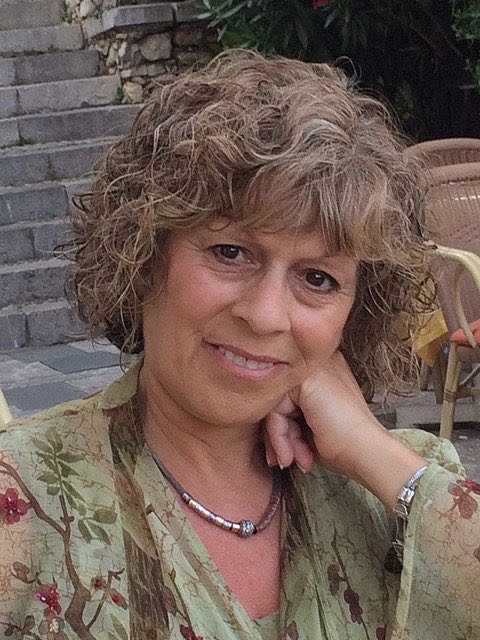
Why Ruth Berlin Matters
In 2024, the global pesticide industry placed MPEN on its “hit list” of 1,000 advocates and scientists it wants to undermine. For a small nonprofit from Maryland to be viewed as that much of a threat tells you something about its impact—and about Ruth’s courage.
For the Jewish people, Ruth Berlin’s story is also one of resilience and redemption. The same chemical industry that once profited from murdering her family tried to silence her again—this time with poisons in her own community. Instead of succumbing, she built an organization that protects millions of children, families, and ecosystems.
Her journey from Auschwitz’s shadow to Annapolis’s statehouse is a living testament to the Jewish call of “Choose life, so that you and your children may live.” (Deuteronomy 30:19).
A Call to Action
For Jews in Israel and around the world, Ruth’s story challenges us to ask:
• What poisons are we tolerating in our air, water, and food?
• How can we align our practices with the Jewish mandate to protect life and creation?
• What coalitions can we build—like Ruth did—to stand up to powerful industries?
The climate crisis and the pesticide crisis are deeply intertwined. The fight is urgent. And if Ruth’s story teaches us anything, it’s that even in the face of devastating history, one person—rooted in Jewish values and driven by courage—can change the future.
Related Topics
Related Posts