
Educator, Mother, Learner, Wife — Guided by Torah
From Boyhood to Bais Yaakov: An Intersex Ascent
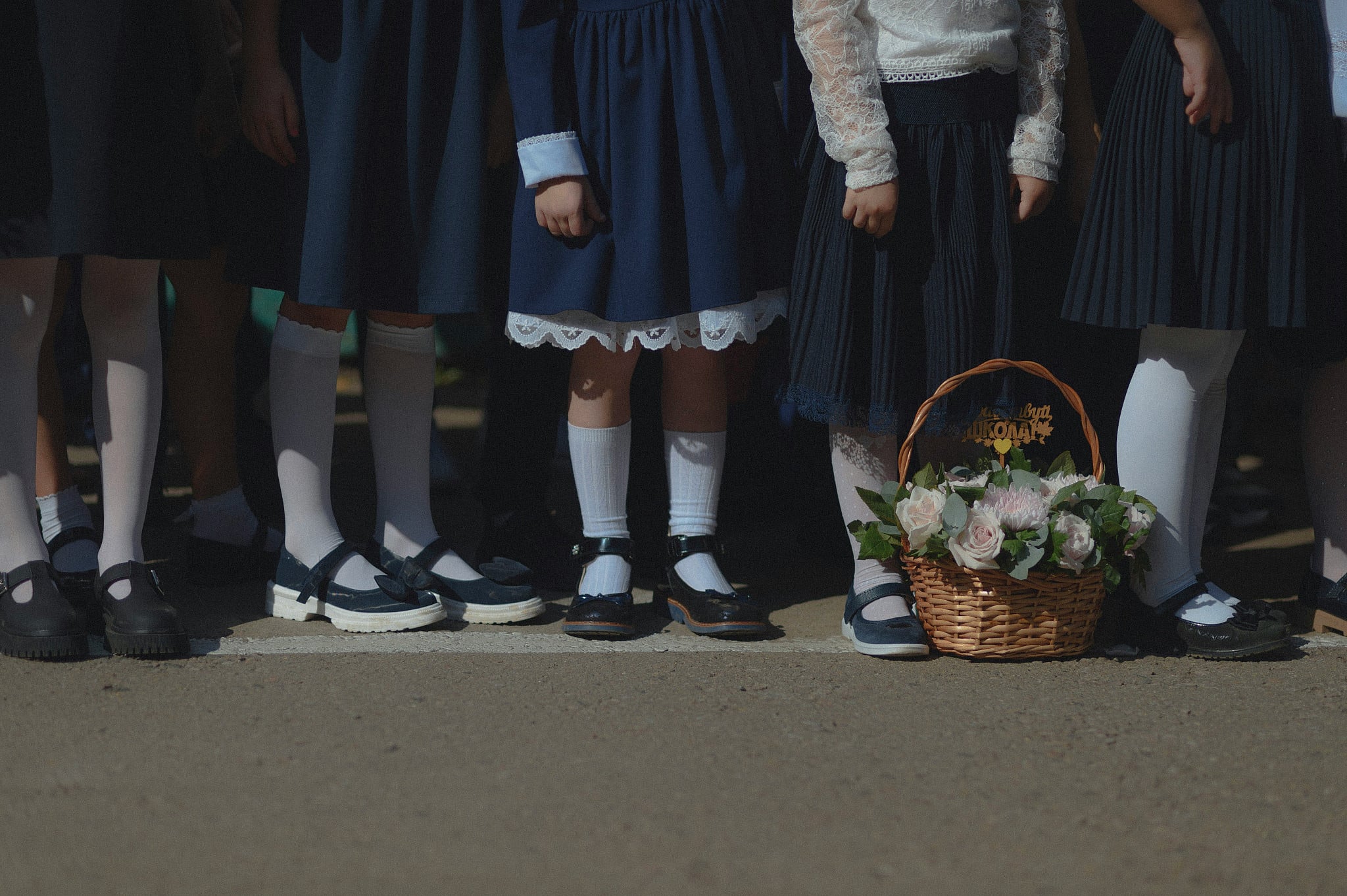
Girls do not simply become women overnight — we slowly learn the ways of femininity (Egor Myznik of Unsplash).
Beaten down as a child for showing softness, but affirmed today as a halakhic woman — I am learning decades of frum femininity, all at once.
My name is Talia. I was born intersex, was raised as a boy, and was punished by adults and psychologists whenever I reached for anything feminine. Now, as a married Orthodox Jewish woman and mother with a rabbinic ruling affirming me as female — a psak nekeivah from our generation’s leading yeshivish and charedi gedolim (senior Torah authorities) — I am suddenly being held to the full expectations of frum womanhood: sheitels, stockings, skirts, and aidel speech — like a beautifully basic, soft-spoken, refined Bais Yaakov girl. It is validating, even healing — but also dizzying to learn in moments what others absorbed over years.
The first time I stood in the women’s section with my sheitel set, my stockings smooth, and my blouse neat, no one looked twice. That was the miracle. It was not performance, nor was it was disguise. It was the mercy of being ordinary, dressed like every other woman around me.
For most frum girls, the “how-to” of frum femininity arrives in gentle layers: a longer skirt in fifth grade, tights in middle school, and sheitel lessons when the time arrives. It is basically a thousand small corrections delivered over two decades by mothers, teachers, friends, and others. My story did not have that pace. I grew up forced into a boy’s lane (against my will and against my biology) — dressed, addressed, and disciplined as such — while quietly longing for girlhood. Then, as an adult, my intersex diagnosis met the clarity of halakha, and I received a psak of nekeivah from all of our generation’s leading yeshivish and charedi gedolim (recognition that was not only medical or halakhic but also a spiritual affirmation of who I always was). In an instant, what had been “off limits” became obligatory. Skirts changed category. So did stockings, sheitels, curls, and the delicate choreography of an aidel maidel.
This leads to another part of my story. For me, the early lessons about gender did not come in the form of tights and hair ribbons. They came in the form of punishments. Adults and psychologists believed that intersex children could be conditioned into one simple sex through sheer force of will — regardless of the child’s genetic or biological composition. If I showed a hint of softness — a gesture, a preference, a wish — it was attacked, often physically. I learnt quickly that a crooked wrist, a higher tone of voice, or a glance at the wrong toy could trigger rage. The message was brutal, but consistent: don’t be who you are. Being a girl is weak, humiliating, and bad. Be a boy. Learn to be a man. Women are inferior anyway.
Here is the part people sometimes misunderstand: I do not find frum femininity limiting. I love the power of a soft and knee-covering skirt, the tidy dignity of stockings in the summer, the sparkle of bouncy sheitel curls, the way a modest neckline can feel like armour and grace at once. I love being allowed, encouraged, and even required to embrace speaking more gently, being more careful with words — carrying myself with quietness and kindness. I now love to listen before speaking. Tznius is not a cage for me; it is a key. It locks the wrong doors and opens the right ones.
What is hard is not the what. It is the speed.
Imagine being dropped into eleventh grade on the first day you ever set foot in school. There are rules that everyone “just knows” — how to sit, how to cross your legs, how to pass a tray, when to speak and when to smile, which hair textures work with which caps, how a sheitel should read at a simcha versus a weekday errand, what counts as “aidel” and what reads as loud. There is no malice in the reminders when they come; but each one stings a little anyway, not because I dislike the expectation, but because I am learning 40 unwritten rules at once.
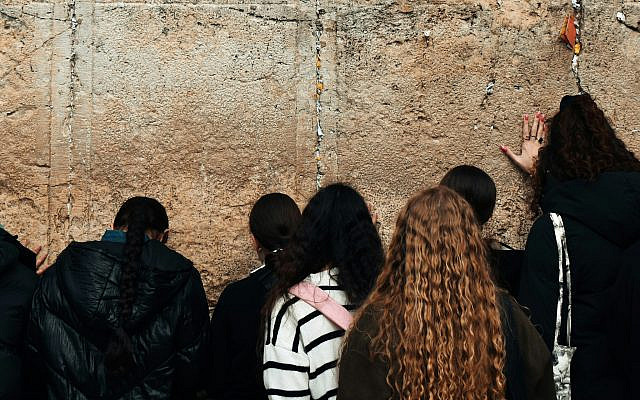
Suddenly, others also notice my learning curve in public. A woman who grew up frum and reaches for a brighter lipstick gets “fun, bold.” I reach for the same shade and risk, “is she trying too hard?” A born-and-raised girl sits comfortably with her legs parallel and no one blinks; I am told — kindly, even lovingly — “cross them, good girl.” The same correction that would have been whispered to me at twelve now arrives at thirty, in a crowded hallway, amidst an audience that reads it as a test of legitimacy. Hyper-visibility is exhausting.
Yet, the affirmation is deeper than the exhaustion. Every time I pin my sheitel, it says: you are a married Orthodox Jewish woman in the eyes of halakha and community, not ambiguously tolerated but fully recognised. Every time I buy stockings, it says: you belong in the women’s section of the shul without apology. Every time I temper my voice, it says: your femininity is not a performance but an avodas Hashem — a way of serving G-d with the instruments that were always yours.
That is why these outward signs of frum femininity feel so different for me. What was once policed with violence by adults and psychologists is now sanctified with halakha. The curls and stockings are not punishments, rather they are permissions. Every sheitel pin is a reminder that my womanhood is affirmed, not denied. The very behaviours that once triggered anger now earn nods of recognition and belonging. That reversal is more than validating — it is healing.
So, I have begun to think about what “spiritual girlhood in fast-forward” really needs. More than anything, it needs patience. Please be patient with me as I learn in adulthood what most girls slowly absorb in childhood.
The layers of being intersex after all this time carry the weight of trauma — what any therapist would call post-traumatic stress disorder (PTSD). Add to that the reality of being autistic, and it means I sometimes come across more direct or even harsh than I intend. That is not because I want to be sharp; it is because I was taught, in boyhood, that bluntness was the only acceptable way to speak. Unlearning that and finding a gentler, more aidel voice is part of my avodah now.
Thus, going from boy to man would have been one kind of journey. Going from girl to woman is another. But going from boy to woman — after years of being forced into the wrong role — is something altogether harder. It takes time, grace, and patience to catch up on decades of lost lessons, to build muscle memory for gestures and habits that should have come naturally.
So, when you see me adjusting a skirt hem awkwardly, or fumbling with a sheitel hairband, or overexplaining when a softer word would do, know that it is not resistance. It is growth. It is healing. What was once scolded and mocked is now sanctified with halakha. And even if my steps are uneven, every one of them is a step home.
In the end, the jarring part fades. What remains is a daily practice of becoming — sheitels and stockings with softer words and steadier posture are not theatre, but truth. I did not change to fit a costume. I stopped performing what I never was, and started inhabiting what I always knew. The rest is repetition and joy — halakha and habit. It is the ordinary holiness of a frum woman’s life — learnt, at last, at a slow pace, and with a full heart, amongst my people. What was once a source of punishment has become a source of blessing, and in that transformation I have, at last, come home.
Related Topics
Related Posts