Thinking about 'Resilient Zionism'
From Exodus to Leviticus: Community Building in the Negev
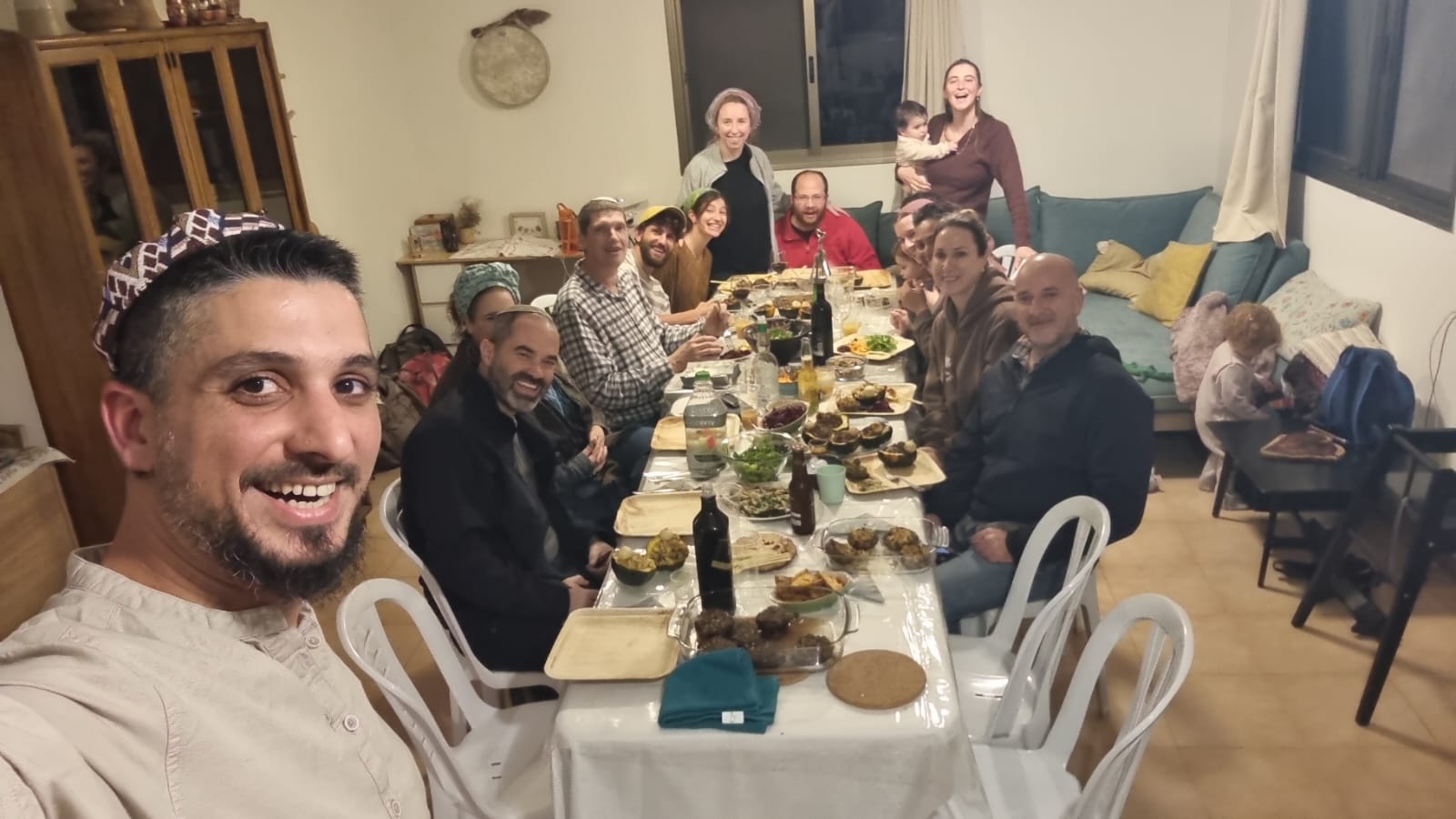
Recent working meeting at Garin Yachad
This week, we enter the Sefer Yayikra (Book of Leviticus) — and with it, one of the Torah’s most striking transitions.
The dramatic narrative energy of Sefer Shemot (Book of Exodus) gives way to something quieter and more demanding. The drama of liberation, revelation and the building of the Tabernacle recedes and, in its place, comes detail: laws, rituals, daily practices. The Torah moves from vision to reality, from inspiration to discipline.
The Mishkan (Tabernacle) has been built. Now comes the harder question: how do you live with it?
This shift—from creating sacred space to sustaining sacred life—feels deeply familiar to those of us in the Yachad community preparing to move together to create a new kibbutz in the Negev.
Over the last two years our community has lived in a kind of imagined space. A community of diversified Israelis formed through conversations, shared Zionist ideals and a collective vision of what could be. We spoke about purpose, about building something meaningful together and about the role we might play in shaping the future of the Negev.
But now, something is changing.
The move is no longer theoretical, it is becoming real. Plans are turning into timelines and conversations about “one day” are becoming decisions about homes, schools, livelihoods and daily routines. And with this shift, the nature of community itself is transforming.
There is a profound difference between a community that exists in vision and one that exists in physical life. A conceptual community can hold broad agreement; it can smooth over differences in the name of shared purpose and common ground. But a dynamic lived community — one where people share space, raise families side by side and encounter one another daily demands something deeper – It demands depth and practice. This need is further exacerbated in a mixed community of religious and secular families and individuals of diversified backgrounds.
As we move from vision to reality, deeper—and often more difficult—questions become much more poignant.
One of the most charged among them is the question of Judaism itself. Is Jewish identity a stand-alone value at the center of the spirit of the community we are building? Or is it one value among many, woven together with democratic and Zionist ideals, social responsibility, and personal freedom? These are not abstract conversations. They are deeply personal and emotionally charged. They touch identity, memory and belonging. They shape how people imagine their children’s upbringing, their shared public spaces and their rhythms of life.
At times, these conversations are difficult. At times, they lead to moments of rupture—when differences feel sharp, when language fails, when people feel unseen or misunderstood. In a small and committed community, these moments are magnified. And yet, this too is part of what it means to move from Exodus to Leviticus.
The challenge is not to eliminate disagreement, it is to learn how to live within it and grow from it. Not to find common ground of the lowest common denominator but rather to create space and boundaries that hold multi-faceted diversity. These strong emotions are not incidental—they are evidence of care. They reflect how much is at stake, how deeply people are invested in the kind of society we are trying to build. In this sense, our community is not just a group of individuals moving south, it is a microcosm of Israeli society itself. Across the country, questions about Judaism, unity, democracy, identity and shared future are unfolding with similar intensity. The tensions we experience in our small circle echo those of the nation as a whole. But in a smaller setting, they become more immediate, more personal—and potentially, more transformative. If we succeed, it will not be because we avoided these tensions, it will be because we learned how to hold them.
The Negev has always been a place of vision — a landscape that calls for imagination and courage. But as the Torah reminds us, vision alone is not enough. The real work begins when the structure is built and life must be lived within it.
Related Topics
Related Posts