From investment to action: Financial inclusion in Arab communities during crisis
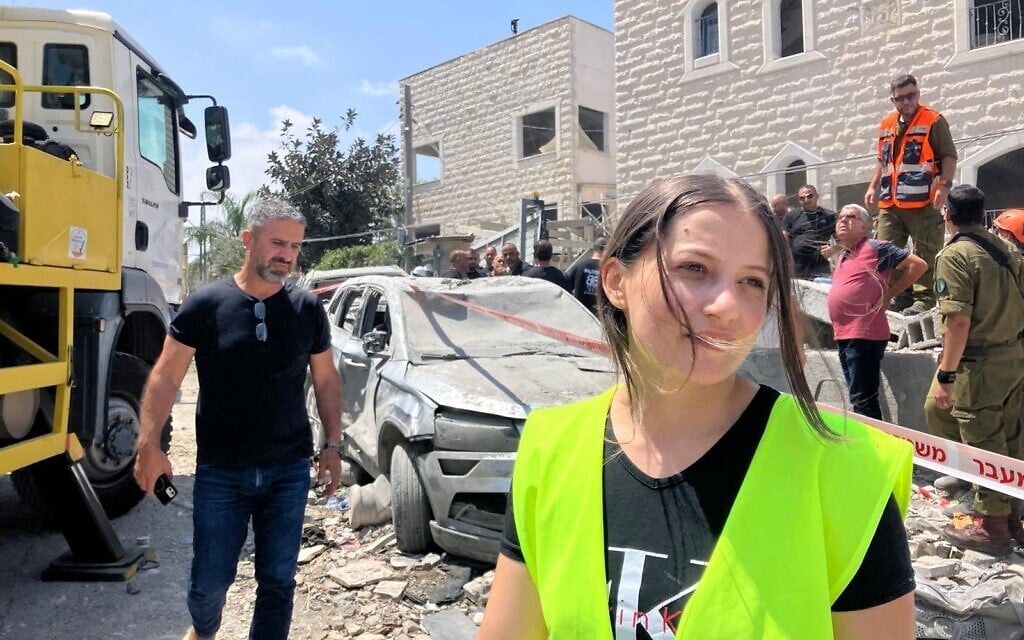
During the war with Iran in June 2025, a missile struck the city of Tamra, killing four women from the same family – a mother, her two daughters, and their sister-in-law. The protected room of their home collapsed under direct impact. Like many Arab towns across northern Israel, Tamra was left with deep physical damage and minimal emergency infrastructure. Families slept in public shelters. Small businesses closed overnight. And municipal officials were left to manage the fallout with limited resources and no time to prepare.
I was there the next day. Not in an official capacity, but as someone from the region who works closely with the municipality. I helped form a volunteer support team to assist the mayor and senior staff. We brought in professionals from across the country, each with different areas of expertise, to advise on response coordination, assess urgent needs, and offer support to affected families and business owners. At the same time, as part of Ogen, Israel’s leading social lender, I helped steer the organization’s immediate emergency financial response, rapidly deploying tools like emergency loans, mentoring, and business guidance to support local recovery.
The ability to act quickly came from a combination of deep relationships on the ground and the infrastructure Ogen had already begun building across Arab communities. The trust we had earned, the programs we had tailored, and the partnerships we had forged – these made it possible to respond with speed and efficiency.
When I joined Ogen in 2022 as its first Arab staff member, there were no Arabic-speaking teams, no tailored services for Arab society, and no physical presence beyond Jerusalem. We began by addressing urgent gaps, launching a joint fund with the El-Maali association to provide interest-free loans to Arab students, and establishing a pilot agreement with the municipality of Umm al-Fahm to support families preparing to purchase their first home.
Since then, we expanded that work. We recruited approximately 45 volunteer mentors from the Arab society, up from just one in 2022. We adapted our website and social media platforms to Arabic and began hiring additional staff members from Arab communities to support program delivery.
As of July 2025, there were 8 Arab professionals working at Ogen in a range of roles, including management. The organization expanded its services to Arab-led nonprofits and businesses. Roughly 14% of business loans and SparkIL allocations were directed to the Arab sector, and over NIS 4 million in loans were provided to Arab nonprofit organizations, alongside access to mentoring and support in 2024 alone. In total, more than NIS 9 million has been allocated to Arab nonprofit organizations over the past three years.
In early 2025, we opened a working space in Shefa-Amr, ahead of plans to launch a permanent office in the city. Shefa-Amr was chosen for its central location in the Galilee, its mixed population, and its proximity to many of the staff and communities we work with in the north.
When the war began, that decision played a critical role, giving us the ability to play a key role as financial first responders with the local municipalities and areas that were hit hard. I knew who to call. I understood what tools were available and how to get them to the people who needed them. Ogen’s broader infrastructure, its programs, partnerships, and people, allowed us to support recovery not just with words, but with steadfast action.
We are now applying that same approach in the south. Outreach has begun in Bedouin communities, and we are working with local leaders to understand needs on the ground. A new multi-year program, developed in partnership with the Authority for Economic Development of Minorities at the Ministry for Social Equality, will support 1,500 families with financial mentoring. Of those, 600 are expected to receive assistance securing their first mortgage. The initiative offers both long-term budget planning and guidance on obtaining favorable mortgage terms from banks, tailored to each family’s needs.
This work isn’t a campaign or a response to headlines. It’s a long-term effort to make financial support accessible to the people and places that need it most, through trust, consistency, and presence. That’s what inclusion looks like in practice. And in moments of crisis, it’s what allows help to come not eventually, but immediately.