The views expressed herein are solely mine.
From JD Vance to Rubio: ‘Trumproe’ Changed Power
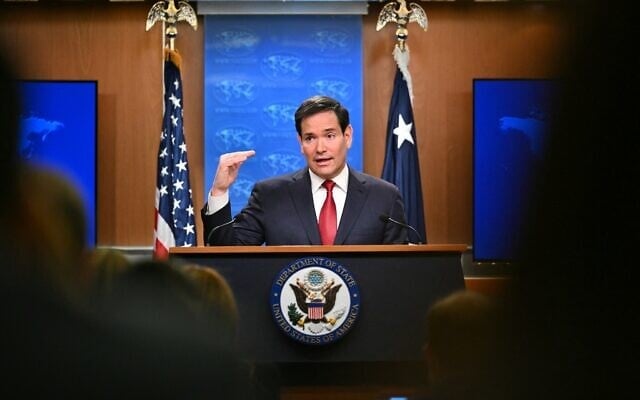
US Secretary of State Marco Rubio gestures as he speaks during an end-of-year press conference in the State Department Press Briefing Room in Washington, DC on December 19, 2025. (Photo by Mandel NGAN / AFP)
JD Vance was the GOP’s signal flare — the up-from-nowhere firebrand poised to be the next president, the man who channeled MAGA’s angry base and packaged anti-interventionism like the GOP’s freshest creed. He screamed culture war, decried foreign entanglements, and surfed the hard-right wave better than anyone. For a moment, it looked like “Vance-ism” would be the Republican future, the ideological “North Star” of the party that once worshipped Donald Trump.
Then came Trumproe — not a policy paper, not a think-tank manifesto, but a live war game in real time where power is not talked about — it moves. And while Vance slunk to the corners of social feeds, adjusting his image and echoing “non-intervention” like a TikTok slogan, someone else stepped into the void and grabbed what leadership actually looks like in 2026.
Enter Marco Rubio: the once-mocked “Little Marco,” now Secretary of State, acting national security adviser, head archivist, and chair of what feels like every major foreign-policy desk Washington still respects. He is the man wearing all the hats — not just one loud megaphone. Rubio is running America’s diplomacy, steering its strategic priorities, and shaping global power plays while Vance hides behind edgy tweets about dogma and identity.
Yes, Rubio may not literally have five jobs at once — but he is simultaneously Secretary of State, acting National Security Adviser, top USAID overseer, and the go-to diplomat on theaters from the Caribbean to the Pacific. That level of influence? That is leadership.
And here is where the script gets downright cinematic: Donald Trump — the same man who once taunted Rubio as “Little Marco” during the 2016 GOP Presidential primary — recently reposted an internet meme that Rubio should become the next leader of Cuba, complete with a laughing emoji and the caption “Sounds good to me!” Should Castro’s regime ever fall, Trump joked, Rubio might earn his new job as President of Cuba — a line so absurd it almost underlines the real dynamic at play.
Secretary Rubio is not just holding titles; he is exercising real power — shaping geopolitical leverage, commanding strategic theaters, and turning U.S. foreign policy away from isolationism toward influence. In a world where America must assert strength to shape outcomes, not just lament decline, Rubio has become the serious statesman the moment demands.
Meanwhile, Vance’s anti-war shtick — popular with extreme right fringes — looks less like ideology and more like retreat. The MAGA base loves its hard edges, but when the rubber meets the road and global stability hangs in the balance, hollow slogans won’t fill power vacuums or win friends.
In contrast, Rubio’s brand of pressure, pivot, and presence makes deals, confronts adversaries, and ensures America’s interests are defended — not just declaimed from the cheap seats.
Call it geopolitics, call it power projection, call it what you will — but leadership in 2026 is not about who yells the loudest or denies global threats; it is about who leads on the global chessboard, moves pieces, and forces outcomes.
And right now, that is Marco Rubio — the accidental heir to Trump’s foreign policy revolution and the serious statesman the GOP actually needs for the future.
Related Topics
Related Posts