
Published author, Jewish educator and scholar
From Laban’s Deception to Israel’s Elections: Can We Ever Trust Again?
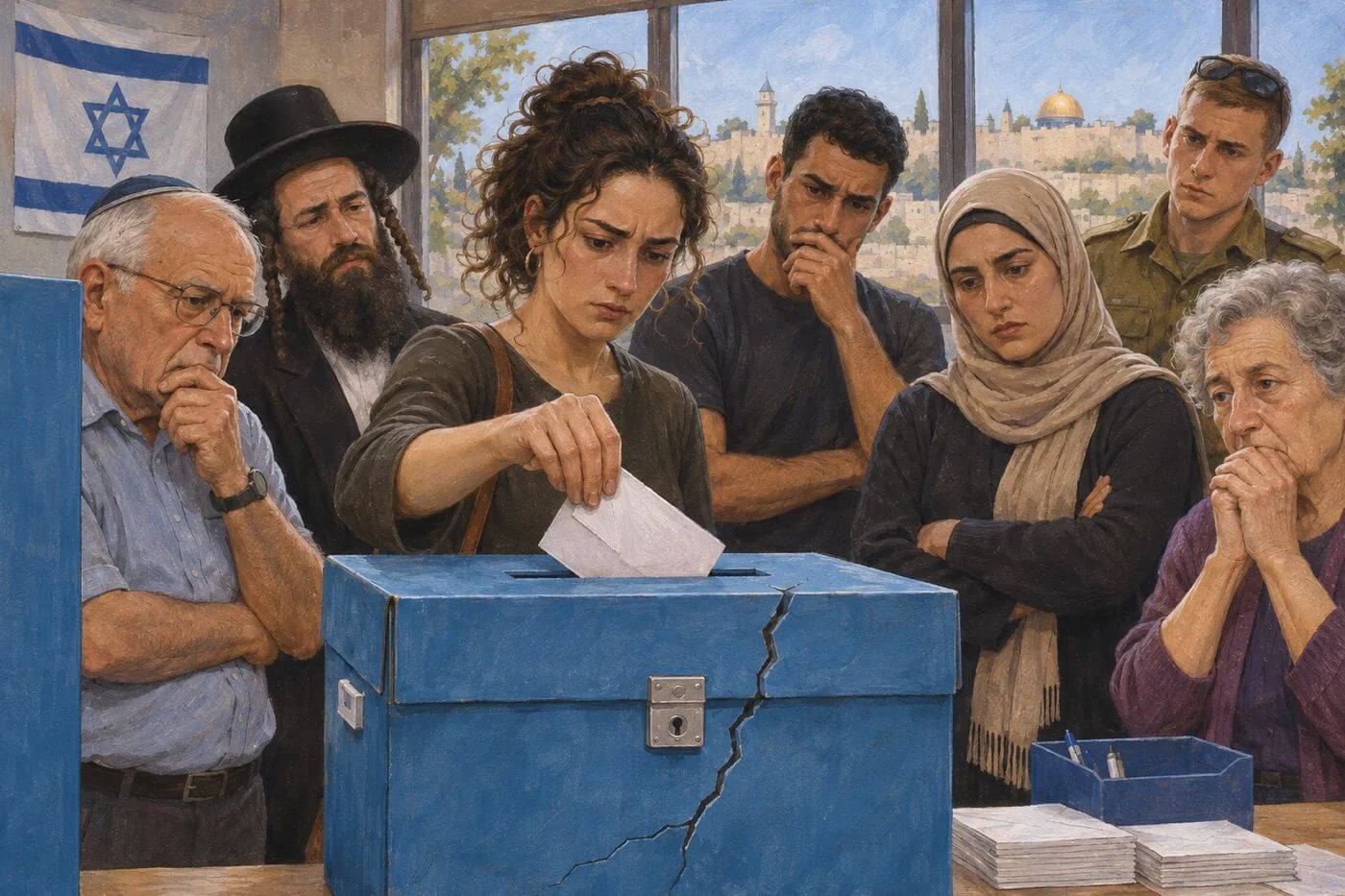
ChatGPT
One of the most disturbing aspects of Israel’s recent elections is not simply the allegation that the results were stolen, but the suspicion that those making the accusations may have manufactured evidence to support them. If true, the implications for our democracy—and our future together—are frightening.
Parashat Vayetze offers a warning about what happens when trust breaks down and the rules governing relationships become meaningless.
When Jacob arrives in Haran, fleeing his brother Esau, his uncle Laban warmly welcomes him, declaring, “You are truly my bone and flesh” (Genesis 29:14). Jacob seems to have found a safe haven among family members who will protect him. But this initial warmth gradually gives way to manipulation, deception, and distrust.
First, Laban promises Jacob his daughter Rachel in exchange for seven years of labor, only to substitute Leah on their wedding night. Confronted by Jacob, Laban explains: “It is not the practice in our place to marry off the younger before the older” (Genesis 29:26). But if that were the custom, why hadn’t he mentioned it before Jacob agreed to work seven years?
The deception continues. After Jacob works another seven years and begins building his own wealth, Laban repeatedly changes his compensation. As Jacob later protests, “You changed my wages ten times” (Genesis 31:41). The problem is not merely Laban’s dishonesty. Jacob can no longer rely on anything he says. Promises become meaningless, agreements are violated, and the rules change whenever they no longer serve Laban’s interests.
Eventually, Jacob secretly takes his family and possessions and flees. When Laban pursues him and demands an explanation, Jacob makes a chilling admission: “Because I was afraid, for I thought you would take your daughters from me by force” (Genesis 31:31).
After twenty years, Jacob no longer trusts Laban even to respect his marriage and family. He fears that his uncle might forcibly take away what is most precious to him. When trust collapses, even the most fundamental relationships become impossible to sustain.
This brings us to the troubling developments following Israel’s October 27 elections.
After the results showed that Prime Minister Netanyahu’s coalition had lost its parliamentary majority, Netanyahu and his allies accused Arab parties of stealing the election, alleging bribery, foreign interference, and electoral fraud. These are extraordinarily serious charges. Elections are the fundamental mechanism through which citizens determine who governs them. To claim an election was stolen is to challenge the legitimacy of democracy itself.
Yet investigations have thus far failed to substantiate allegations of fraud on a scale that could have changed the results. And now the story has taken an even more disturbing turn.
According to a Channel 12 Uvda investigation, information used to justify the arrest of Arab political activists on Election Day may have been deliberately planted by individuals connected to the Prime Minister’s Office, apparently to bolster claims that Arab parties were stealing the election. These suspicions remain under investigation and have not been proven. But consider what it would mean if they were substantiated.
We would no longer be dealing merely with political leaders making irresponsible accusations about their opponents. We would be confronting the possibility that individuals connected to the highest levels of government manipulated law enforcement to manufacture a narrative intended to discredit the outcome of democratic elections.
If those entrusted with protecting our democratic institutions can exploit those very institutions to discredit an election they have lost, how can citizens ever trust the electoral process again? And if citizens cannot trust that their votes will be respected, what remains of our democracy? The damage would not end with one contested election; suspicion would haunt every future vote, regardless of who won.
This is precisely the danger illustrated by Jacob’s relationship with Laban. Once promises are broken and rules manipulated by those in power, mutual trust becomes impossible. Eventually, even our most basic assumptions about how we will treat one another collapse.
But there is one crucial difference between Jacob’s predicament and ours.
When Jacob realizes that life under Laban has become intolerable, he can leave. He can gather his family and possessions and return to the land of his fathers. We, however, have nowhere else to go.
Israel is our national home. Jews of different religious and political orientations, together with our Arab fellow citizens, must live together despite profound disagreements. We cannot walk away whenever we lose an election or distrust those who govern us.
That is why these allegations demand a thorough, independent investigation and full accountability for anyone found responsible. Political disagreements are inevitable, and fierce electoral competition is legitimate. But accepting election results, respecting the rules, and recognizing the legitimacy of one’s opponents are indispensable.
Without these commitments, we risk becoming like Jacob and Laban: trapped in a relationship poisoned by suspicion, resentment, and fear.
Jacob could escape that relationship by returning home but, for us, Israel is home. And if we destroy the trust that enables us to live together, there is nowhere else to run.
For more thought-provoking articles exploring the Torah’s relevance to contemporary Israel and the Jewish world, visit my website at https://davidharbater.com/
Related Topics
Related Posts