From Magneto to Sabra the Jewish stories inside comic books
Each year I go to New York Comic Con, I look for the Jewish connection: a compelling comic, a familiar character with an unexpected history, or a story that opens a conversation about who we are. As a huge Marvel fan, I love discovering where that world intersects with Jewish identity.
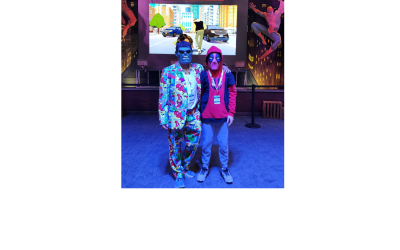 The convention is a wonderful place to search for rare and sought-after comics. During my visits, I found X-Men: Magneto Testament and comics featuring Sabra, and I was able to share those discoveries with my son. What began as a fan’s search became a meaningful moment of Jewish pride and resilience between a father and his child.
The experience itself is incredible. You meet fascinating people and encounter truly one-of-a-kind costumes, with fans bringing their favorite characters to life. For me, finding these comics adds another dimension to that excitement. It is a chance to see how deeply Jewish identity runs through the stories I love, and to share that connection with the next generation.
Before Magneto could move metal, he was a Jewish child trying to survive Nazi persecution.
That is an essential part of his story, and one that can get lost beneath the helmet, the spectacular battles and the debate over whether he is a villain or a hero. His Jewish history changes how we understand his fear, his anger and his determination to prevent another people from being marked for destruction.
As New York Comic Con returns to the Javits Center October 8–11, there is an opportunity to look beyond the costumes and ask whose histories live inside these characters. For Jewish readers, that question leads from the creators who helped build the superhero industry to the X-Men, the Holocaust narrative of X-Men: Magneto Testament, and the Israeli superhero Sabra.
The connections are sometimes metaphorical. Sometimes they are explicit. Understanding the difference matters.
Superman’s creators, Jerry Siegel and Joe Shuster, were Jewish. Joe Simon and Jack Kirby, the Jewish creators of Captain America, put their hero punching Hitler on the cover of his first issue, cover-dated March 1941, before the United States entered World War II.
Kirby, born Jacob Kurtzberg, grew up on New York’s Lower East Side. The American Jewish Historical Society’s current exhibition on his life explores how his Jewish upbringing, neighborhood and wartime experiences shaped his work.
These backgrounds do not make every character their creators invented Jewish. They do help explain why questions of belonging, persecution and the responsibility to use power recur throughout superhero stories.
The X-Men give those questions a particularly durable home.
Created by Stan Lee and Jack Kirby in 1963, the team inhabits a world in which people can be feared for an identity they did not choose. Mutants are judged collectively, treated as threats and pressured to hide what makes them different.
For Jewish readers, that can feel familiar. The mutant experience also speaks to other communities that have faced exclusion. Its power lies partly in that breadth. Reading the X-Men through a Jewish lens need not mean claiming their story belongs only to Jews.
Magneto brings a specific Jewish history into that broader metaphor.
Introduced as an antagonist in the original X-Men series, he acquired a more complex background under writer Chris Claremont, whose work established his history as a Holocaust survivor. His conflict with Charles Xavier became more than a contest between two powerful men. It became an argument about whether coexistence can protect a vulnerable minority, and what happens when someone no longer trusts that promise.
That history helps explain Magneto’s worldview without excusing every action he takes. A survivor’s fear of renewed persecution is understandable. His willingness, in some stories, to dominate or endanger others remains open to moral judgment.
X-Men: Magneto Testament takes readers back before those arguments, to the child who had to live through the catastrophe.
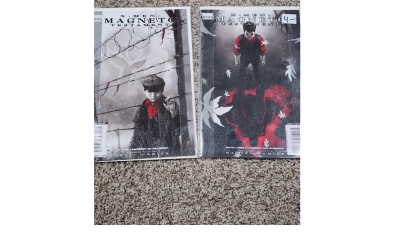
Written by Greg Pak and illustrated by Carmine Di Giandomenico, the five-issue series appeared in 2008–2009. It follows Max Eisenhardt, the boy who will become Magneto, through Nazi persecution and Auschwitz-Birkenau. His efforts to protect his family and Magda, a Romani girl, place individual relationships within the machinery of genocide. The collected edition includes historical endnotes and a teachers’ guide.
The importance of the book is its attention to vulnerability. Familiarity with Magneto’s future cannot make the child safe on the page. Readers encounter a Jewish boy whose life is being constricted by hatred, long before they encounter a man capable of bending steel.
Holocaust Museum Houston includes the work in its educational materials, emphasizing survival and choices rather than superpowers. That distinction is crucial. This is fiction situated within documented history; it can invite readers to learn more, but it does not replace survivor testimony or historical study.
It also asks something of readers who know Magneto principally as an adversary: look at the person before judging the symbol.
Jewish identity within the X-Men is not confined to catastrophe. Kitty Pryde, also known as Kate, provides another important example. Marvel’s official biography identifies her as a Jewish girl from Illinois whose grandfather survived a Nazi concentration camp.
Her presence makes room for a Jewish character whose life encompasses friendship, leadership and adventure. Jewish representation should have room for inherited memory and for the ordinary business of living.
Sabra introduces a different dimension: Israeli identity.
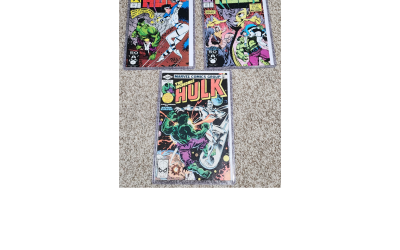
Created by writer Bill Mantlo and artist Sal Buscema, Ruth Bat-Seraph appeared briefly in The Incredible Hulk #250 in 1980 before her full introduction in #256, cover-dated February 1981. A mutant associated with Israeli intelligence, she wears a costume inspired by Israel’s blue-and-white flag. Her name draws on the term for a native-born Israeli, associated with the prickly pear: a tough exterior and a sweet interior.
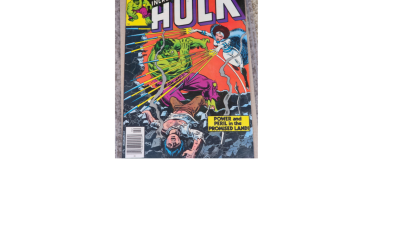
Her significance is easy to understand. Israel has a place within Marvel’s imagined world, and an Israeli woman can occupy the role of superhero.
Her early portrayal also deserves scrutiny. In her first full appearance, the death of an Arab boy becomes the occasion for the Hulk to challenge her understanding of their shared humanity. The story’s treatment of the conflict is blunt, and Israeli comics creators have criticized the character’s limited depth.
Recognizing those shortcomings does not diminish the value of Israeli representation. It establishes a higher expectation for it. An Israeli character should have an interior life, relationships and moral complexity, rather than carrying an entire country’s meaning in every appearance.
The screen adaptation renewed that discussion. Shira Haas played Ruth Bat-Seraph in the 2025 film Captain America: Brave New World. Although the film changed her background to a former Black Widow operative, it retained her Israeli identity. Claims that the released film erased her nationality therefore miss an important fact.
Questions about how faithfully the adaptation preserved the comics character can still be debated. But that debate should begin with what actually appeared onscreen.
These conversations will also have a home at Comic Con. According to the announcement Roy Schwartz shared, “The Year of Jack Kirby: A Star-Studded Celebration!” is scheduled for Thursday, October 8, from 5:45–6:30 p.m. in North–Room 408. The announced participants include Chris Claremont, Jim Starlin, Adi Granov, Dean Haspiel, Jeremy Kirby and Schwartz.
“Jewish Identity in Comics” is scheduled for Sunday, October 11, from 12:15–1 p.m. in North–Room 406.1, with Alex Segura, Julian Voloj, Michal Schick, Neil Kleid, Sarah Singer and Schwartz. Attendees should check the convention’s current schedule for changes.
Schwartz, the author of Is Superman Circumcised?, has helped bring attention to the Jewish histories behind these familiar figures. The panels offer an opportunity to discuss both that creative inheritance and the responsibilities of representation today.
For me, the question is whether readers are encouraged to see Jewish characters in their fullness.
Magneto’s childhood asks us to remember the human being beneath a frightening reputation. Kitty Pryde makes space for Jewish life beyond persecution. Sabra raises questions about how Israeli identity can be visible without becoming a caricature.
Sharing these comics with my son reminded me that a comic book can open a conversation that reaches far beyond its pages. We can talk about Jewish history, the meaning of resilience and the responsibility that comes with power, while enjoying the Marvel universe together.
That is why I keep searching for the Jewish connection at Comic Con. Comics help us encounter perspectives we might otherwise miss. They invite us to see a person’s history behind a costume, a conflict or a label. We need that willingness to understand one another now more than ever.