
What Does Every Child Need Now?
What does every child need now?
I have been asking myself that question a lot lately, usually during morning carpool or while standing in the hallway at dismissal (the ten minutes at each end of the day when you learn the most about a school). At Bornblum Jewish Community School, in Memphis, Tennessee, where I have served as Head of School since 2018, I have had the unusual vantage point of watching the same building, and many of the same families, before COVID, during it, and in the years since. The children walking through our doors today are every bit as bright, curious, and funny as the ones who greeted me in my first year. They are not, however, the same children. Some of that is the pandemic; much of it is simply what it means to grow up in 2026.
What kids today bring to school
It would be easy to blame everything on COVID. That would be tidy, and it would also be incomplete. Psychologist Jean Twenge has shown that declines in adolescent mental health and in test scores began around 2012, years before COVID, and roughly the same time when smartphones moved to the center of childhood (Senate testimony, January 2026), though other researchers dispute how much of that is the phone and how much is the pandemic. The fairest reading is that COVID landed on children who were already spending less time face to face, and it widened every crack it found.
Social skills. In a national survey this spring, nearly half of early-grade educators said disruptive behavior interrupts their teaching several times a day, and researchers have found weaker communication and problem-solving skills among children born during the pandemic than among those born just before it (EdWeek Research Center, March 2026).
How children learn. Just last month, the CDC reported that the share of school-age children diagnosed with ADHD rose from 9.9% in 2019 to 13.8% in 2025 (Contemporary Pediatrics, reporting on the CDC’s MMWR), and about one in 31 eight-year-olds is now identified with autism (AngelSense, summarizing CDC data). Some of that is more children struggling, and some of it is better recognition (especially of girls, who often present differently); the data cannot yet tell us how much of each. Either way, more students arrive with a name for how their minds work, and with parents who rightly expect a school to know what to do with it.
The widest classrooms ever. Even before the pandemic, the typical fifth grade classroom held students whose skills spanned about seven grade levels, and researchers found that range grew by another 5 to 10 percent afterward (NWEA, via The 74). That stretch runs in both directions. The children at the top of the class have quietly stalled: national data released this summer show high-performing nine-year-olds have barely moved since the pandemic, and top-scoring thirteen-year-olds remain below where their predecessors were, a gap that strong report cards can easily hide (Fordham Institute, July 2026). The good news is that reading scores from kindergarten through eighth grade rose meaningfully this past year (Fordham Institute on NWEA’s 2026 data).
Connection. Chronic absenteeism has come down from about one student in three to roughly one in four, still far too high (ABC News, June 2026). Research on what protects children is remarkably consistent: in a national study of more than 36,000 adolescents, feeling that the adults at school cared about them was the single strongest protector against absenteeism, substance use, and violence, and second only to family in protecting against emotional distress (CDC).
Being known cuts both ways
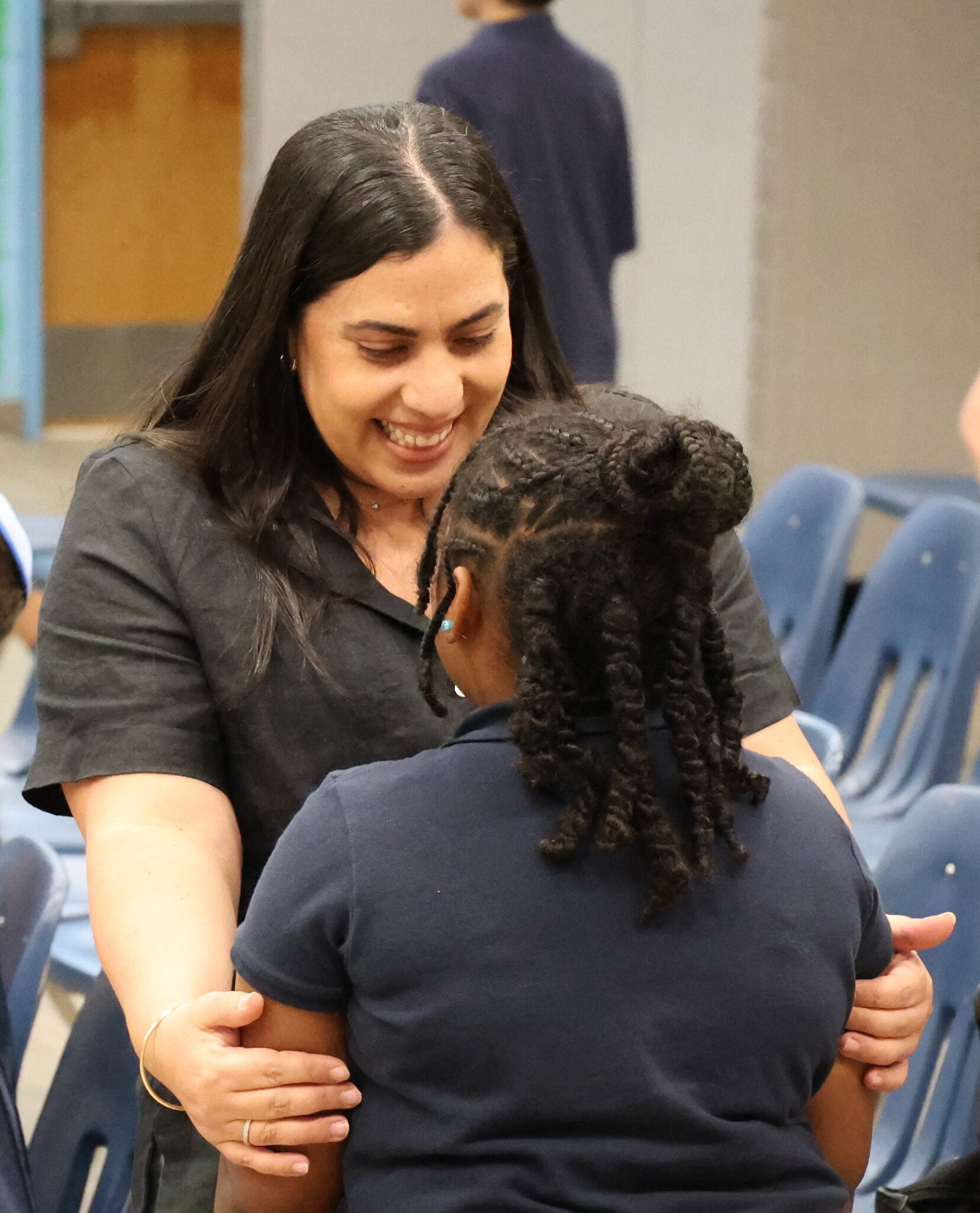
Here is what I have come to believe: the single most powerful thing a school can offer a child right now is to be known. Not processed, not sorted, known. In a classroom of 12 to 15 students, a teacher does not have to wait for a report card to discover that a child has gone quiet, that a friendship has frayed, or that a reader is ready for a much harder book. She sees it on a Tuesday morning and does something about it by Tuesday afternoon.
We happen to live in the state that produced some of the best evidence on this. In Tennessee’s Project STAR, about 11,600 children in kindergarten through third grade were randomly assigned to small classes of 13 to 17 students or to regular-size classes of 22 to 25; the children in small classes outperformed their peers in reading and math (Education Week), were more likely to take a college entrance exam years later (NBER), and were significantly more likely to attend college (Chetty et al., NBER). The Harvard economists who followed those children into adulthood found something I think about often: the test-score boost from a strong early classroom faded over time, but the gains in noncognitive skills (persistence, self-control, getting along with others) lasted (Harvard Kennedy School). Those are precisely the skills today’s teachers tell us need the most attention.
That kind of attention is usually described as a safety net, and it is one. When a child needs a different approach to reading, a quieter place to regroup, or a teacher who will explicitly coach the skills of joining a game at recess, a small school can build that around the child rather than asking the child to fit the system. In a small school, students learn how to advocate for themselves. They learn how to approach a teacher, because they know that the teacher sees them as an individual and cares for how they belong in our community.
But the same attention that catches a struggling child also catches a child who is soaring, and that part of the story rarely makes the headlines. It shows up in our students who work two years ahead in math, so that when they move on, their high schools have to make real decisions about how to keep challenging them. Or students who are reading the same books in our Middle School that High School students are reading, but with us, they do so as critical thinkers and tie the stories into their learning in other subjects. In a room where skills span seven grade levels, “teaching to the middle” leaves the top of the class waiting; when a teacher knows a student well, “ready for more” turns into a real plan: an independent project in our Design Lab, a podcast recorded in our own studio, a student-led presentation (complete with a green screen backdrop). Enrichment is not a reward we hand out after the basics are covered; it is how we keep curious children curious.
A school that only sees the struggle never notices the child ready to fly. And a school that only praises the high flyers walks right past the quiet one in the back row. Individualized attention means refusing to choose between them.
One of Gallup’s measures of student engagement is a deceptively simple statement: in the last seven days, someone at school told me I did good work. At our Potential Parent Parlor earlier this month, one of our new parents shared that before the meeting, she asked her first-grade daughter what to talk about. Her answer: “Talk about how they celebrate everything at school; most importantly, they celebrate each person.” I have read a lot of mission statements in my career; I am not sure I have read a better one. She is six, and she has already figured out what the research takes thousands of pages to say.
This matters most in the middle school years, which the data flag as the place where both academic recovery and engagement are hardest. In its 2016 survey, Gallup documented an “engagement cliff”: about two-thirds of fifth graders strongly agreed that the adults at school cared about them, but only about one in four high school students said the same (Gallup). Middle school is also the age when children most need an adult who knows them well enough to say both “I see you are struggling” and “I think you can do more than this.” Our eight Mishpachot (Hebrew for “families”), values like Chesed (kindness) and Sakranut (curiosity), give our oldest students a language for that, and a role in modeling it for our youngest students.
What every child needs
So, what does every child need now? Probably what they always needed, only more of it and more deliberately. Our tradition has understood this for a long time; Proverbs teaches “Chanoch lana’ar al pi darko,” educate a child according to his way, Mishlei 22:6. Not according to the average child’s way, or last decade’s child’s way, but his way, and hers.
That is the quiet promise of a Jewish Day School that is small enough to know every child by name (and, more often than not, by their younger sibling’s name, their lunch order, and their favorite place to play on the playground). Children who are seen (by name), supported (exactly where and how they need it), stretched (well past grade level when they are ready), and, as one first grader reminded me, celebrated (each person, not just each grade). And if we do it well, the adults in the building get a little better at all four too.