

From Kibbutz to the global stage
From Sparta Nation to a New Are — Michael Dell, Israel, and Trump’s Peace Plan
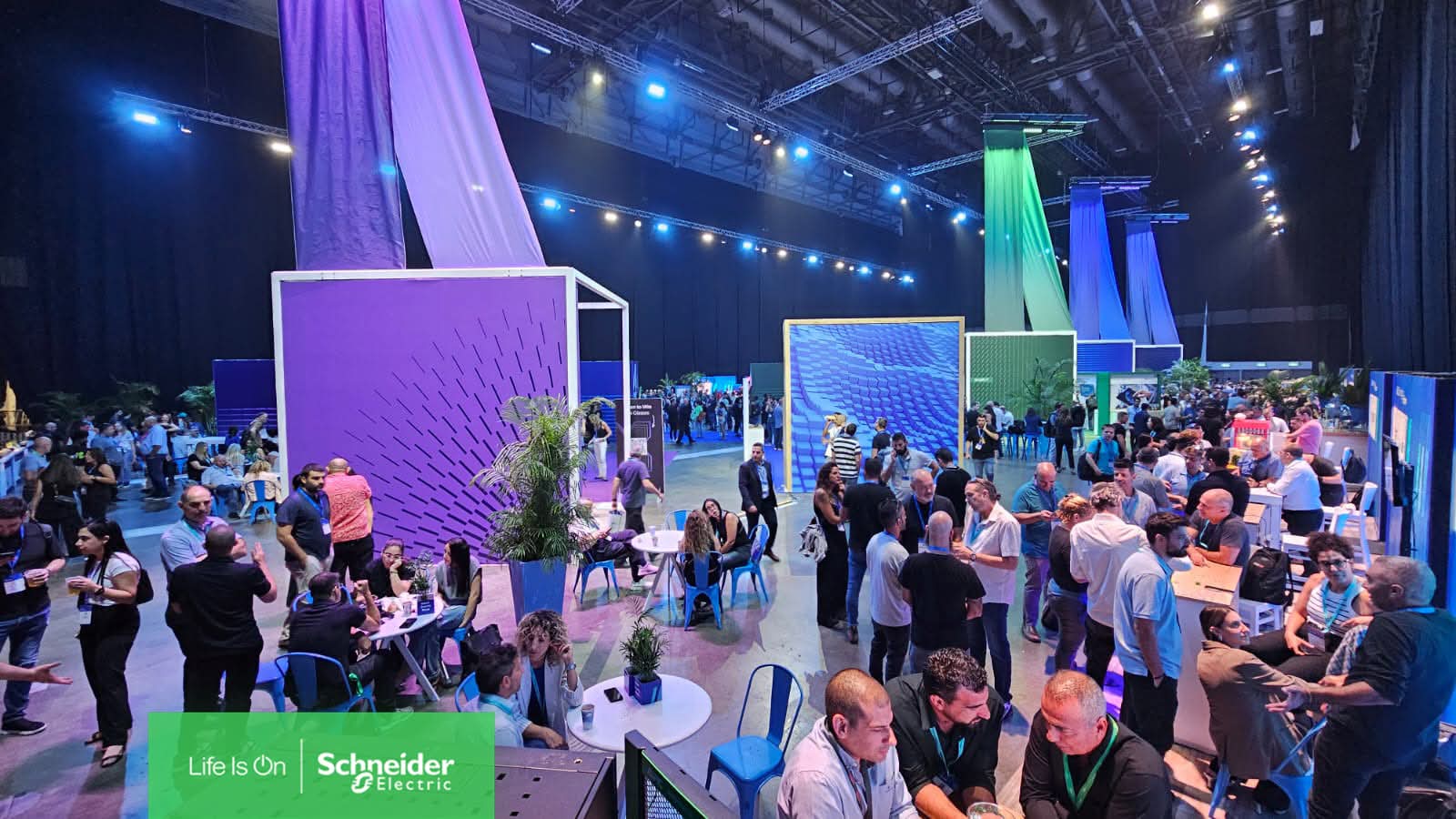
(Dell Technologies Forum, Tel Aviv — hundreds of Israeli engineers and global partners exploring the future of AI and cloud infrastructure.Source Rafi Glick public domain)
From “Sparta Nation” to an Open World — Michael Dell, Israel, and Trump’s Peace Plan.
When I attended the Dell Technologies Forum in Tel Aviv last September 16 — four days after I wrote about the growing American pressure that would eventually lead to a new peace framework — the contrast between the optimism in the hall and the pessimism in Jerusalem could not have been sharper.
The forum gathered more than a thousand participants from Israel’s vibrant high-tech ecosystem — engineers, partners from Intel, NVIDIA ,Microsoft, and leading ompanies and startups.
It opened with a recorded greeting from Michael Dell, the company’s founder and CEO, who praised Israel’s innovation and Dell’s expanding footprint here.
“Technology is the bridge to the future,” he said — a message that resonated deeply in a year of global uncertainty.
The Moment of Contrast
Dell Technologies, a $102 billion global powerhouse with 133,000 employees — including about 800 in Israel’s R&D centers — represents everything that makes Israel’s economy thrive: openness, integration, and cooperation.
That same evening, however, Prime Minister Benjamin Netanyahu declared his vision of a “Sparta Nation” — an autarkic Israel that “stands alone” and distances itself from global interdependence.
I left the Dell event inspired by the power of collaboration — only to hear hours later a call for isolation.
I wasn’t seeking a political debate; I was describing a dissonance between two worldviews: one of connection, one of withdrawal.
I could only imagine the reaction of Dell’s global executives — and of Michael Dell himself — upon hearing such rhetoric from Israel’s leadership.
For a company built on partnerships, innovation, and shared intelligence, isolationism is not a plan. It’s a warning sign.⁹
A Month Later — The Story Evolves
Fast-forward to the present:
Only a month ago, news broke of Michael Dell’s renewed proximity to Donald Trump, and reports surfaced about Dell’s potential participation in a consortium exploring the purchase of TikTok’s U.S. operations.
At the same time, Dell Technologies has expanded its investments in Israel, partnering with Bank Leumi on a $77 million technology fund and deepening collaboration with local research institutions.
The “Sparta Nation” idea seems to have faded — replaced by a pragmatic reality in which Israel remains a core node in the global innovation network.
While some leaders spoke of detachment, others quietly built bridges — and those bridges are now the foundations of the region’s economic renewal.
Michael Dell and Trump’s Wider Vision
It is no coincidence that Dell’s global partnerships now align with a renewed Trump-era peace and economic framework, which links regional stability to technological development.
The same ecosystem that fuels AI and cloud computing is now becoming a tool of diplomacy and reconstruction — from Tel Aviv to Riyadh, from Austin to Abu Dhabi.
From Isolation to Integration
Looking back, the real story was never about technology alone.
It was about the choice between fear and openness.
A month after “Sparta Nation” was proclaimed, the world — and Israel with it — is moving in the opposite direction: toward collaboration, shared prosperity, and peace supported by Scianse and Technology.
The Broader Context — Innovation Meets Diplomacy
The timing could hardly be more symbolic. As the United States, under the renewed Trump peace framework, works with Egypt, Gulf partners, and Israel toward a long-awaited regional stabilization, technology leaders like Dell are articulating a parallel vision — one where innovation is not separate from diplomacy but an essential driver of it.
For Israel, this intersection carries profound meaning. The nation that once saw itself as a “Sparta of the Middle East” — strong, isolated, and perpetually on alert — is now invited to become part of an “Open World” of shared progress, where AI, infrastructure, and clean technology may do more for coexistence than another round of political declaration.
A Message That Transcends Business
As Michael Dell said at Dell Technologies World 2025:“Each organization has its own culture and values… You worry that the engine of progress is pulling away, and you worry about being left behind. It’s a lot — I get it, and that’s okay. That’s why we’re all here… Dell Tech is full of on-ramps. The real danger is standing still.”
His words extend far beyond the business arena. They capture the very spirit of the current moment in the Middle East — a call to act, to innovate, and to move together rather than stand still.
The Trump peace plan and the emerging regional reconstruction initiatives share this same ethos: building bridges, not barriers, through technology, investment, and shared vision.
If leaders embrace this mindset — one that merges innovation with cooperation — then progress, much like technological evolution itself, becomes not just possible but inevitable.
(Photo: Dell Technologies Forum, Tel Aviv — hundreds of Israeli engineers and global partners exploring the future of AI and cloud infrastructure.Source Rafi Glick public domain)
About the Author
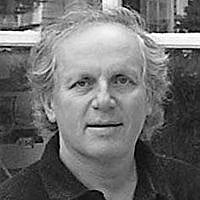
Rafi Glick is a writer, lecturer, farmer, and business executive with decades of experience at the intersection of academia, technology, agriculture, and international trade.
• He has served as a Senior Teaching Associate at Ben-Gurion University of the Negev, Ono Academic College, Ariel University, Ruppin Academic Center, and as a guest lecturer at Sofia University’s Faculty of Economics and Business Administration (FEBA). At Ben-Gurion University he also advised the BGU–NHSA Accelerator in the Faculty of Science.
• In business, Rafi was CEO of Bidsnet Ltd., a pioneer in deploying fiber-optic cables through unconventional infrastructure (in partnership with CableRunner), delivering high-speed connectivity to homes, enterprises, institutions, and cellular networks. Earlier he held senior roles at ECI Telecom and served on the board of RLF Venture Capital, working with partners such as Intel, Teva, and the Jerusalem Development Authority.
• He contributed extensively to Israel’s trade and investment ecosystem: he directed industrial and agricultural technology divisions at the Israel Export Institute, founded Israel’s AGRITECH as international exhibition, and served on the board of the Israeli Investment Center at the Ministry of Industry and Trade.
• In his early career, Rafi established and served as the first director of the Cargo and Aircraft Supply Security Department in the Security Division at Ben-Gurion Airport (1972–1976). He lived in Kibbutz Parod until 1974.
• Rafi has also been recognized for his writing: in 2008 he was named Best Economic Blogger by TheMarker, Israel’s leading business daily.
• Today he continues to publish essays and commentary—with a special passion for astrophysics, space exploration, technology, economics, and social issues.
From Kibbutz Parod to the global stage, Rafi Glick’s career reflects a lifelong commitment to building connections—between people, industries, and ideas.
Email: rafi.glick@gmail.com
Related Topics
Related Posts
Rafi Glick