
Urban Sociologist and Global Affairs Commentator
Gaza: Confronting Complicity and Extremism
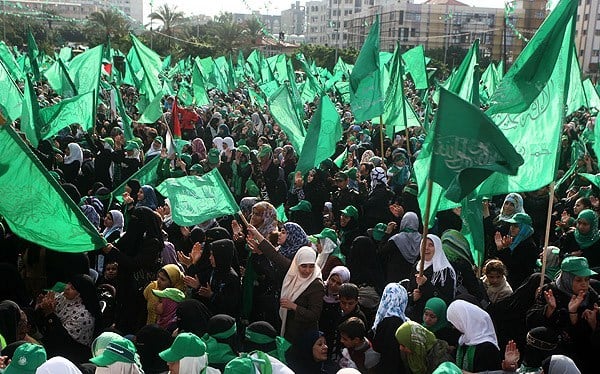
25th anniversary of Hamas celebrated in Gaza. 8 December 2012. (Source: Hadi Mohammad/Wikimedia Commons)
The Hard Questions Masked by the Selective Outrage of Sonia Gandhi: A Reckoning with Islamism, Gaza, and the World’s Convenient Amnesia
There is a version of the Gaza story the world has agreed to tell. It is clean, photogenic, and morally uncomplicated. It requires no difficult history, no examination of ideology, and no accountability from anyone except Israel. It is also, in its comfortable incompleteness, a form of contempt for the very people it claims to champion.
This essay is not that story.
The Ideology Nobody Wants to Name
Hamas is not a resistance movement that happens to use violence. It is a theocratic totalitarian organization whose foundational charter called for the annihilation of Jews, not Israeli soldiers, not the Israeli state, but Jews, and cited the Protocols of the Elders of Zion as a credible source. Its 2017 revised document softened some language while preserving the same eliminationist objective beneath polished diplomatic phrasing.
This matters because the global conversation about Gaza has almost entirely excised Hamas’s ideology from the frame. To name it is treated as deflection. To examine it is called victim-blaming. The result is a discourse that discusses the wounds of a conflict while refusing to examine one of the primary instruments of those wounds.
Islamism, the political project of organizing society entirely around a particular interpretation of Islamic law, enforced by the state, is not synonymous with Islam, and conflating the two is both intellectually dishonest and genuinely bigoted. But Islamism as a political force, in its Hamas variant, in its Iranian theocratic variant, in its various regional expressions, has caused extraordinary suffering to Muslim-majority populations above all others. The people most damaged by Islamist governance are not Israelis. They are the women denied education in Taliban Afghanistan, the Iranians shot in the streets for removing their hijabs, the Gazans who could not organize a political opposition without risking their lives.
The world’s reluctance to say this plainly is not solidarity with Muslims. It is condescension toward them, an assumption that Muslims cannot be held to the same standards of political accountability applied to everyone else.
The Election That Haunts Every Conversation
In January 2006, Palestinians in Gaza voted. Hamas won. The international community, which had demanded those elections, promptly refused to accept the result. This produced a paradox that has never been honestly resolved: the world insists on Palestinian political agency in theory while structurally preventing its consequences in practice.
But there is a harder question embedded here. Hamas did not emerge from nowhere. It was cultivated, by Saudi money funding Salafist madrassas, by Iranian strategic patronage, by Israeli tactical shortsightedness in the 1980s that briefly tolerated Hamas as a counterweight to the PLO, by a Palestinian Authority so corrupt and authoritarian that Hamas’s brutal clarity seemed preferable to some voters.
Holding these facts simultaneously, that external forces shaped Hamas’s rise, and that the organization still bears full responsibility for what it chose to do with that rise, is not comfortable. But it is necessary. Causation is not exculpation.
The October 7 attacks were not spontaneous. They were meticulously planned, deliberately targeted at civilians, families at a music festival, elderly people in kibbutzim, children in their homes, and celebrated by Hamas leadership as a triumph. To understand Gaza’s suffering without accounting for what Hamas deliberately chose to do, and why, is not compassion. It is selective humanity.
The Regional Cynicism Nobody Prosecutes
Here is what the solidarity marches never address: For decades, Arab states held Palestinians in camps not as guests but as political instruments. Jordan, Lebanon, Syria, all maintained Palestinian populations in conditions deliberately designed to prevent integration, preserve grievance, and sustain a cause that served domestic political purposes without requiring any actual sacrifice from the host governments.
Iran funds Hamas and Islamic Jihad not because it cares about Palestinian statehood, as the Islamic Republic has never had a serious plan for Palestinian governance, but because a perpetually burning Gaza serves its regional strategic interests. Every funeral in Gaza is a propaganda asset for Tehran. The mullahs have invested in Palestinian suffering as an export commodity.
Qatar hosts Hamas leadership in air-conditioned offices in Doha while the people those leaders claim to represent live and die in the ruins of their strategic decisions. This is not solidarity. It is the most cynical form of outsourcing, funding a proxy war and calling it liberation theology.
The Arab world’s relationship with Palestine is one of the most sustained and underexamined hypocrisies in modern geopolitics. Countries that jail their own citizens for criticizing the government hold candlelight vigils for Palestinian democracy. Countries where women cannot drive, where apostasy is a capital offense, where migrant workers die building football stadiums, present themselves as the conscience of humanity when cameras point at Gaza.
This should be said. It almost never is.
The Indian Political Temptation
A powerful section of India’s political class, perhaps, in seer desperation to regain lost power, faces a specific and cynical temptation, also displayed in Sonia Gandhi’s (a senior leader of the Indian National Congress, the largest party in the Opposition) recent opinion column on Gaza: to import this conflict’s emotional charge for domestic electoral purposes, using Palestinian suffering as a mobilization tool for Muslim voters while offering nothing substantive to either Palestinians or India’s foreign policy interests.
This is not solidarity. It is the same instrumentalization practiced by Tehran and Riyadh, just at lower stakes and with better deniability.
India has legitimate, clearly defined interests: counterterrorism, regional stability, energy security, relationships with both Israel and the Arab world, and above all, a consistent domestic principle that religious identity does not determine political loyalty or government policy. A foreign policy that selectively denounces terrorism based on which community is the victim corrodes that principle from within.
India’s Muslim citizens deserve political leadership that engages them as citizens with complex, full interests, not as a vote bank to be activated by foreign tragedies and then ignored. The Congress party’s invocation of Gaza as a signal to Muslim constituencies is not advocacy. It is the soft bigotry of assuming that Indian Muslims think in a single, predictable direction, and that a tragedy thousands of miles away matters to them primarily as a marker of communal identity.
What Genuine Solidarity Would Require
If the world genuinely cared about Palestinians, not as symbols, not as instruments, but as people, then the conversation would look entirely different.
It would demand accountability from Hamas for deliberately constructing civilian infrastructure around military assets, knowing the calculus this created. It would demand that Iran and Qatar stop funding organizations that have turned Gaza into a strategic sacrifice. It would demand that the Palestinian Authority reform itself into a governance structure capable of actually governing. It would demand that Arab states stop treating Palestinian refugees as permanent political capital and start treating them as human beings with futures.
It would also demand that Israel account for the civilian toll of its military campaign, for settlement expansion that forecloses political possibilities, and for political leadership that has at times found a frozen conflict more useful than a resolved one.
None of this is the conversation happening. The conversation happening is simpler, more satisfying, and entirely useless to the people of Gaza.
The Truth That Costs Something
The future of Gaza, if it has one, will not be built by those who reduce it to a hashtag or those who write it off as irredeemable. It will be built, if it is built, by Palestinians who choose a different politics than the one Hamas offers, by a regional order willing to invest in Palestinian institutions rather than Palestinian martyrdom, and by an international community honest enough to hold all parties to the same standards.
That is not the world we have. But naming why we don’t have it, naming the ideology, the cynicism, the hypocrisy, the selective humanity, is not cruelty. It is the only form of respect left.
The pit-diggers of history have rarely chosen their victims wisely. They have almost always, in time, fallen in themselves. The question is how many others fall with them before the reckoning arrives.
Related Topics
Related Posts