‘Globalize the Intifada…?’
Shock, not surprise — Bondi after Chanukah
To those who marched beneath signs reading “Globalize the Intifada”: this is what that slogan looks like when it leaves the placard and enters the world. Bondi is not an abstraction.
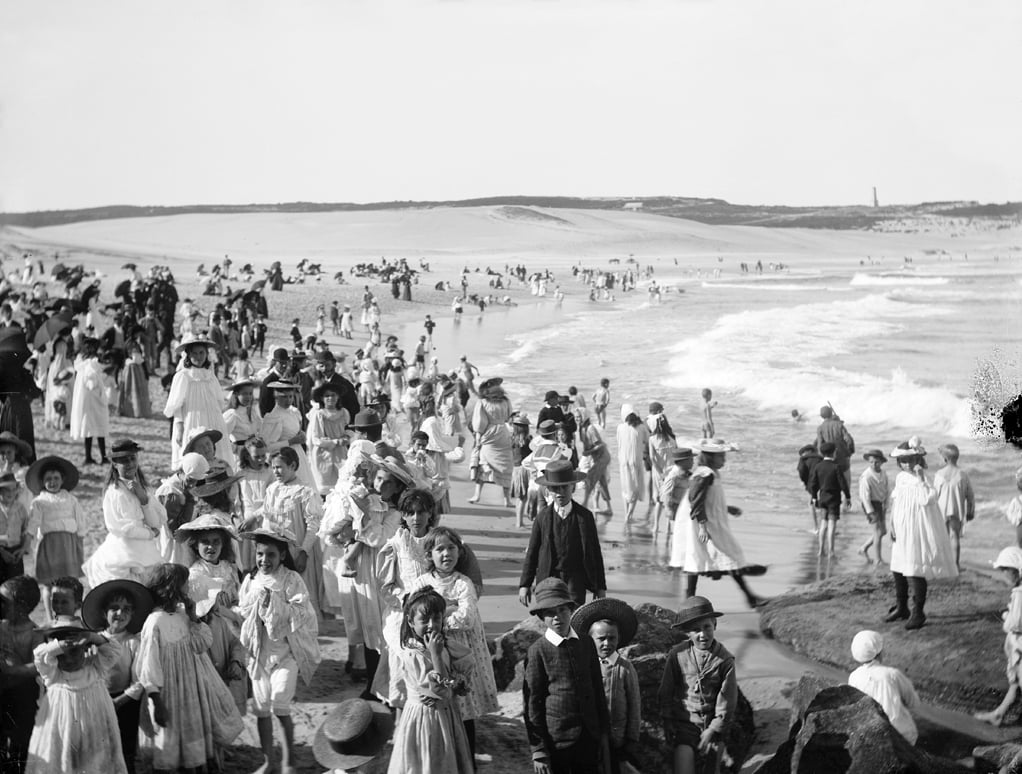
I haven’t been to Bondi in decades. I was on that beach in 1981. That’s a long time ago now. But it’s one of those places you don’t entirely forget—and one of those places a lot of us have been taught to file under safe.
Earlier this month, on sand Australians treat as shorthand for innocence—Bondi’s bright strip of summer and salt and stroller-wheels—Jews were hunted at a Chanukah celebration. An ordinary night, in an ordinary park, beside an ordinary playground. Face paint and plastic cups and the soft chaos of kids. And then the sound that doesn’t belong there: gunfire.
I’m not sure I’m going to say anything new below. Probably not. What I’m offering is a lament. If you’ll indulge me, read it not for novelty but for the human thing it is: an attempt to name a pain, and to find a little relief in the act of writing it down.
Bondi is a postcard in the world’s imagination, but for locals it’s errands. It’s the route you take when you want to clear your head. It’s the place you walk when you’re trying to remember you’re lucky. That’s part of what makes this kind of attack feel so destabilizing: it violates not only bodies, but the human bargain we keep trying to believe in—that some places remain ordinary.
Within minutes, the familiar tempo of normal life was replaced by the other tempo: phones vibrating too often, names repeating, the kind of punctuation people use when they’re trying not to panic. Friends messaging friends. Families checking on families. Rumor thickening before facts can arrive.
And in the middle of all that, the same question always appears—sometimes spoken aloud, sometimes only as a thought you can’t shake: how can anything catastrophic be happening in a place this familiar? That’s the seduction of places like Bondi. They teach you, without words, that the world’s ugliness is something that happens elsewhere, to other people, on other screens.
Then you watch the ugliness race into the most ordinary frame you have.
The shock is in the body—how could this happen here, like this, with children present—and the lack of surprise is in the mind, the part of you that has been watching the temperature rise for a long time.
Later came the stories that make you proud of strangers.
A man tackled one of the attackers unarmed. He fought for the gun. He saved lives. His name—Ahmed Al-Ahmed—landed with an almost unbearable symbolism. If you were trying to script an antidote to the reflex to scapegoat Muslims—if you wanted a clean, human rebuke to the cartoon of “Muslim versus Jew”—you could not have written it better than a man with an unmistakably Arab name risking his life for Jews on Australia’s most iconic beach.
The police and paramedics and surf lifesavers and bystanders who ran toward danger deserve more than a throwaway sentence in the news cycle. They deserve the nation’s gratitude—and its attention. Because heroism is not a substitute for a functioning moral culture. It’s what you get when the culture fails and ordinary people have to stand in the breach.
Since October 7, Jews in the diaspora have been drinking from a firehose: daily hate, casual slurs returning like fashion, social media turning cruelty into sport, a steady insistence—spoken and unspoken—that Jews are uniquely fair game. Not just Israelis. Not soldiers. Jews.
And what compounds the fear is the way so many people who should have understood have treated that fear as melodrama. As “moral panic.” Sometimes even as a hoax. The arguments have been less like moral reasoning than like scripts—ritual lines delivered to protect identities and alliances: say no to hate, don’t inflame tensions, it’s just criticism of Israel, you’re imagining it, stop weaponizing antisemitism.
This is where it helps to be explicit about standpoint, because tone matters: these words are written not as an Israeli, and not as a Jew, but as a gentile trying to stay morally awake in a moment when so many people seem to be sleepwalking into tribal certainty. Sympathy is not identity. Empathy is not ownership. But empathy does create obligation: to speak clearly when clarity is unpopular.
Part of the effort to stay honest on Israel-Palestine comes from books. Part of it comes from being there, and having the place refuse to fit into slogans.
Benny Morris can be carried like ballast—the historian’s refusal to let anyone off the hook, the footnoted weight of contingency and brutality. Yossi Klein Halevi can be read as a voice of yearning and argument, the way someone can love a place and still interrogate it from inside its contradictions. Edward Said stays as the loneliness of exile, the way a people can be turned into an abstraction by the stories others tell about them. And Raja Shehadeh’s walking—his attention to the texture of a landscape and the slow theft of what seems too small to name until it’s gone—can stay in the nervous system like a kind of quiet grief.
And then there are days on the ground.
Hebron—where warmth can be unmistakable until the talk turns, and then you can feel something harden behind a smile. Ramallah, where prayer moves through a mosque in a cadence that feels older than the arguments we impose on it, and yet the arguments wait nearby. Bethlehem’s Walled Off Hotel, where a kind of nausea can arrive unexpectedly—not because the suffering isn’t real, but because the suffering can become a boutique experience for wealthy visitors collecting moral feeling like souvenirs.
At Erez, there were Palestinians crossing into Israel for work—men moving with lunch bags and cheap coffee, the daily choreography of survival at a border that can turn, overnight, into a front line. Before the war, thousands held permits; a small fact that says more about incentives and human need than a thousand campus chants. There were conversations with people inside Gaza who spoke in code—for fear of Hamas—and that fear spoke louder than any manifesto.
And in Sderot, there is what ideology does to ordinary life—how a town can carry the evidence of rockets the way other places carry souvenir magnets. Even there, where the politics can be fierce, you meet people who are just trying to live, to raise children, to sleep through the night.
Those experiences don’t deliver a neat position. They deliver dissonance. They make anyone who is paying attention allergic to moral theater—the kind that treats suffering as a prop and turns complex lives into a purity test. But dissonance is not denial. And liberal good manners are not courage.
The permission structure
Civil society fails not only when laws are weak, but when institutions decide it’s safer to equivocate than to judge; easier to parse technicalities than to name what is in front of us; more comfortable to translate eliminationist language into “benign interpretations” than to hear what people are actually saying.
Permission structures don’t only come from polite euphemism. They also come from ideologies that sanctify violence as virtue. When fanatical religiosity blesses murder—when it is sold as martyrdom, shouted in the name of Allah, and even attached to material reward, the payment that keeps terrorism viable—then cruelty stops looking like a crime and starts looking like a duty. That is not a description of Muslims as such; it is a description of the fanatics and recruiters who weaponize the sacred to make the unspeakable feel righteous.
Where a country has to reckon is not only at the level of policing, but at the level of norms—at the level of what is tolerated, excused, reframed, and rewarded.
Politics and public leadership
Politicians who refuse to repudiate hatred—sometimes because they fear their own base, sometimes because they don’t want to offend the fashionable—must be held accountable.
Courts, authorities, and enforcement
Courts and authorities must take seriously marches and slogans that glorify “resistance” when that word has become a euphemism for slaughter. Not all protest is intimidation. But intimidation exists, and it has been laundered as activism for too long. Police must enforce laws against the public display of terrorist and Nazi symbols. Not symbolically. Actually.
Public institutions and civic life
Media—especially publicly trusted or publicly funded media—must stop collapsing “Israel” into “the Jews,” and must stop treating Jewish fear as a rhetorical inconvenience. Words matter. Not because “words are violence” in the childish way that phrase is often used—but because words build permission structures. They tell people what is admirable. What is excusable. What is heroic.
Universities must stop tolerating exclusionary tactics—encampments and intimidation that make Jewish students and staff choose between silence and risk.
Schools must prevent the politicization of classrooms in ways that single out Jewish children as stand-ins for a foreign war.
Arts bodies must stop imposing political purity tests that quietly drive Jewish participation out of cultural life, as if Jews are acceptable only when they recite the correct creed.
Businesses must investigate workplace antisemitism instead of doing the corporate thing—quietly hoping it goes away if nobody makes a fuss.
Platforms
Social media platforms must be pressured—hard—to change the algorithms that turn rage into a business model and radicalization into a feedback loop.
Beyond security as a substitute for culture
More security funding alone is not a solution. Guards, bollards, cameras—these things matter, because people deserve to be alive. But a Jewish life that can exist only behind fortifications is not a stable moral settlement; it’s a containment strategy. There is no wall high enough if the real barrier is being built in people’s minds: the normalization of anti-Jewish contempt, and the lack of consequences for it.
Reducing this to gun control mistakes the means for the end. If people want dead Jews, they will look for a method. The deeper question is why the desire has been allowed to fester in the first place—why it has been framed, by too many respectable voices, as understandable anger, as righteous resistance, as something we must “contextualize” until it is no longer recognizable as hatred.
There have been warnings. There have been recommendations. There have been people tasked with naming the problem and proposing concrete steps. Those steps should be implemented—not as a gesture, not as a press release, but as a change in posture: from indulgence to seriousness.
The familiar line—“antisemitism has no place here”—has started to sound like a land acknowledgment read before a yoga class. A script. A performance. A way to feel virtuous without changing anything.
Antisemitism does have a place in the West right now. It is here. It is growing. And at Bondi, it found Jews in a park beside the sea.
These are the ashen wages of permissive antisemitism.
Note on tools: I used to draft with Google, a thesaurus, and whatever else was to hand. Lately I’ve been using ChatGPT—built on GPT, which stands for Generative Pre-trained Transformer—in much the same spirit: as a writing aid, not a ghostwriter. The words, judgments, and meaning here are all mine.