
Goodbye UNIFIL: Now what?
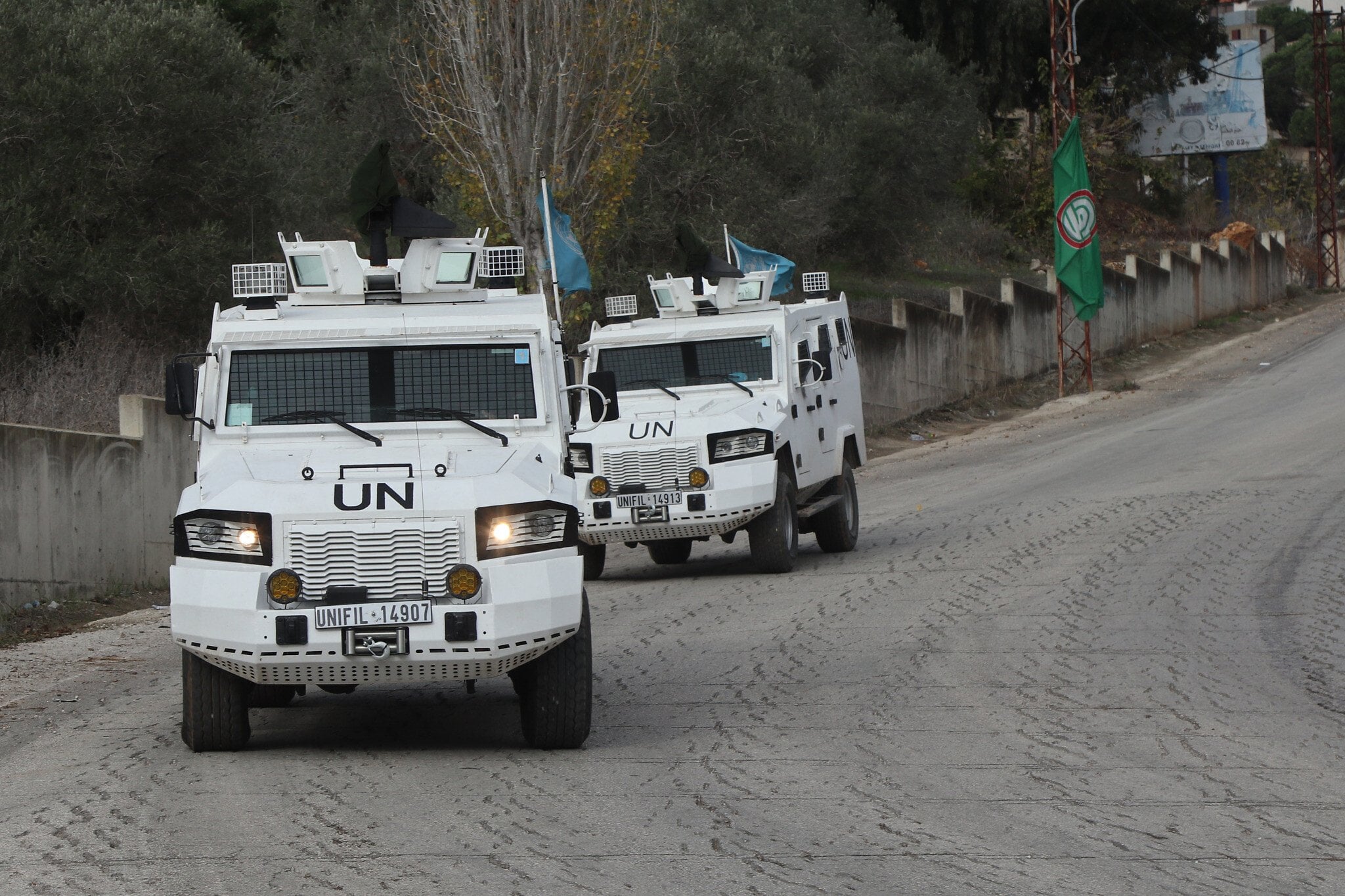
The UN has voted for a phased end to the long-troubled United Nations Interim Force in Lebanon (UNIFIL), a controversial peacekeeping force established in 1978 to confirm the withdrawal of Israeli forces from Lebanon, restore peace and security, and assist Lebanon in establishing its authority over Southern Lebanon. The many subsequent wars in Lebanon testify to the failure of this force to live up to its mandate, and its repeated failures have given Israel good cause to want it gone. Without UNIFIL, Northern Israel and Southern Lebanon face an uncertain future that could see repeated flare-ups as the two countries’ forces will remain in constant proximity. On the other hand, the death of UNIFIL might finally present an opportunity for something better to take its place.
At this point, Israel has little love left for the embattled peacekeeping force – or any other UN force for that matter. Repeated anti-Israel votes in the UN, the behavior of UNRWA (United Nations Relief and Works Agency for Palestine Refugees in the Near East) and other UN agency personnel, and events such as the First Durban Conference have all led Israel to have little trust in the UN or its forces. While some UN peacekeeping forces in the region, such as UNDOF (United Nations Disengagement Observer Force) in the Golan Heights, have been successful, most have not. Not only did UNTSO (United Nations Truce Supervision Organization), which was established to govern the ceasefire after Israel’s 1948 war of independence, fail to prevent fighting before the Six-Day War in 1967, but the initial Jordanian attack in 1967 went through the UNTSO headquarters. Similarly, the UN Emergency Force (UNEF) in Sinai famously failed to prevent the Egyptian remilitarization of Sinai in 1967.
Despite fulfilling some important functions, UNIFIL has too often proven itself impotent in serving the cause of peace and sometimes has seemed to be an adversary of Israel. Incidents such as that in October 2000, when Hezbollah crossed into Israel disguised as UNIFIL personnel to abduct IDF soldiers, reinforced Israeli suspicions about UNIFIL. In that case, not only did UNIFIL collect critical evidence about the attack and the fate of those abducted without informing Israel, but they then lied about their possession of the evidence and turned some of it over to Hezbollah. The cover-up lasted nearly a year, and even then, the UN still kept some of the material from Israel. The problems with UNIFIL continued through the 2006 Second Lebanon War, when many Hezbollah positions were found near UNIFIL forces.
Even attempts to fix UNIFIL have failed to live up to its promise. At the end of the 2006 war, the US-led ceasefire arrangements gave UNIFIL a second chance and a new, more robust mandate. There was hope that the so-called UNIFIL II would succeed where its predecessor had failed, but its limited success proved to be an illusion. Over the next several years, countries withdrew their soldiers from the multinational force, and the situation deteriorated.
In 2010, the IDF went to clear brush on their side of the border fence, and as was standard practice, informed UNIFIL, but this time, UNIFIL asked for a delay. During the delay, UNIFIL informed the Lebanese Armed Forces (LAF), who deployed to the location and brought journalists. As the IDF began to clear brush, an LAF sniper shot and killed an Israeli officer and wounded others. UNIFIL II had at best failed to prevent and at worst colluded in causing the worst case of cross-border violence in since the end of the Second Lebanon War. Between then and now, UNIFIL did little to enhance its reputation with Israel, and over the years, Hezbollah positions and tunnels were found in UN patrolled areas and next to UN posts.
Suffice to say, Israel and UNIFIL have an unhappy past, but UNIFIL does serve a purpose. One of the reasons for the 2010 incident was the proximity of the LAF to the IDF. While there is now a separate higher-level coordination mechanism, the only force on the ground capable of coordinating and deconflicting the movements of the two armies is UNIFIL. UNIFIL can also serve as a firebreak in the locations of highest potential tensions. Without UNIFIL, the chance for misunderstanding and accidental escalation could increase.
So, while Israel does not want to see a renewal of UNIFIL, it may, in the long run, want some of its functions preserved. There are far better options than UNIFIL. There are other multi-national forces in the region that are not UN forces and have carried out a similar mission. The Multinational Force and Observers (MFO) in Sinai exists outside UN auspices and is made up of forces from countries that were acceptable to Israel. It has been successful in preventing tensions between Israel and Egypt from spilling over, even when under the threat from ISIS. A new multinational force in Lebanon could do more than just serve as a buffer between the IDF and LAF. With a more robust mandate and capabilities, like those given to forces in East Timor and Kosovo, they could also help Lebanon to regain control of its territory and disarm Hezbollah. In short, while the potential withdrawal of UNIFIL is not without risk, it could create room for something far better.
The views, facts, opinions, and conclusions expressed herein are those of the author and do not necessarily represent the views of the U.S. Government, Department of Defense, U.S. Army, U.S. Army War College, or any other government agency. (References to this article should include the foregoing statement.)