International Speaker, Author, Educator, Tour-Guide, Artist, Zionist
How Israel Cut Battlefield Deaths by More Than Half
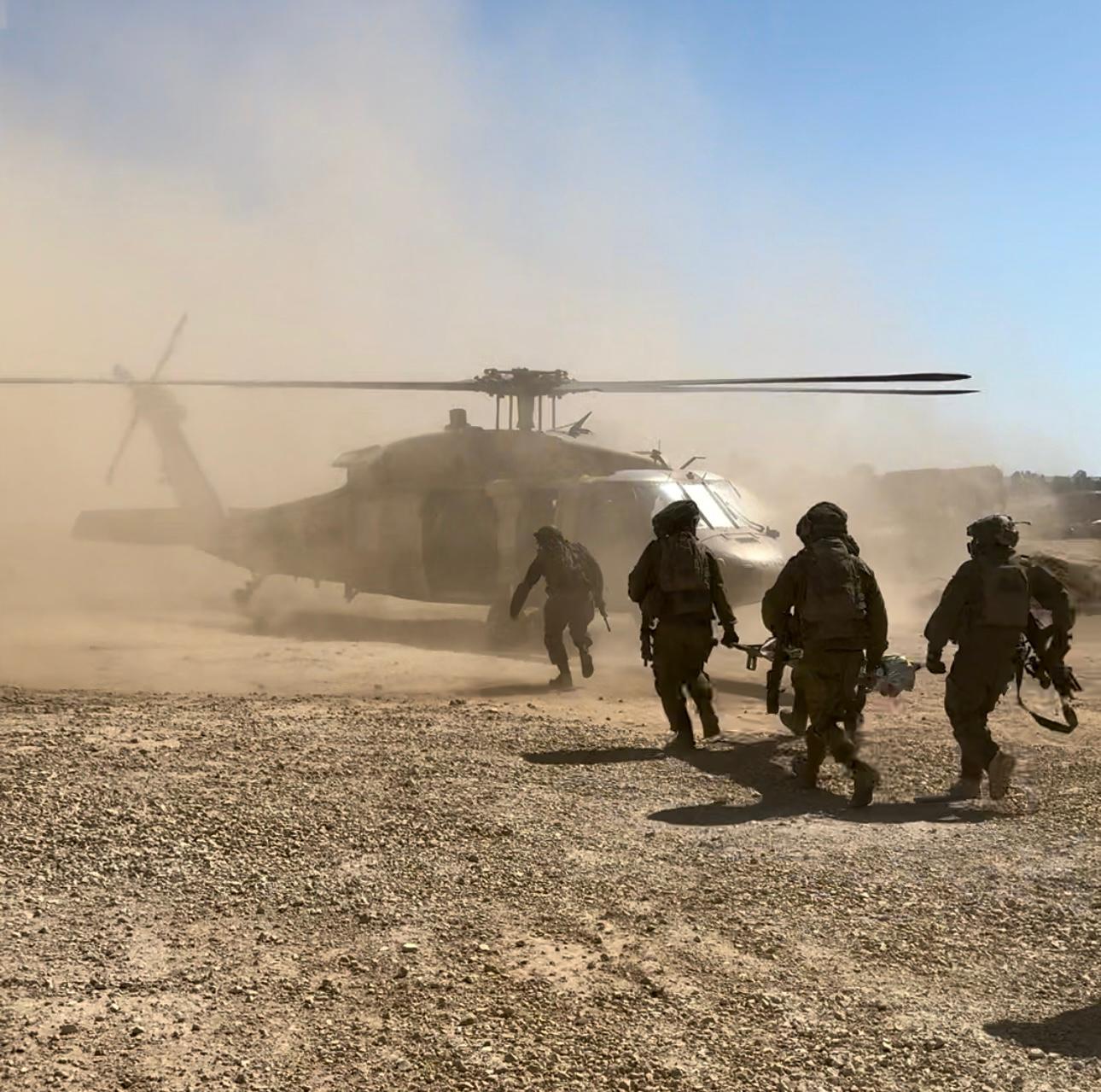
My IDF Palmar unit medivacing a wounded soldier from Gaza. Photo ©️ T. Book, 2026
Some statistics are easy to skim past. This is not one of them.
During the Second Lebanon War in 2006, roughly 15% of Israeli soldiers wounded in combat died of their injuries. In the current war, that figure is 7.1%. In other words, a wounded soldier today is about half as likely to die as one in 2006.
I am a reservist in a PALMAR, a medical extraction unit of the IDF, and have served in it since October 2023 on the Gaza and Lebanon fronts. But I want to set my own experience aside and let the data lead, because what the numbers show deserves a wider audience.
The numbers
The figures come from IDF data presented to Fox News. According to Fox News, the mortality rate among combat casualties stood at approximately 15% in 2006 and 7.1% during the Swords of Iron War.
They are not just an Israeli claim. A 78-page US Army report, “Israeli Defense Force Medical Lessons Learned,” cites nearly identical figures: a decline from 14.8% in the Second Lebanon War to 7.1% in the current war.
The most striking detail is that the improvement came despite a significant increase in the proportion of wounded soldiers suffering severe injuries. The war is not producing easier wounds. It is producing more survivable outcomes from harder ones.
To be clear about what the statistic measures: it is not the share of all soldiers who die in war. It is the share of those already wounded who do not survive. Every point of that percentage is a person who reached a medic alive but whose fate was still in doubt.
The clock
The IDF medical specialist who briefed Fox News Digital put it simply. In the Second Lebanon War, it took 15 to 20 minutes for advanced life support to reach a casualty. Now it can arrive immediately or within four minutes.
Anyone who has seen a serious bleeding injury understands why that matters. Severe blood loss is among the fastest ways to die, and the 2012 American study the IDF specialist credited as a foundation, “Death on the battlefield (2001–2011),” looked at exactly this kind of loss in Iraq. Fifteen minutes can be too late. Four minutes is often enough.
What changed
According to the reporting, several factors are behind the improvement.
Doctors closer to the fighting. The specialist described medical personnel on the battlefield, including a doctor in every company, which lets critical decisions be made early.
Fast evacuation. Helicopters carry gravely wounded troops to treatment centers, and the specialist called rapid evacuation to Israeli hospitals a second key advance. In my unit, we work alongside the Air Force’s Search and Rescue Unit 669 to make that happen.
Blood at the point of injury. The IDF has emphasized blood products since 2013, and the specialist said Israel was the first to use plasma at the point of injury. Coolers carried on the backs of first responders bring blood forward. Fox News quoted the specialist saying the method “saved significant numbers” of wounded troops. The above mentioned US Army report states:
The IDF prioritize pushing lifesaving blood and plasma products directly to the point of injury (POI) and forward echelons rather than waiting for rear-hospital arrival.
Shared information. A data system lets every relevant medical officer in the chain see a patient’s information. The medic, the helicopter crew and the hospital team all know what has already been done.
None of these ideas is exotic. Together, and applied at speed, they appear to be producing a measurable difference in who comes home.
The world is paying attention
The US Army’s report recommends that American medical teams study Israel’s evacuation systems, data collection, preventive medicine and ability to deliver advanced care in high-intensity combat. Its authors wrote that Israel went through a painful transformation during active combat that the US now has the chance to avoid, adding that “the time to prepare is now.”
An IDF spokesman described the study as a joint collaboration in which American officers came to learn from the IDF. The learning has gone both ways for years, and Israel built on American research from Iraq.
Dr. Marc Siegel, Fox News’s senior medical analyst, argued that Israeli battlefield advances, including surgical techniques and the burn treatment NexoBrid, help not just today’s wounded but fuel medical and surgical advances around the world.
Why this matters beyond the battlefield
War is terrible. No survival statistic changes that, and I would give up every figure in this article to never need them.
But medicine has always advanced fastest where the pressure is greatest. Tourniquets, blood transfusion, trauma surgery and rapid evacuation all matured in wartime before they became routine in civilian life. The lesson of this data is no different. Getting blood and doctors to a patient within minutes, and keeping a clear record of their care from the first moment, are not just military ideas. They apply equally to a highway crash, a terror attack or a natural disaster, anywhere in the world.
A mother who gets her child back because an ambulance crew carried blood to the roadside will never know that the idea was refined in Gaza or Lebanon. She does not need to. That is how progress in emergency medicine usually works.
Behind the percentages
I tell the story of how this approach came together in my book, Heroes of Palmar: How One IDF Unit Revolutionized Combat Medicine in Gaza, published by Gefen Publishing House (and available at gefen.com and Amazon). The PALMAR concept was born after Operation Protective Edge in 2014, out of a refusal to accept that wounded soldiers must wait.
But percentages can only tell you so much. A drop from 15% to 7.1% sounds like an achievement of systems and logistics, and it is. It is also thousands of individual moments in which a soldier saw a helicopter and a medical team arrive and understood s/he would not be left alone, that, “the door to the hospital was already open.”
More than half of those who would once have died are now going home. That is the number worth remembering.
Dr. Tuvia Book is an international speaker, author, tour guide and IDF reservist who serves in a PALMAR medical extraction unit.
Related Topics
Related Posts