The views expressed herein are solely mine.
Greenland Was Never the Prize—Control Was
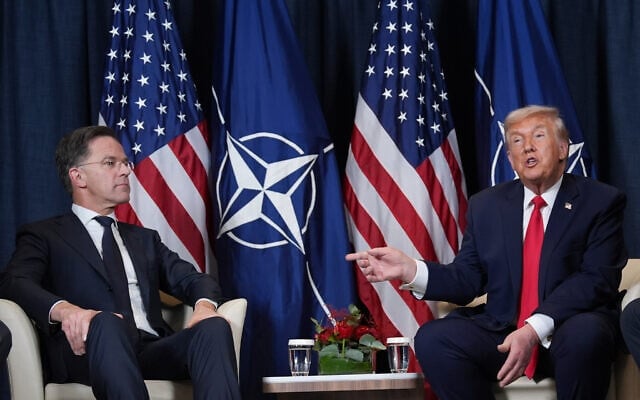
US President Donald Trump, right, meets with NATO Secretary General Mark Rutte during a meeting on the sidelines of the Annual Meeting of the World Economic Forum in Davos, Switzerland, January 21, 2026. (AP Photo/Evan Vucci)
Donald Trump never wanted Greenland the way critics pretended he did. He wanted what serious powers have always wanted: control without conquest. The noise about “buying” Greenland was never literal—it was leverage. Just like the Panama Canal, where Trump’s early bluster vanished the moment American-linked capital pushed Chinese firms aside and Washington secured decisive influence. Ownership was irrelevant. Outcome was everything.
Greenland is Panama at Arctic scale. It dominates the maritime and aerial choke points between North America and Europe, sits atop critical minerals Western supply chains desperately need, and anchors the northern arc of missile warning and interception. That is why, after weeks of pressure, Trump suddenly backed off on tariffs, spoke of a “framework,” and emphasized cooperation at Davos. Because the deal was already taking shape.
Recent moves tell the story. The US is trimming symbolic roles inside NATO while tightening hard capabilities where they actually matter. Advisory posts are cut; radar, airspace, and Arctic access are reinforced. NATO’s secretary general openly credited Trump for forcing Europeans to spend more—an admission that coercion worked. Denmark protested loudly, then quietly accepted that Greenland’s security architecture is no longer negotiable.
This is not imperialism. It is functional absorption. Greenland remains formally Danish, but operationally American-aligned: US air dominance, maritime surveillance, missile defense integration, and resource access locked away from China. No annexation means no rebellion, no legal mess, no moral theater for Europe’s professional protest class.
Trump understands a rule most liberal strategists refuse to accept: in the 21st century, sovereignty is secondary to systems. You do not need flags if you control airspace. You do not need borders if you command logistics. You do not need treaties if your adversaries are structurally excluded.
Panama proved it. Greenland confirms it. The outrage was always the distraction. The control was always the objective.
Related Topics
Related Posts