Gulf Capital Bets on Syria’s Revival
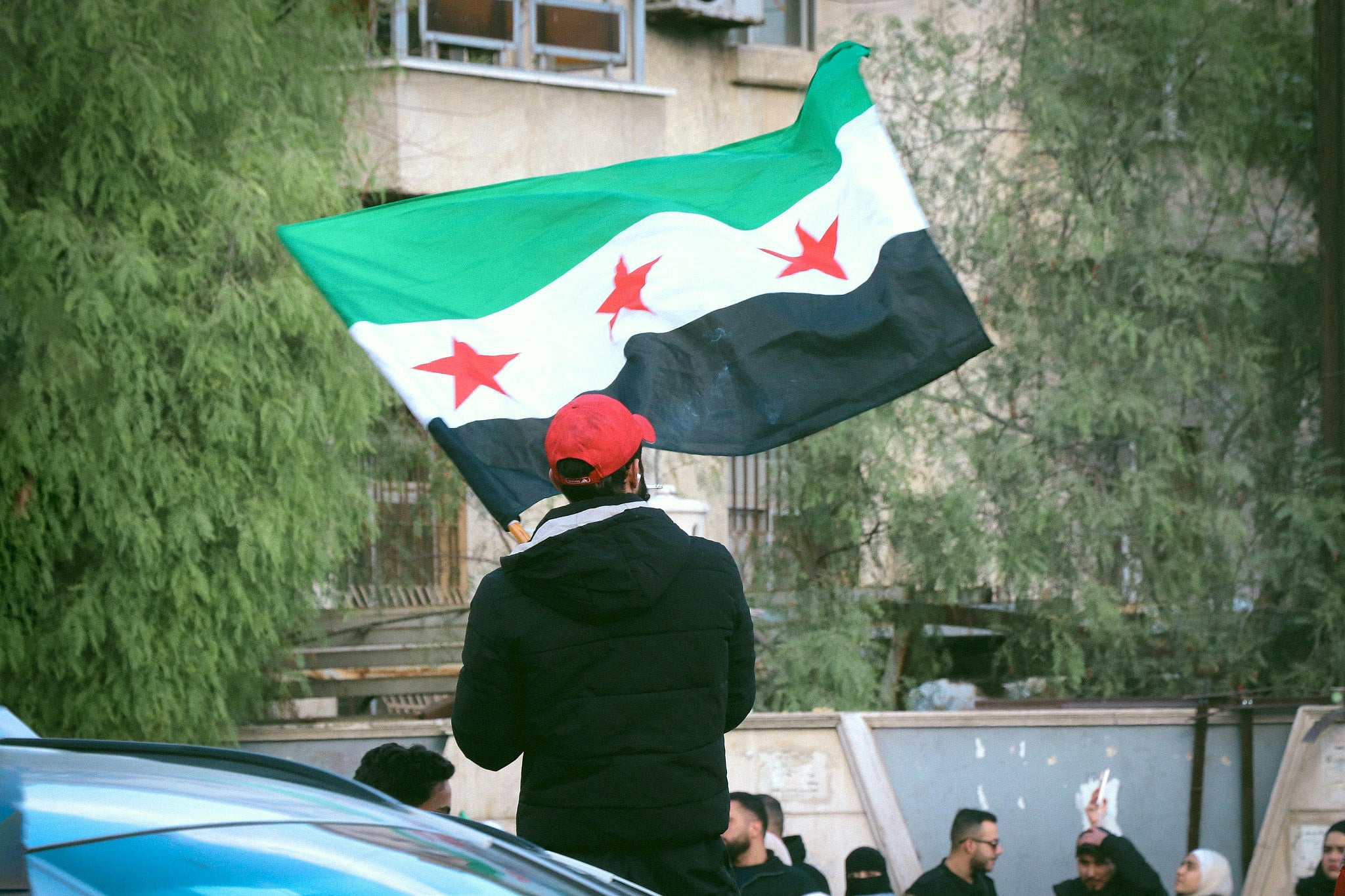
In May 2026, two events occurred within days of each other that, taken separately, might have registered as routine diplomatic and financial news. Taken together, they represent the first credible outline of a post-war Syrian economy.
Earlier in May, a Mastercard and a Visa card were tapped on payment terminals in Damascus, completing Syria’s first successful international card transactions in fifteen years. Four days earlier, the Central Bank of Syria had authorized licensed banks to reconnect with global payment networks, and Qatar National Bank had moved within hours to activate card services on the ground. The speed of execution was itself a signal. Mastercard had signed a memorandum of understanding with Syria’s central bank in September 2025. Visa had announced a phased digitization roadmap with the central bank in December. The infrastructure had been prepared; what changed in May was that it was finally switched on.
The significance extends well beyond consumer convenience. Syria’s exclusion from Visa and Mastercard was not a technical matter. It was a political one, a direct consequence of the sanctions architecture that had sealed the country off from the international financial system since the early 2010s. The United States removed its broad Syria sanctions program in June 2025. Congress repealed the Caesar Act in December. The European Union restored full trade relations on May 11, 2026. The return of international payment rails is the financial expression of a geopolitical shift that has been accumulating for over a year, and it matters precisely because it is foundational. A Visa terminal at a Damascus merchant is not a symbolic gesture. It is the infrastructure on which foreign investment, tourism, remittances, and cross-border trade depend. Without it, the broader reconstruction agenda remains aspirational.
The second event was more visible, but its depth is similarly easy to underestimate. On May 11, the first Syrian-Emirati Investment Forum opened at the Ebla Cham Hotel in Damascus, bringing together Syrian government officials, the UAE Minister of Foreign Trade Thani Al Zeyoudi, and a substantial delegation of Emirati businessmen. The forum was organized by the Syrian Investment Authority. Syrian President Ahmad al-Sharaa attended. The atmosphere was one of deliberate momentum rather than ceremonial formality.
The numbers announced at the forum were substantial. Non-oil trade between the UAE and Syria reached $1.4 billion in 2025, an increase of 132 percent over the previous year. Mohamed Alabbar, founder of Emaar and Eagle Hills, disclosed that his company was studying real estate projects in Damascus valued at up to $12 billion and a coastal development in Latakia worth an additional $7 billion. DP World, the Emirati port operator, has already signed a 30-year agreement to manage the port of Tartous, pledging $800 million in modernization investment. Sharjah’s Dana Gas signed a preliminary deal with the Syrian Petroleum Company to redevelop gasfields near Homs. Syria received $28 billion in Gulf investment across all sectors in the first half of 2025, following amendments to its foreign investment law permitting full foreign ownership of projects. Saudi companies, for their part, have signed contracts reportedly worth around 60 billion riyals in aviation, telecommunications, infrastructure, water, and energy, including projects tied to Aleppo International Airport and the launch of Flynas Syria.
The scale of these figures invites both attention and caution. Preliminary agreements are not completed projects. Eagle Hills’ proposals for Damascus and Latakia remain in the negotiation phase, and Syria’s ability to absorb investment at this pace depends on regulatory simplification, security stability, and the resolution of financing constraints that have not yet been fully addressed. The Syrian Investment Authority has introduced one-stop-shop licensing and accelerated approval processes, and officials in Damascus have been deliberate in presenting these changes as structural rather than cosmetic. Whether that framing reflects reality will be tested over the next several years.
What is already clear, however, is the strategic logic driving Gulf engagement. The World Bank has estimated Syria’s reconstruction needs at about $216 billion, approximately ten times the country’s 2024 gross domestic product. That gap between need and available capital represents, depending on one’s vantage point, either an obstacle or an opportunity. Gulf states, particularly the UAE and Saudi Arabia, appear to have concluded it is the latter. The combination of political normalization, amended investment law, sanctions relief, and Syria’s genuine need for capital and expertise has created conditions in which Gulf investment carries both commercial and strategic returns.
The UAE is not operating in isolation. Qatar National Bank’s rapid activation of card payment services, Etihad Airways’ announced resumption of Abu Dhabi-Damascus flights in June, and the broader pattern of Gulf engagement suggest a coordinated, if not formally coordinated, regional posture. Damascus has also been making renewed contacts with international financial institutions, and also has reportedly taken steps to reconnect with the financial infrastructure tied to the New York Fed, and to the SWIFT network. These developments indicate early progress toward financial reintegration, though implementation remains incomplete.
The contrast with the previous decade is stark. For years, Syria existed in a kind of suspended economic animation, its financial system cut off from international networks, its infrastructure progressively degraded, its population dependent on cash and informal channels. The return of Visa and Mastercard is a small but concrete reversal of that condition. The UAE investment forum is a more visible one. Neither resolves the underlying complexity of Syria’s reconstruction, and neither should be mistaken for arrival at a destination. What they represent, rather, is the beginning of a credible trajectory, one in which Gulf capital, global financial reintegration, and a new Syrian government willing to invite external partnership are moving, for the first time in fifteen years, in the same direction.
Whether that trajectory holds will depend on factors that remain genuinely uncertain: the security environment, the pace of institutional reform, the behavior of international investors once the initial momentum settles. But the architecture of renewal is being assembled. In the span of a single week in May 2026, Syria plugged back into the global payment system and hosted its first bilateral investment forum with the UAE. For a country that spent more than a decade in near-total economic isolation, that is not a small thing.