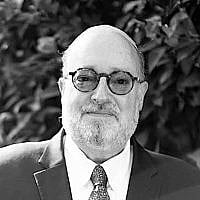
President and Rosh HaYeshiva, Ohr Torah Stone
Haftarat Parshat Lech Lecha: The Challenge to Avraham’s Legacy
Our haftarah speaks enigmatically of the “one from the east” (Isaiah 41:2), whom God called forth to usher in a new age of justice and goodness. Our Sages identify this man as Avraham Avinu, the central figure of our parsha, who is referred to tenderly just a few verses later as “Avraham, who loved Me” (v. 8). As we read this week of Avraham’s first steps into the land of Canaan, the haftarah reminds us that we return to this land as his heirs – inheriting his moral legacy along with the promised return. This week that legacy was challenged publicly, and I believe the challenge demands an answer.
In a letter published last week, Rabbi Dov Lior issued a halakhic ruling permitting Jews to harvest olives from Arab-owned groves throughout Judea and Samaria. His reasoning runs as follows: The Jewish people never despaired of the land. Since land cannot be stolen, it never left our ownership. The owners cannot reach their orchards for security reasons, so they must have despaired of the fruit. Any claim they had for planting the trees has long been repaid by the fruit they have eaten. He therefore concluded that harvesting their olives is permitted, and even meritorious, because it asserts our ownership and fulfills the mitzvah of conquering the land.
This stands in stark contrast to the message of our haftarah. I do not write this in the hope of changing the mind of the rabbi who wrote the letter. I write out of responsibility to our youth, who are searching for direction. They must not mistake his letter for sound halakhic analysis; the opposite is true.
Chillul Hashem is not a matter of public relations. It concerns how our words and actions represent God’s name in the world. “Do not profane My holy name – that it may be sanctified in the midst of the Israelites.” (Leviticus 22:32). When our Torah is presented as permission to take a person’s property simply because that person is not Jewish, it is made to stand against Torah values, distorting the very Torah it aims to uphold.
Furthermore, the Ramban teaches that the technical rules of halakha cannot address every situation. The Torah therefore commands us to do “what is right and what is good” (Ramban on Devarim 6:18), insisting that Torah values must guide our conduct in complex situations, when the halakhic outcome is not always clear.
On the halakhic level, our people’s eternal bond with the land and the mitzvah to settle it do not make every plot and parcel the collective property of the Jewish people. They do not strip non-Jewish residents of their property rights. The principle that land cannot be stolen is a rule within the laws of theft. It cannot be turned into proof of title to a particular plot. A long line of authorities, from Tosafot and the Meiri to Rav Kook and Rav Herzog, limit the prohibition of lo techonem (selling or renting land to non-Jews) to idolaters, and thus Christians and Muslims have the right to be landowners.
Abandonment (ye’ush) of the fruit cannot be presumed just because harvesting is difficult, and it certainly cannot be presumed when the IDF and Jewish volunteers stand ready to help the owners reach their trees. Above all, the halakha is explicit: it is forbidden to steal even the smallest amount, whether from a Jew or a non-Jew (Rambam, Hilkhot Gezela Vaaveida 1:2; Shulchan Arukh, Choshen Mishpat 359:1). The Tosefta goes further and calls theft from a non-Jew more severe, because it brings chillul Hashem (Tosefta Bava Kama 10:8).
Rabbi Naftali Zvi Yehuda Berlin, the Netziv, in his introduction to Bereshit, writes that the Avot are called yesharim, the upright, because they treated the nations around them with care and love, including idolators. Avraham even prayed on behalf of the people of Sodom and Amora, despite rejecting their ways. Avraham “walked before God” (Genesis 17:1). As the haftarah reminds us, he is “one from the east” who spread godliness through the world. Yet he also insisted on dealing fairly with the people who lived in the land before him.
Rashi explains that the quarrel between the shepherds of Avraham and the shepherds of Lot mentioned in our parsha was about exactly this. Lot’s shepherds grazed their flocks in other people’s fields, and Avraham’s shepherds rebuked them for theft. Lot’s men answered that the land had been promised to Avraham and that Lot was his heir. The Torah rejects that answer with a single clause: “the Canaanite and the Perizzite dwelled then in the land” (13:7; Rashi ad loc.). The promise was real, but it did not entitle anyone to take what belonged to others. The argument of Lot’s shepherds has been revived in our day. The Torah long ago made clear which side of the argument it supports.
To be Avraham’s children is to be ethical ombudsmen to the world. When words like Rabbi Lior’s are presented as the voice of the Torah and of truth, we cannot remain silent. We must teach the next generation the Torah of Avraham: respecting our neighbors’ property does not lessen our love for the land. It is how we live in the land according to the Torah, and how we honor the legacy of our forebears and live up to the example they set: “You are My servant; You have I chosen, and I will not reject you” (Isaiah 41:9).
Related Topics
Related Posts