
Middle East Analyst
Hamas Disarmament: Mechanisms and Challenges
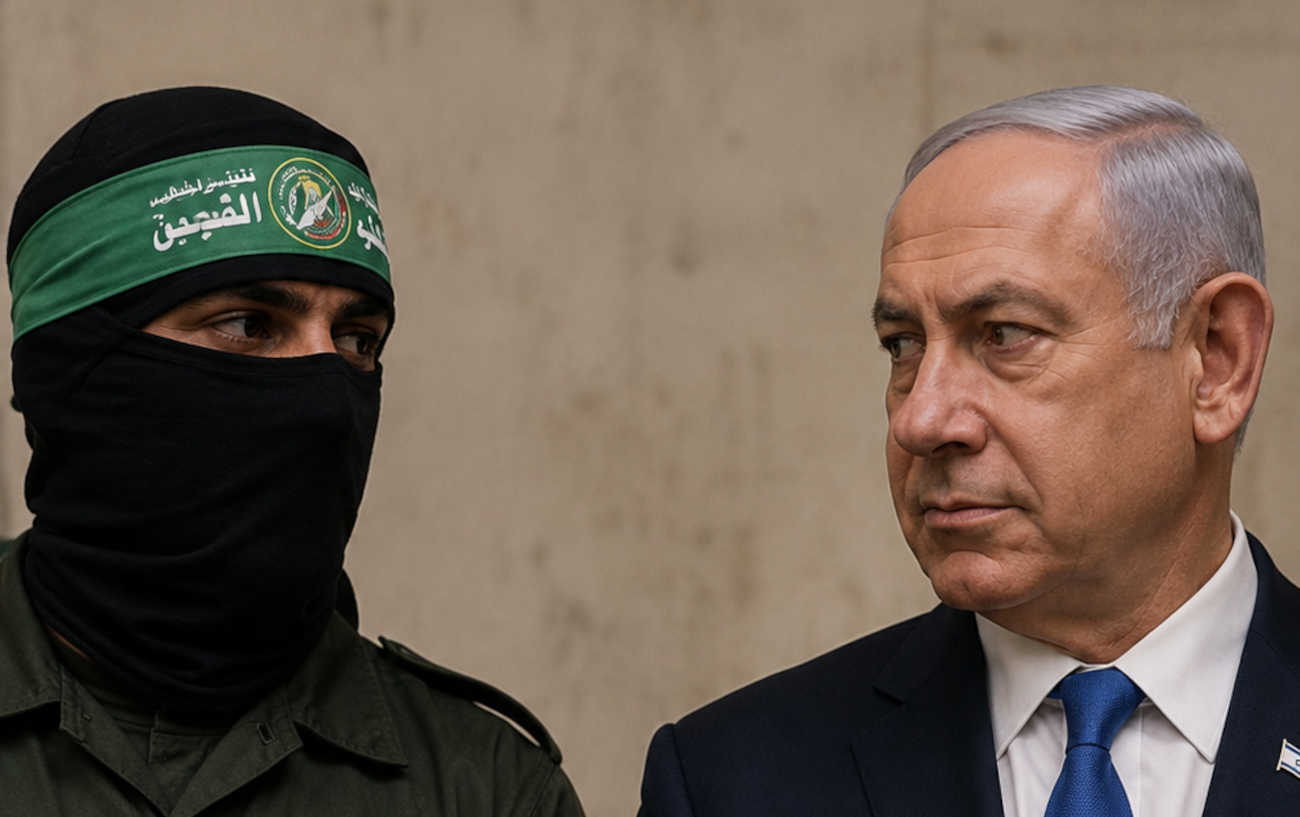
by author (AI)
Part one of this series looked at:
Why Gaza sits at the center of Trump’s regional architecture, and why Netanyahu’s habit of accepting the plan publicly while resisting it privately has become harder to sustain as Israel’s October 27 election approaches. This installment looks at the piece that has actually stalled implementation for eight months: the mechanism by which Hamas disarms and Israel withdraws, and the growing gap between what the framework requires and what Israel’s government is doing on the ground.
What the Framework Actually Says
Start with the text, because the text is more specific than the public argument over it suggests. Resolution 2803, adopted in November 2025, ties Israeli withdrawal in its operative paragraph to “standards, milestones, and timeframes” connected to demilitarization — the IDF pulls back as the International Stabilization Force (ISF) establishes control and stability in each area, not once Hamas has been fully disarmed. The Board of Peace’s implementing roadmap, released July 30, makes the same architecture explicit and concrete: decommissioning of heavy weapons “shall be linked to an Israeli withdrawal, in phases,” with a National Committee for the Administration of Gaza (NCAG) administering the process “in a gradual, sequential and time-bound manner,” certified at each step by an International Verification Committee (IVC) before the next phase unlocks. The Board of Peace’s own summary of the roadmap states it plainly: the process is “based on phased implementation,” and withdrawal is tied “to verified progress of the decommissioning process — rather than to predetermined dates.”
In other words, the framework everyone signed onto describes a reciprocal choreography: a zone is identified, Hamas’s heavy weapons and militia armaments in that zone are decommissioned and stored under NCAG authority, the IVC certifies the handover, and Israeli forces withdraw from that zone as the ISF moves in. Then the next zone. Nowhere in the resolution or the roadmap does full Hamas disarmament function as a precondition for any further Israeli withdrawal — the two tracks are meant to move together, phase by phase.
Israel’s Actual Position
This is where the gap opens. Reporting from the past several days indicates Israel’s government wants disarmament substantially front-loaded — full demilitarization achieved and verified before Israel commits to further withdrawal from its current lines — rather than accepting the reciprocal, zone-by-zone model the roadmap describes. Legal analysis of the newly approved international-force arrangement makes the conflict explicit: a reported Israeli position to withhold further withdrawal “until Hamas is completely disarmed” would, if implemented, displace the resolution’s own system of phased withdrawal milestones. That is not a minor interpretive dispute. It is Israel asking to convert a framework built on parallel, verified, incremental steps into a sequential one where Israel’s obligations don’t begin until Hamas’s are essentially finished.
The events of the past two days sharpen this further. Hours after Hamas approved the Board of Peace’s roadmap on July 31, Israeli strikes across Gaza killed at least two people; strikes continued into a second day on August 2, killing at least nine more. Israeli Energy Minister Eli Cohen, a member of Netanyahu’s security cabinet, said publicly that there is “no deal to halt attacks,” and went further — arguing that Israel, which he said already controls 70 percent of the Gaza Strip, should move toward “full control” of it. That is a materially different position from “we want stronger verification before we withdraw.” It is at least one senior minister publicly arguing against further withdrawal at all, on the same day the other party to the agreement took the step the roadmap asked of it.
The 70 percent figure is itself worth sitting with. The Yellow Line agreed in October 2025 left Israel in control of roughly 53 percent of Gaza pending the phased process outlined above. Israeli forces have since expanded well beyond that line — Cohen’s own figure confirms it. That means the dispute isn’t only about the terms of future withdrawal; it’s also about whether Israel returns to the position it already agreed to before any new phased withdrawal conversation can credibly begin.
Hamas’s Side of the Ledger
None of this excuses Hamas’s own record. The Board of Peace’s first biannual implementation report, submitted in May, cited Hamas’s refusal to decommission its weapons as a central obstacle to progress in the resolution’s first six months — meaning the reciprocal mechanism hasn’t only failed to advance because of Israeli conduct. Eight months after adoption, none of the interlocking steps envisioned by the resolution — decommissioning, ISF deployment, phased IDF withdrawal, eventual transfer of authority to a reformed Palestinian Authority — had meaningfully moved, according to the UN Security Council’s own July monitoring report. Hamas’s approval of the roadmap on July 31 is the first concrete sign of forward motion from its side in months, which is precisely what makes Israel’s continued strikes and Cohen’s full-control remarks the following day so difficult to reconcile with the framework both parties nominally accept.
Why Neither Side Gets the Benefit of the Doubt
Both sides have legitimate grounds for skepticism. Israel has spent two years watching Hamas exploit ceasefires to rearm and reconstitute command structures, so a demand for verified proof before ceding more ground is not paranoia — it is a lesson learned at cost. Hamas, for its part, has reason to doubt that Israel will actually withdraw once its weapons are gone, given that Israeli forces have already expanded well past the line they agreed to hold in October 2025. Neither party has given the other much reason for good faith, and nothing in the resolution or the roadmap can manufacture trust that isn’t there.
That mutual distrust is precisely why a phased, benchmarked structure is the only mechanism that could plausibly work, rather than a design flaw to be argued around. Neither 2803 nor the roadmap assumes goodwill on either side — they assume the opposite, and try to build a process that doesn’t depend on it. Each phase is small enough that a party reneging is caught and costly rather than catastrophic, and each verified handover on one side buys a matching concession from the other, so neither Israel nor Hamas has to extend blind trust all at once. There is no guarantee either side ultimately honors its commitments; the mechanism doesn’t eliminate that risk. What it does is convert the question from an unverifiable promise into a sequence of observable, checkable steps — giving each party a real, repeated opportunity to demonstrate whether it is negotiating in good faith or stalling, phase by phase, rather than asking outside observers to simply take either side’s word for it.
Why the Mechanism Matters More Than the Rhetoric
This is the level at which Trump’s “very disappointed” framing has to be evaluated, and it is more concrete than the broader statehood argument covered in part one. The statehood clause is aspirational and heavily conditioned — genuinely contestable ground where Israel has room to argue the language doesn’t bind it to anything specific yet. The phased-withdrawal mechanism is not aspirational. It is an operative paragraph with a defined sequencing logic, reinforced by a roadmap Israel’s own government did not publicly reject when it was released. Insisting on full disarmament before any further withdrawal — or, as Cohen suggested, moving toward full reoccupation instead — isn’t a matter of interpretation. It runs against the specific mechanism Israel is on record having accepted twice: once in the resolution, and again when it did not reject the July 30 roadmap outright.
That is likely why Washington’s pressure on this particular dispute has been sharper and more immediate than its pressure on the statehood question, which has simmered for eight months without triggering the same public rebuke. Statehood is a fight over the horizon. Disarmament sequencing is a fight over whether the mechanism in front of both parties right now is honored at all — and it is happening in real time, with Israeli strikes continuing as this piece is being written.
What to Watch Next
The IVC’s actual verification standard — how much compliance it will require before certifying a phase complete, and how fast it can move — is the mechanism most likely to determine whether this dispute resolves or hardens into the next flashpoint before October 27. That, along with the unresolved question of whether Israel first returns to the Yellow Line before any new withdrawal phase begins, will be the subject of the next installment in this series.
Related Topics
Related Posts