
Russian-American-Israeli Palestinian. Palestine is Israel.
Hands Off My Palestine
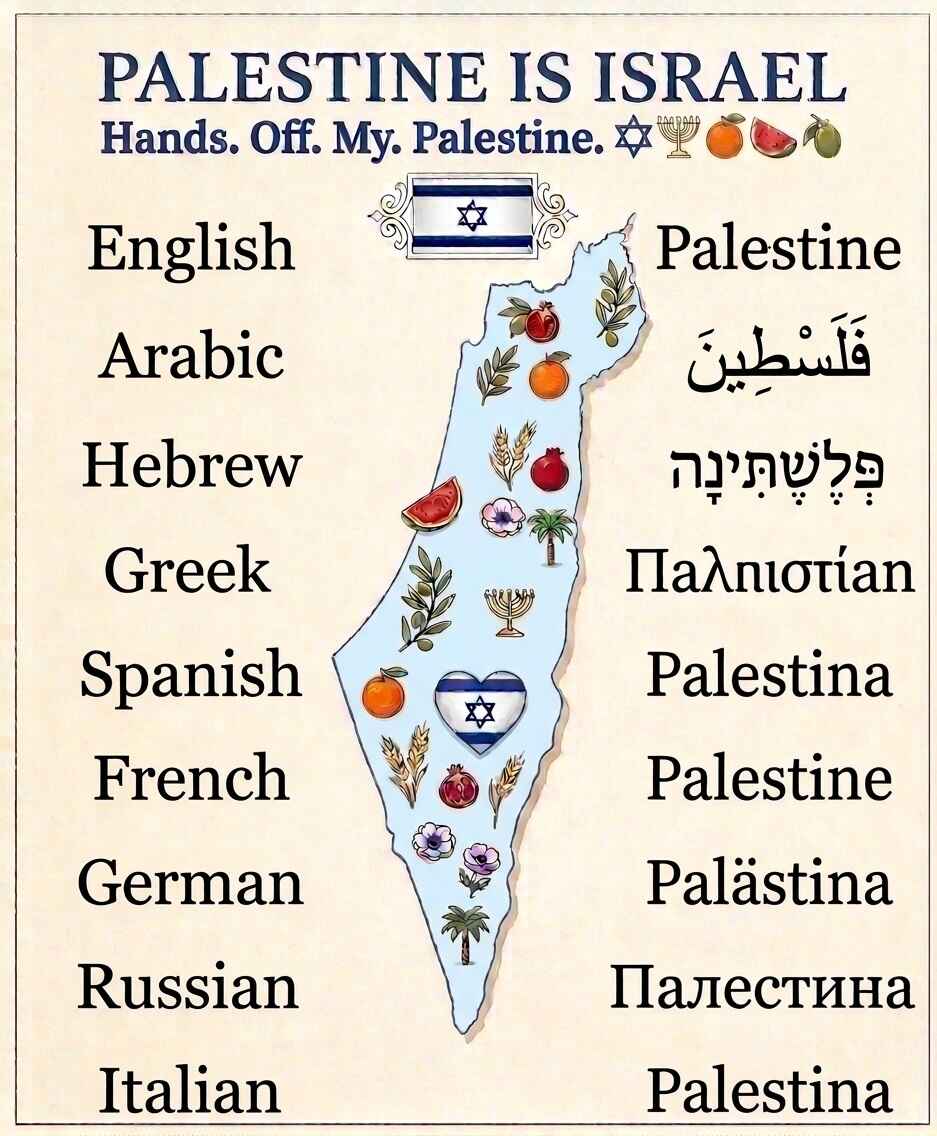
The Palestine Reclamation Project: Palestine Is Israel. Hands. Off. My. Palestine. Image © Ivan Bassov, 2026. Licensed under CC BY 4.0.
Reclaiming the Name That Exists Only Because Israel Does
What is Palestine?
The question seems straightforward. It isn’t.
Ask different people, and you will get radically different answers.
There is no Palestine.
Palestine is Jordan.
Palestine is Gaza and Judea and Samaria.
Palestine is the State of Palestine.
Palestine is the entire Land of Israel.
These definitions contradict one another.
Yet political discourse routinely moves between them as though “Palestine” had one obvious, timeless meaning.
It doesn’t.
The battle over Palestine is, first of all, a battle over the definition of Palestine.
And that battle matters because definitions do not merely describe reality. They create the framework through which reality is understood.
So before asking what Palestine is, we should ask:
Who gets to define it?
“There Is No Palestine”
One position rejects the premise altogether:
There is no such thing as Palestine, and there are no Palestinians.
The argument has a straightforward historical basis.
There was never an independent sovereign Arab state called Palestine. The territory was ruled by successive empires and administrations, while the Arabs living there belonged to the broader Arab population rather than to an ancient Palestinian nation-state.
Moreover, Mandatory Palestine became Israel, and Zionists who had identified as Palestinians became Israelis.
As an argument against the existence of a historical Palestinian state, this is correct.
But it contains a logical mistake when it goes further and concludes that Palestine itself never existed.
A geographic name does not have to designate a sovereign country.
The Levant was never a sovereign country. Neither is Siberia. Yet nobody concludes that the Levant or Siberia therefore never existed.
Palestine is no different.
The name was used as a geographic designation long before the modern State of Israel. The Greek term Palaistinē appears in the work of Herodotus in the fifth century BCE, and the Roman period produced Palaestina as an administrative name. The term continued in various forms through subsequent centuries. By the twentieth century, it was sufficiently established that the League of Nations formally created the Mandate for Palestine, explicitly using “Palestine” as the name of the territory entrusted to Britain.
So two propositions must be kept separate:
There was no sovereign Palestinian state.
And:
There was a geographic and administrative name called Palestine.
The first does not disprove the second.
In fact, the historical existence of the name is precisely why the argument needs to move beyond simply denying it.
“Palestine Is Jordan”
A second definition takes a very different approach.
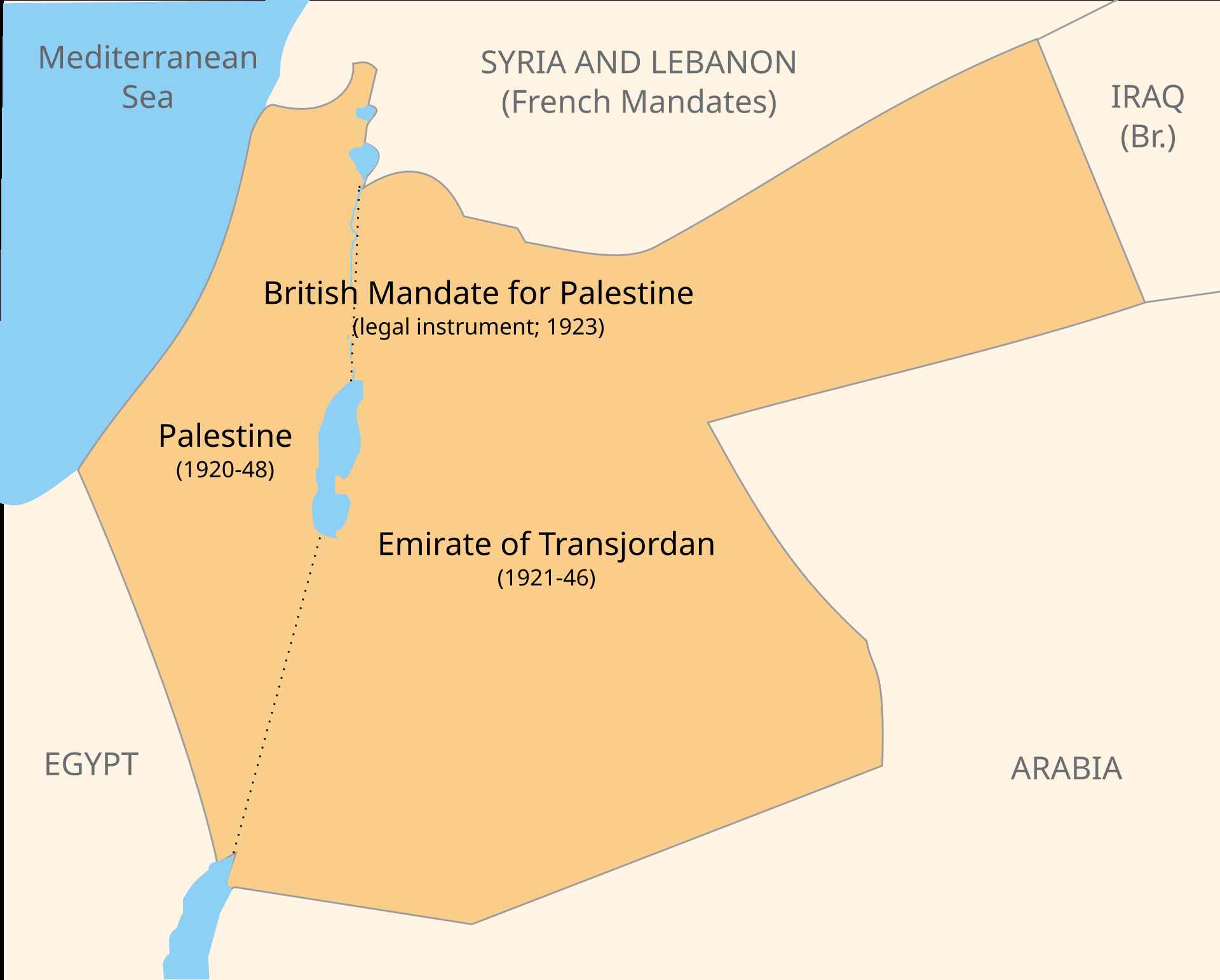
Instead of denying Palestine, it argues that the Arabs already received 77% of the territory of Mandatory Palestine.
In 1922, Transjordan was separated from the Palestine Mandate and placed under a separate administration. It subsequently became the Hashemite Kingdom of Jordan.
The argument is therefore:
A vast Arab territory was separated from the Palestine Mandate and ultimately became Jordan. Why should another Arab state be carved out of the territory west of the Jordan?
This is an important historical argument.
But it does not establish the equation:
Palestine = Jordan.
Transjordan became Jordan.
It did not become a country called Palestine.
The 1922 arrangement also did not magically settle the meaning of the word Palestine for all subsequent generations. It changed the political administration of territory. It did not create a universal dictionary definition.
The Jordan argument is therefore useful for understanding the history of the territory—but insufficient as a complete definition of Palestine.
The name Palestine is too precious to be surrendered to Jordan.
Today, Jordan has little reason to claim the name. Moreover, it actively denies that Jordan is Palestine. But that could change. If Israel begins successfully reclaiming Palestine, asserting that Palestine is Israel, Jordan may discover that it wants the name after all, insisting that Palestine is Jordan.
That’s when the real battle for Palestine starts.
“Palestine Is Gaza and Judea and Samaria”
A third definition is now deeply embedded in international political vocabulary:
Palestine is Gaza and Judea and Samaria—the so-called “West Bank.”
Israel is Israel.
Palestine is the territory outside Israel.
At first glance, this sounds like a geographical definition.
Look more closely, however, and it reveals an assumption:
Palestine is being defined by its separation from Israel.
Israel becomes the fixed reference point.
Everything designated as not-Israel becomes Palestine.
This is not an inevitable property of the word.
It is a political construction.
And it creates the familiar binary:
Israel versus Palestine.
Once that binary is accepted, the two names appear naturally incompatible.
Israel is one country.
Palestine is another.
Israelis are on one side.
Palestinians are on the other.
But the entire structure depends upon accepting the premise that Palestine must be something other than Israel.
That premise deserves to be challenged.
“Palestine Is the Entire Land”
The extreme ziophobic version goes further.
Palestine is not merely Gaza and Judea and Samaria.
Palestine is the entire Land of Israel—from the Jordan River to the Mediterranean Sea.
Israel therefore becomes, depending on the speaker, an occupier, a colonial project, an illegitimate state, or simply an entity that should eventually disappear.
Here the formula is:
Palestine instead of Israel.
This definition appears to contradict the Zionist claim that there is no Palestine.
Yet the two positions have something surprisingly important in common.
Both assume that Palestine and Israel must be separate concepts.
The denialist says:
Israel exists, therefore Palestine does not.
The extremist ziophobe says:
Palestine exists, therefore Israel should not.
They fight over the conclusion, but they accept the same semantic premise:
Israel and Palestine are competing names for competing political entities.
Why accept that premise?
Why must they be?
The Stolen Palestinian Identity
The same problem becomes even more serious when the word Palestinian enters the discussion.
The existence of Arab communities in Palestine does not establish the existence of an ancient Palestinian nation. The people now called the “Palestinian” people were shaped into a rival national project through the appropriation of the name Palestine and the forced construction of a separate identity. Its defining characteristic is not simply that its members are Arabs who happen to live in Palestine.
Its defining characteristic is political separation from Israel.
The identity exists to establish a separate national claim to the same country in which Zionism established the Jewish state. It transforms a historic geographic name for the Land of Israel into a competing national claim against Jewish sovereignty.
Palestine is not defined by its opposition to Israel. The rival national project is.
Consider a simple thought experiment: imagine that the State of Israel had never been established.
The name Palestine would still exist, and Arab communities would still inhabit the region. Families, communities, religions, languages, and local histories would still exist. But the rival national project built around opposition to Jewish sovereignty would not have the same meaning—or the same purpose.
This is the point so often obscured.
The Arab Palestine project was fabricated in response to the Jewish national revival and the establishment of Israel. Its identity was constructed around a competing claim to the Land of Israel and opposition to Jewish sovereignty over it.
Israel is not incidental to the Palestine project. It is its central reference point.
The Elastic Palestine
The shifting definition of Palestine is not merely a linguistic curiosity. It is politically useful.
When Palestine means Gaza and Judea and Samaria, it describes a proposed state alongside Israel. When it means the entire Land of Israel, it becomes a claim to replace Israel. When it refers to the “State of Palestine,” it functions as a diplomatic and institutional designation.
The same word can therefore support incompatible political objectives without the contradiction being acknowledged.
Palestine expands or contracts according to the argument being made.
That elasticity allows one word to perform several different jobs: geographic designation, territorial claim, statehood claim, national identity, and political aspiration.
The problem is not that the word has had different meanings throughout history. Historical words often do.
The problem is using those different meanings interchangeably while presenting them as one continuous, self-evident reality.
This is why the definition matters.
The Missing Definition
There is, however, one definition that is almost never permitted into the discussion:
Palestine is Israel.
Not Palestine instead of Israel.
Not Palestine as a future state replacing Israel.
Not Palestine as a territory from which Israel must be excluded.
Simply:
Palestine is Israel.
This definition does not deny the historical existence of Palestine.
It does not deny the history of the name.
It does not require pretending that the word was invented yesterday.
And it does not require denying Israel.
Instead, it rejects the assumption that the two names must be opposites.
Israel can be Israel.
Palestine can be Palestine.
And they can refer to the same country—Israel.
The Choice That Changes the Question
This changes the entire argument.
If Palestine is Israel, then the familiar question—
“Do you support Israel or Palestine?”
—is exposed as a false choice.
It is like asking whether someone supports Deutschland or Germany.
The question itself contains the assumption that there must be two countries.
There don’t have to be.
The real political battle is therefore not merely over territory.
It is over who gets to define the name of the territory.
Zionists have too often responded defensively.
Some deny Palestine.
Some say Palestine is Jordan.
Some accept the opposing definition and restrict Palestine to Gaza and Judea and Samaria.
All of these responses leave the basic semantic battlefield intact.
They allow the other side to define the word and then force us to argue inside that definition.
We should stop doing that.
The name Palestine is not the property of the anti-Israel movement.
Its history is not their property.
Its meaning is not their property.
And the existence of Israel does not require Zionists to surrender the word Palestine.
Quite the opposite.
Israel gives us a reason to reclaim it.
I refuse to allow an enemy’s political project to monopolize a historical name.
Palestine is Israel.
That is the definition I choose.
And once we stop allowing others to define Palestine for us, the question changes completely.
It is no longer:
Israel or Palestine?
It becomes:
Who gave them the right to decide that there must be an “or”?
—
See Also
Related Topics
Related Posts