
Digging deep for the truth...
Hashem’s Not Dead: Faith at the Heart of Israel’s Victory
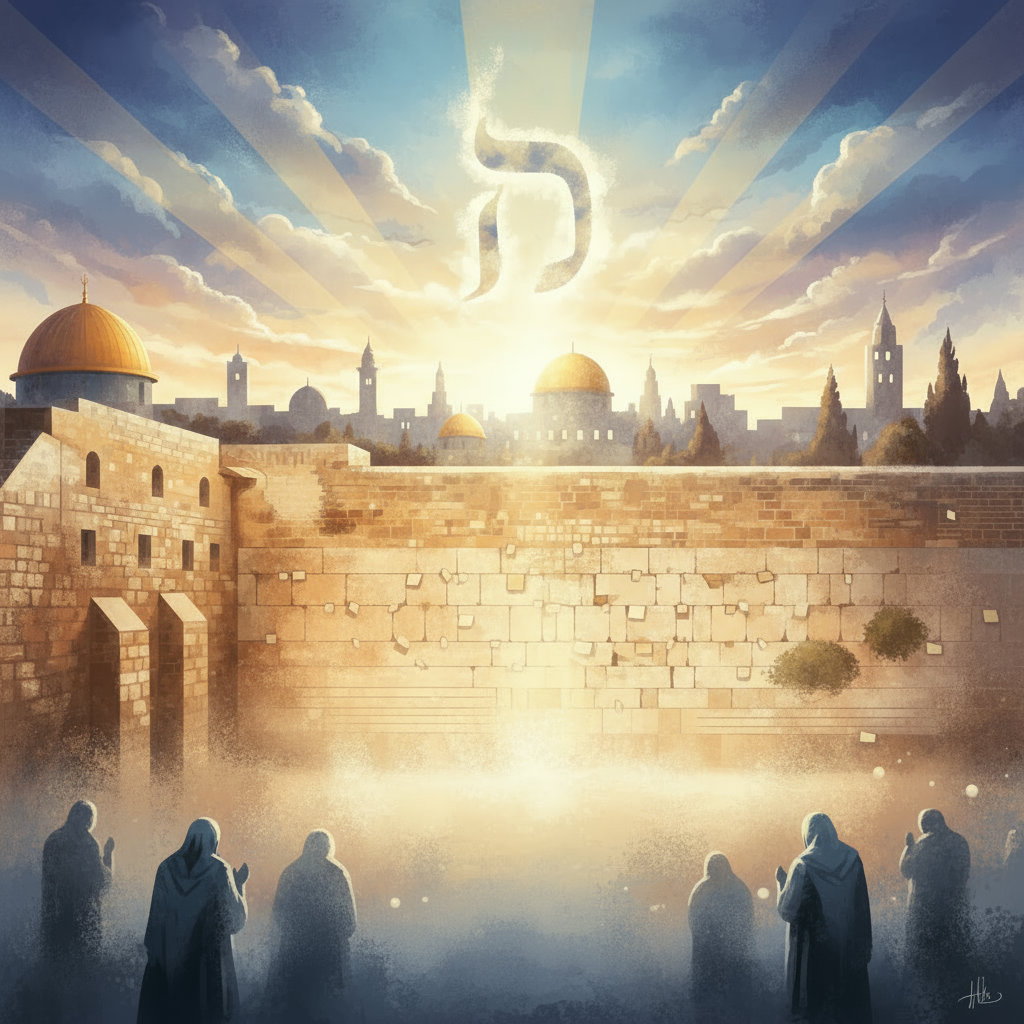
Light Over Zion (Andrea McGurran/2025)
In the wake of national relief and celebration over the projected return of Israeli hostages, a quieter yet deeper reflection is beginning to surface among Jewish communities worldwide. The joy is real—families are preparing to welcome back loved ones, prayers of gratitude ripple through synagogues, and public squares pulse with song. Yet, amid the relief, one truth remains central to the Jewish spirit: none of this unfolds outside of Hashem’s eternal presence.
For many observant Jews, the unfolding events are not merely political or military triumphs, but echoes of divine orchestration. The phrase, “Hashem’s Not Dead,” now finds voice among those seeking to remind a secularizing Israel—and a distracted diaspora—that what may seem like victory through intelligence, diplomacy, or force is, at its foundation, sustained by something greater.
“We mustn’t make the mistake of thinking this victory is only ours,” said Rabbi Ariel Ben-Yosef, a Jerusalem-based teacher of Torah and contemporary ethics. “When we leave Hashem out of the story, we risk rewriting our own history as if divine providence were coincidence. But it’s not.
Warnings and Questions
Even as optimism soars, difficult questions have resurfaced. Could October 7—one of the darkest days in modern Israeli experience—have been prevented? Investigators, both military and civilian, are working to connect overlooked intelligence dots. There were whispers, months before the attack, of online radicalization among Gazan youth, of growing terrorist sympathies exposed in digital forums and ignored columns. A Canadian journalist’s intelligence message allegedly warned of “ISIS-adjacent affiliations” within Gaza years before the attack—an alert that, according to the journalist, may not have been passed on by the Haaretz journalist she entrusted it to.
Official investigations have remained tight-lipped, pending national inquiry results. Still, it raises a pressing question: beyond operational lapses, did a deeper spiritual complacency also weaken the nation’s guard?
The Spiritual Battlefield
“Israel has always fought two battles: one on the ground, one in the heavens,” remarked Professor Leah Korman, a religious sociologist at Bar-Ilan University. “The Torah teaches that when Israel’s people stray into arrogance or self-assuredness—when faith becomes ceremonial rather than spiritual—our enemies sense it. It’s not about punishment, but about alignment.”
That word—alignment—has surfaced repeatedly in interviews across communities from Tel Aviv to Toronto. Survivors of the attacks have spoken of inexplicable moments of deliverance, chance encounters that steered them away from danger, and strangers whose actions saved entire families. Many see these as divine fingerprints, as reminders that faith sustains even in terror’s shadow. But faith, as several rabbis stress, does not guarantee immunity from tragedy.
“Faith is not a shield against suffering,” Rabbi Ben-Yosef added quietly. “It’s the lifeline that helps us remember Hashem’s glory even when the world burns.
When Evil Masks as Power
Islamic extremism continues to darken geopolitical discourse, and few Israelis doubt the moral nature of Hamas’s violence. Yet, away from the military lens, scholars are raising broader concerns: what allows hatred to fester? Why does it persist, generation after generation, despite the evident devastation it inflicts?
Some spiritual commentators point to what they call “the false gods of modernity.” The pre-attack Supernova Festival has drawn attention among religious circles—not as a cause, but as a troubling reflection of spiritual drift.
“When spaces in our homeland become sanctuaries to intoxication and idolatry, even unintentionally, it weakens our spiritual armor,” said Rabbi Yaakov Donenfeld, a Safed mystic known for his fiery sermons. “Evil thrives where holiness is neglected.
Critics argue such interpretations risk victim-blaming. Still, the recurring motif—of divine sovereignty amid chaos—has sparked new conversations across social networks, synagogue sermons, and diaspora essay columns.
“Whether one agrees or not,” wrote columnist Noa Weiss in a recent op-ed, “we are being asked, as Jews, to revisit what it means to live under covenant.
Faith Beyond Politics
As Israel steps uncertainly into what diplomats are calling a “renewed peace phase,” many Israelis whisper a more ancient invocation: Baruch Hashem. Blessed be God. The sense of collective survival—physical, spiritual, national—remains intertwined with divine will. Political arrangements may secure borders; only faith renews the soul that guards them.
The hostages’ homecoming is, to most, proof not only of strategy but of mercy. Yet, as history has shown, respite in Israel is rarely permanent. The peace to come will be tested, but so too will faith.
“Hashem’s Not Dead” is more than a slogan or a reply to a Christian film series—it is a declaration of enduring belief, a reminder that behind every military resurgence and every national prayer, a covenant still stands.
“If we celebrate victory without humility,” Rabbi Ben-Yosef cautioned, “we risk forgetting who delivered it.”
In that reminder lies Israel’s enduring struggle—and its unbroken strength.
Related Topics
Related Posts