
Here’s why there’s no possible deal with Iran
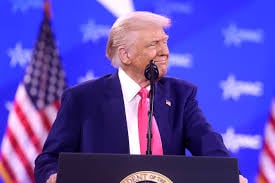
This coming Tuesday, President Trump’s envoys, Steve Witkoff and Jared Kushner, will meet with Iranian representatives in Geneva. Their goal? To follow up on the talks held in Oman earlier this month, reach a deal between the U.S. and Iran, and prevent an American strike that Trump claims will be “far worse” than June’s Operation Midnight Hammer.
Witkoff and Kushner have a proven track record as negotiators; last October, the two managed to push Israel and Hamas into a ceasefire agreement that freed all of the remaining hostages and ended the war. Unfortunately for them, their new assignment is doomed to fail.
Even if the United States and Iran sign a piece of paper, there cannot and will not be a deal that ends the fighting between the U.S., Iran, and Israel. Israel’s minimum demands go beyond Iran’s maximum concessions, and neither side can credibly commit to not using force in the future. One way or another, there will be war. The only question is whether the U.S. will join the fight against the Islamic Regime, or will leave itself on the sidelines.
Israel announced its conditions for a deal with Iran two weeks ago. The terms were clear: no nuclear program, no ballistic missiles, no proxies. Israel expects a halt to all nuclear enrichment within Iran, and the removal of any nuclear material that survived the Twelve Day War to another country. It wants Iran to limit the range of the ballistic missiles in its arsenal, so they can no longer reach Israeli soil. And it wants Iran to end its support for Hamas, Hezbollah, the Houthis, and the other terrorist organizations it finances.
Israel’s demands are massive, so broad that they are hard to take seriously. This sounds like an opening position, a bargaining stance that will moderate as the negotiations play out. But the last two and a half years suggest otherwise.
After the horror of October 7th, Israel is unwilling to give its enemies the benefit of the doubt. Instead of relying on deterrence or deescalation, the IDF now destroys enemy capabilities as soon as they appear. In both Gaza and Lebanon, despite ongoing ceasefires, Israel has regularly used airstrikes to stop the rebuilding of terrorist infrastructure. Israel believes that Iran’s nuclear program, ballistic missiles, and proxy network pose existential threats to the country. It will not accept a deal that leaves those threats intact.
But Iran cannot accept Israel’s demands. Ending its nuclear, ballistic missile, and proxy programs would be tantamount to renouncing its entire defense strategy all at once. Without the threat of a nuclear breakout, ballistic missiles that can strike Israeli cities (and American military bases), and a ‘ring of fire’ surrounding the Jewish state, the U.S. and Israel would be free to do as they wished to the Islamic Republic. If President Trump and Prime Minister Netanyahu decided to pursue regime change—which they both openly support—Iran would be powerless to stop it.
Iran’s problem is only compounded by Israel’s remarkable successes against the proxy network since October 7th. The loss of Hamas and Hezbollah, two of Iran’s most important assets, do not force it to be more reasonable. Quite the opposite; stripped of its deterrents, Iran must cling to the nuclear program and the missiles to avoid the overthrow of the regime. Not making a deal means war, but accepting Israel’s demands—in Iran’s view—means certain demise.
Israel and Iran are trapped in a credible commitment problem. Israel cannot trust Iran to not use its weapons, and Iran cannot trust Israel to not act if it lays down those weapons. Both sides are right to be skeptical, and their skepticism can only be resolved through war.
Despite the President’s reputation as a dealmaker, the United States has no way to peacefully defuse this conflict. The credible commitment problem will continue to exist, even if a U.S.-Iran deal is somehow reached.
If Iran promises President Trump that it won’t keep developing nuclear weapons, Israel would have every reason to assume Iran is lying and would still see the ballistic missiles as an existential threat. If President Trump promises not to pursue regime change in exchange for Iran renouncing its missiles and proxies, Iran would have every reason to assume he is lying and would still fear an attack by Israel. Neither side can trust one another, and both believe that their survival is at stake.
The U.S.’s only choice now is how it wants to position itself for the coming conflict. If the Trump Administration persists in its ill-fated quest for a peaceful resolution, it will only succeed in writing itself out of the story. President Trump will either sign some half-baked deal with Iran or keep flying Witkoff and Kushner around the world for meetings, and Israel will eventually decide that the diplomatic option has exhausted itself. Iran will be attacked, the U.S. will grumble about aggression, and once the war is over, the U.S. will have no leverage to dictate the outcome.
On the other hand, if the U.S. recognizes that these talks cannot succeed and takes military action in conjunction with Israel against Iran, it can at least create the possibility for a peaceful Middle East. This doesn’t even have to mean regime change; if the Islamic Republic is credibly threatened with collapse, it will be far more likely to accept Israel’s conditions. But until that threat is real, Iran will have no incentive to cooperate.
I hope that the Trump Administration proves me wrong. But as of now, it seems like there won’t be peace without another war.