
99.6% Ashkenazi + .4% Viking = 100% Zionist
Hey AP, WTF?!
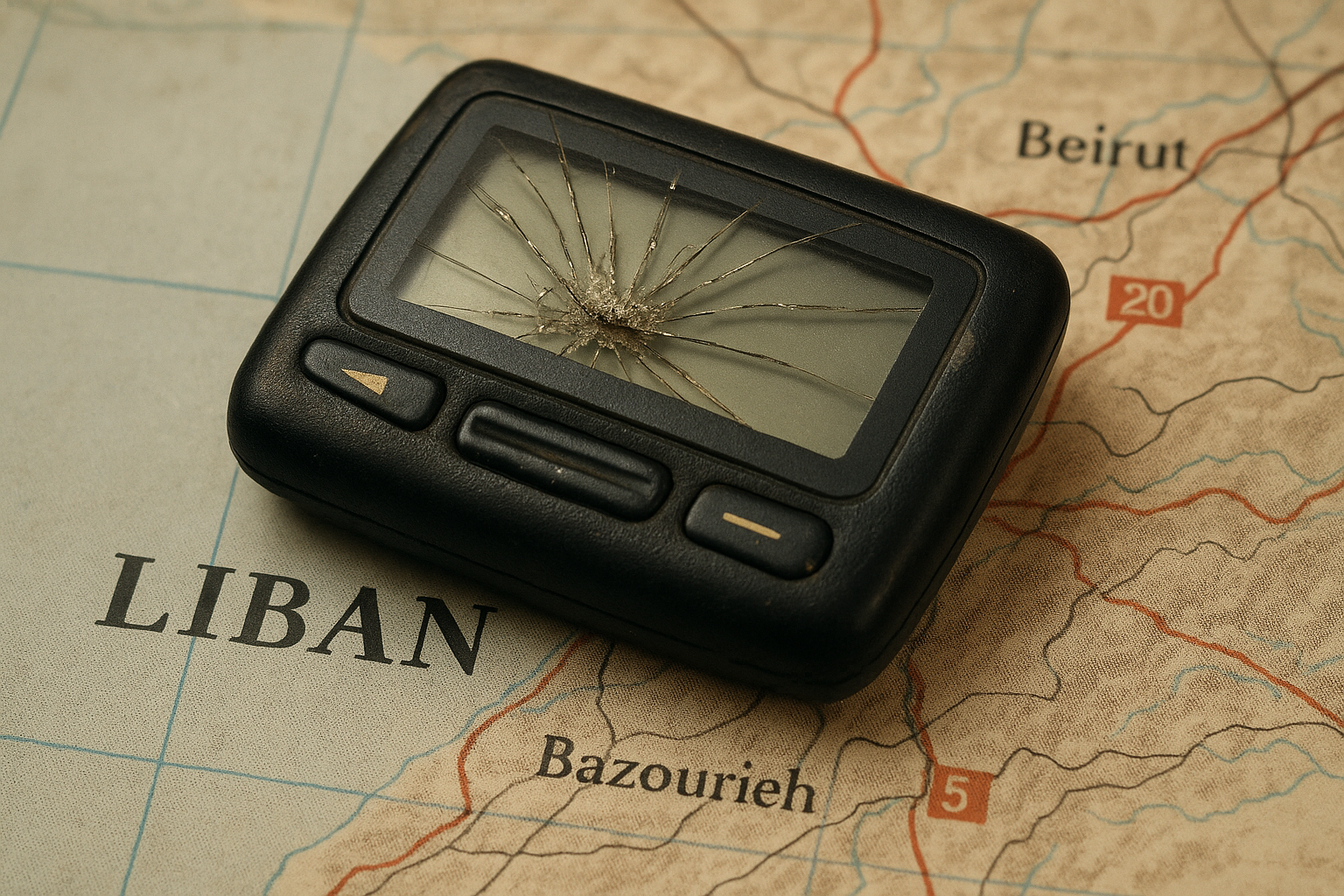
When Sympathy Sides with Terror
There are real tragedies in war: children stepping on forgotten land mines; entire families caught in crossfire they neither caused nor provoked; innocent civilians paying the price for the cruelty of men with guns and agendas. Then there are the manufactured tragedies—deliberate attempts to recast consequence as victimhood, responsibility as misfortune, and combatants as casualties of fate. The Associated Press’s recent article on the aftermath of Israel’s precision pager strike on Hezbollah reads like the latter.
This wasn’t some indiscriminate attack. It wasn’t a drone hovering over a wedding or a bomb mistakenly dropped on a school. It was a targeted strike—surgical, sophisticated, and years in the making—against an organization that has launched countless attacks against Israel, destabilized Lebanon for decades, and proudly wears the label “resistance” while functioning as an Iranian proxy militia.
Let’s be clear: Hezbollah is not a misunderstood political movement with some rough edges. It is a US-designated terrorist organization with the blood of Israelis, Syrians, Lebanese, and countless others on its hands. It hides its rockets in schools, uses hospitals as command centers, and ensures that wherever it operates, civilians are human shields by design.
And yet, the AP chose to frame Israel’s surgical strike as a “tragedy”—as if Sarah Jaffal, who picked up a buzzing Hezbollah-issued pager in her relative’s home, was just as innocent as a child who stumbles upon an old landmine in the woods. But this wasn’t a landmine. It was a live device handed out by a terror organization operating illegally within a sovereign state, a device designed for wartime communications amid near-daily rocket attacks against Israeli civilians.
The article reads like a human interest feature—personal, emotional, and wrenching. We learn about missing fingers, prosthetic eyes, ringing ears, wedding plans, and thwarted career dreams. The survivors are humanized, as all people deserve to be. But the AP’s telling carefully sidesteps the hard truth: nearly all those injured or killed were either Hezbollah fighters, affiliates, or their family members—individuals willingly embedded within a network of violence.
Even more troubling, the article echoes the claim that Israel’s pager strike was “indiscriminate.” The facts suggest otherwise. These were pagers sold exclusively to Hezbollah operatives through a covert Israeli infiltration of their supply chain. Israeli intelligence ensured the devices were designed to harm only their handlers—not their surroundings. There is no moral equivalence here, no shared blame. There is a sharp line between targeting terrorists and targeting innocents—and Israel stayed on the right side of that line.
Incredibly, this strike came at a time when Hezbollah is already politically and militarily neutered. With Iranian support faltering, Lebanese public sentiment turning, and the Lebanese government formally moving to reclaim its monopoly on weapons, Hezbollah has never been more isolated. Even Lebanon’s cabinet, in a historic move, tasked its Army with creating a disarmament plan—a bold step toward fulfilling UN resolutions and the Taif Accords. Hezbollah’s “resistance” credentials are crumbling. The myth is cracking.
Yet, while even Lebanon moves toward rejecting Hezbollah’s rule-by-gun, the Associated Press steps in to polish their image with soft-focus tragedy. Make no mistake: this isn’t journalism in the pursuit of truth. It’s sentimentality weaponized against reason.
Yes, war is ugly. Yes, people bleed. And yes, the human stories on all sides matter. But journalism has a responsibility not to confuse consequence with crime, especially when the “victims” are embedded members of a terror network long known for endangering civilians—its own and others’.
Sympathy is not a substitute for clarity. And moral clarity, in this case, demands a reminder that Hezbollah—by virtue of its methods, its alliances, and its goals—is not a tragic victim of war. It is the reason the war exists at all.
Related Topics