
Hiding In Plain Sight – for traffickers, every child with a phone is a target
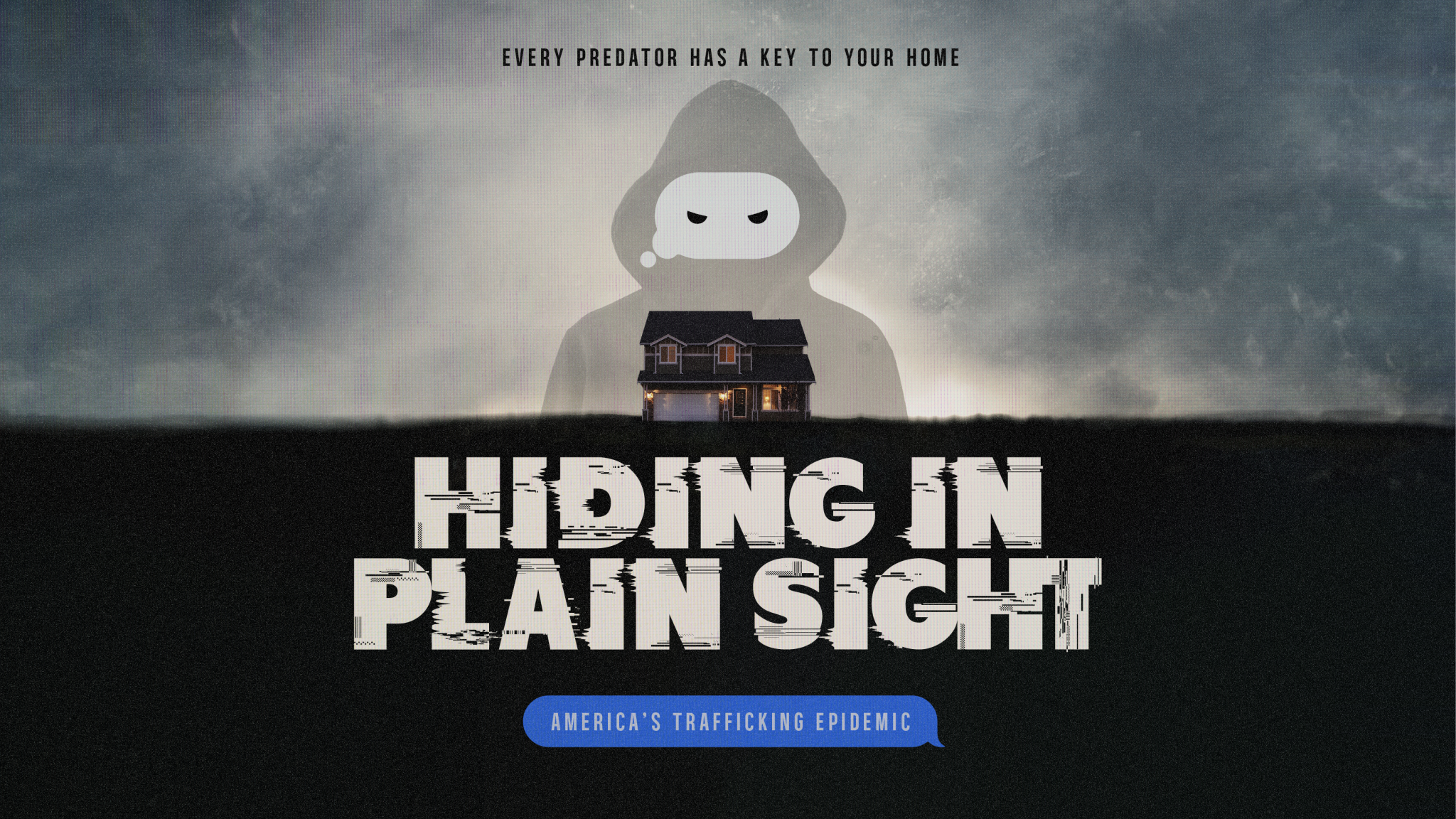
Traffickers have turned, online platforms, like social media, into hunting grounds where no family is safe.
DailyWire’s stark documentary reveals the darker-than-dark world of digital predators using everyday apps to hunt, groom and traffic children. Exclusive insight into undercover law enforcement in action, coupled with harrowing survivor accounts, bring to light a global epidemic, and the sobering reality where every child with a phone is a target.

“Predators don’t lurk just outside anymore” explained Mike Richards, President and Chief Content Officer of Daily Wire Entertainment, “they reach directly into your home through phones and social media, even the most vigilant parents can have their child targeted – this film could save your child’s life.”
At the heart of the arresting documentary is Our Rescue, a non profit organisation dedicated to combating sex trafficking and child exploitation. I talk to Our Rescue’s Chief Executive Officer, Derek Benner, and with Vice President of Cyber, John Trenanry, about the unprecedented global trafficking epidemic and how education holds the key to blocking predators’ path.
I start by asking Derek Benner to describe the seedy traffickers’ market.
DB: The trafficking organisations are typically multinational criminal organisations that are making an estimated 150 to 170 billion dollars annually off the pain and suffering of sex trafficking victims. Highly organised operations that don’t respect international borders, leveraging the cyber element and technology to recruit, groom and bring people into their organisations through fraud and coercion.
HG: As demonstrated in the movie, these predators reach people’s homes.
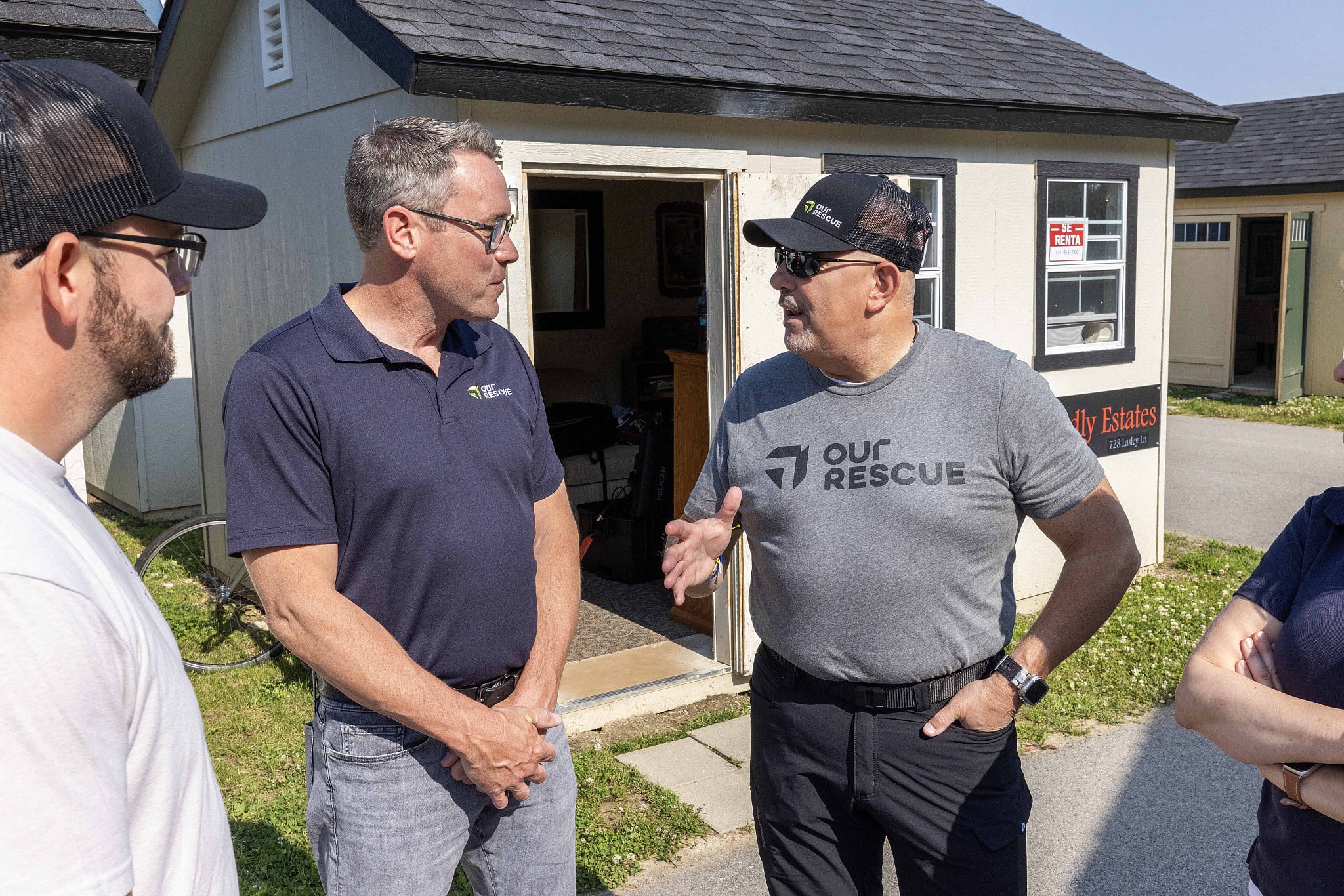
DB: Yes – no house, no family, no child is safe. We typically think of people being grabbed off the street, thrown into a van and held in a basement, this still happens of course but predominantly now, these are all done through phones and social media, through grooming techniques, fraud and coercion of vulnerable individuals. In some cases it’s a false promise for employment or a better life, the victims respond and end up being trapped. The movie highlights some of those experiences through real life parents and survivors talking about their painful journey. We see how children exposed to social media are clocked by these organisations, skilled at developing a grooming relationship through familiarity, they engineer this around information about the child’s personal details that are already available online, details posted innocently by family and friends (what school the child goes to, who their friends are, where they go on vacation..), predators use these details to learn about a potential victim and build a level of trust, this is why we need to lock down accounts so that they’re not public.
HG: What is the extortion epidemic?
DB: This is a global phenomenon where organisations located in other countries, social engineer relationships at scale to lure people into conversations and build trust. Once trust is established, it moves into the power differential and threats of exposing things the victim has done, and things that the predator can do to exploit the now trapped individual.
HG: The movie puts across the grave sense of urgency, you quickly grasp why raising parents’ awareness should be a top priority.
DB: Most definitely, I cannot stress the urgency enough. The normal human reaction is to recognize that ‘yes, this is a seriously bad problem but it doesn’t happen where I live, it doesn’t happen in my country or my town’ – that’s one of the biggest uphill battles that we face – getting people to have an open conversation about this. Governments cannot fight this alone so it’s left to Our Rescue and similar nonprofits to climb that steep hill.
HG: Would you advise parents to ban children from having devices altogether?
DB: That’s a tough question. I’ve heard of people withholding devices entirely, which I think is difficult. We have to be measured and realistic in our efforts, focus on teaching parents and communities how to be as safe as possible, what the threats are, what the predators’ techniques and tactics are, the trust factor, supervision and limits. We were all taught growing up, before the mobile device age, that you don’t talk to strangers and that you don’t get in a car with a stranger even if they tell you ‘your mom told me to come pick you up’. This information was everywhere but we have not done that to any degree when it comes to online and mobile devices, relative to chat rooms, social media via email and gaming. This documentary is important for that very reason, it rings the alarms and makes people realise that they need to change their mindset with regards to children’s use of technology. I would urge parents to watch it and turn to Our rescue’s free Our Shield guide to learn more about the threats, putting safety devices on technology, locking down social media accounts, limiting exposure to certain types of technology or chat rooms, the tactics employed by criminal organisations to develop relationships and so on.
HG: Am I right in asserting that the children’s naivety remains an issue? Stolen innocence is probably the gravest crimes that happens in our society – the victims will carry psychological and emotional scars for life.
DB: Very much so. It’s hard for children to understand that there really are bad people out there and that they are trying to deceive you. In 2024 there was a 200% increase in what we call online enticement, which is basically using chat rooms and cyber apps to entice children into trafficking and child exploitation. This tells us that these traffickers and predators are leveraging technology at a rate equal to, or better than the law enforcement and governments around the world. Technology isn’t slowing down either, the number of apps only rises, and generative AI is producing new chat bots, all things that can be leveraged at scale by predators.
I agree that its a crime very much beyond our understanding, it is outside our moral capacity to contain the depravity. The crimes affect the entire being of the person, the recovery starts with providing shelter, food, clothing, stabilisation, medical care, followed by weeks and months when you start the hard work to make sure these survivors are able to thrive. The doc shows this in action and talks about prevention, putting across the mammoth scale of the problem. In the United States, the National Center for Missing and Exploited Children, received 20 million reports in 2024 tips on potential child exploitation. Within that 20 million, there were 63 million files that contained images and videos of child sex abuse material. So those are images, videos, these images are living in the dark web, they’re passed around global networks, secure chat rooms that predators use for their illicit purposes.

HG: The movie demonstrates how so much of this is preventable.
DB: Governments need to continue passing good legislations, hold tech companies accountable, arrest and prosecute violators, but at the same time we need to create a sense of urgency around educating kids about online safety, technology is key as my colleague here. John Trenary, Our Rescue’s Cyber expert, will explain. John joined us with over 25 years of experience in law enforcement and as the Vice President of Cyber.
“What we are seeing” Trenary tells me, “is a threat landscape that is entirely new in our evolutionary history, it is impossible for me to see screens as neutral anymore – every app, game, platform, social media, communication method is in an environment that is either going to protect the child or permit a child to be preyed upon.”
I ask Trenary about his repeated call for parents and society at large to rethink our relationship with technology.
JT: I spent over a decade as a US Internet Crimes Against Children (ICAC) investigator and digital forensic examiner, this gave me a window into targeted children, their family structures and the rules that they had in their family. This allowed me to form anecdotal experiences and opinions around how parents can most effectively mitigate against online threats. The parents who abdicated parenting roles to technology heightened the risk to their child of online threats. After investigating hundreds of cases and thousands of devices, where technology became the bridge between vulnerability and exploitation, it is now impossible for me to see screens as neutral.
My hope is to move the conversation away from protecting the kids online being the sole responsibility of re reactive law enforcement action, and encourage a proactive approach where entire communities reinforce the parents so they can reclaim agency over their families.

If your eight-year-old has a cell phone and you don’t enforce responsible use of technology such as time away from the screen, bedtime and dinner routines that don’t involve technology, you’re leaving parenting up to somebody else. That role-modeling and value setting that is coming through the cell phone, is influencing your child. So parents can choose if they want to be the parents or if they want Instagram, Tik Tok and Snapchat to take on this role.
HG: From the Princess of Wales to Jonathan Haidt’s extensive research and Sophie Winkelmans ARC lecture there is certainly growing awareness to the often irreversible damage excessive use of technology is causing children and families.
JT: In this sense, this documentary is aptly timed. We’ve gone through a generational cycle and have figures, testimonies and statistics that speak volumes. More parents recognize the need to regain agency and influence over the child’s development. Parents see the importance of daily structure in kids’ lives; bedtime routines, chores and technology-free dinners that encourage face-to-face communication. Parents can, and should, say to their children ‘we’re going to limit technology use to no more than two hours a day, and during dinner we’re all going to plug in our phones in the kitchen and we’re not going to use technology the rest of the night. We’re going to enjoy a family time together, go to bed and in the morning, our phones will be all charged for us.’ This act, especially when applied routinely gives agency and dignity to your child, it sends the positive message that they have purpose and ownership over their own lives. Time spent away from devices allow kids to build and explore on their own. Reinforcing they have purpose, and are not just passive consumers who do everything that the screen tells them to do.
HG: What else would you advise parents?
JT: I have a number of ways I tend to advise parents on online safety.
First, delay the dive into digital devices – once you introduce technology, it can be difficult to claw it back. Hold off on giving kids personal communication devices (like smartphones or social media accounts) until they have the maturity and judgment to use them responsibly. Childhood isn’t a race to connect online. It’s a time to grow, imagine, and mature without constant digital noise.
I would advise parents to create device free zones and routines – set aside parts of the day (like meals, bedtime, and family time) where all screens are off, or better yet, put away and out of sight. Routinely applied, this simple strategy keeps relationships strong, reinforces the role of family as central to healthy character development, and reminds kids that real connection is always unplugged.
Parents should talk openly about technology benefits and risks – make online safety and responsible tech use a normal, ongoing conversation. Discuss what’s okay, what’s not, and why. When families talk about technology regularly and without judgment, kids are far more likely to recognize danger early and reach out for help when it matters. Resources at ourrescue.org and other online sources can help parents educate themselves on online dangers.
I would stress the importance of model responsible behaviour, reminding parents that children learn most by watching what we do. Model the same healthy tech habits you expect from them. Set limits, put your phone away during family time, charge it overnight in a shared space, and use technology for creativity, productivity, and learning rather than idle scrolling. Your consistency teaches more than any rule you enforce, but don’t follow, ever could.
Finally, I would advise parents to trust, but verify – from the beginning, teach kids that privacy doesn’t extend to technology. Keep devices in shared areas, check usage often, use one passcode for all devices, use parental controls, and frame supervision as protection, not punishment. As a parent, you have the wisdom and perspective to recognize risks your child may not yet see. If you see a potential threat on your device or theirs, treat it as an opportunity to learn and strengthen trust.
HG: What is the solution?
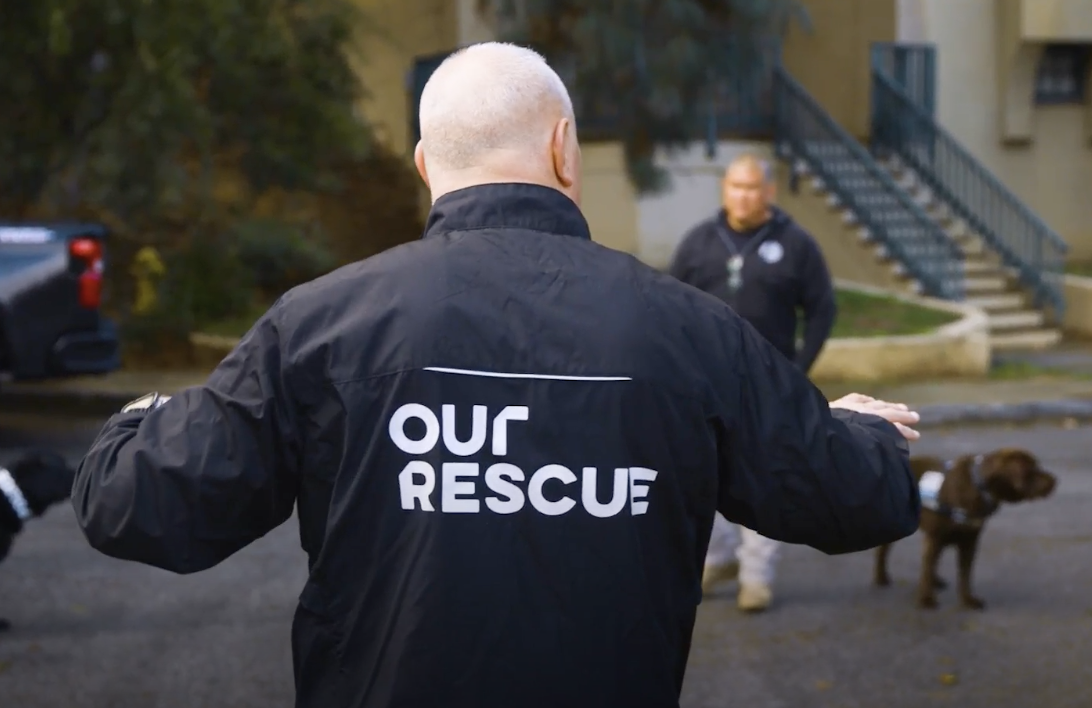
JT: This is a global problem without a global solution. New online threats adapt technology quickly and easily to target our kids. Unfortunately, we do not have a quick and easy defence. Law enforcement in partnership with organizations like Our Rescue bring the fight to the perpetrators. But, the best defense is offline. Defenses built by the relationship between the child and their parents and care givers.
In the end, Hiding in Plain Sight is more than a documentary, it is a call to action and a reminder that protecting children begins long before a predator appears on a screen.
Our Rescue exists for this very reason; to empower families with honest and compassion, to confront exploitation with courage, and to restore the joy and dignity that every child deserves. When communities choose to learn, to speak openly, and to act together, we take back innocence stolen by predators. And in the shared efforts of parents, neighbors, survivors, advocates, non-profits, and law enforcement, we build a future where children are empowered, protected, and free to grow in confidence rather than fear. Awareness is the first step. Collective action is the path forward.