Historic Israel-Lebanon Talks Open Path Toward Lasting Peace
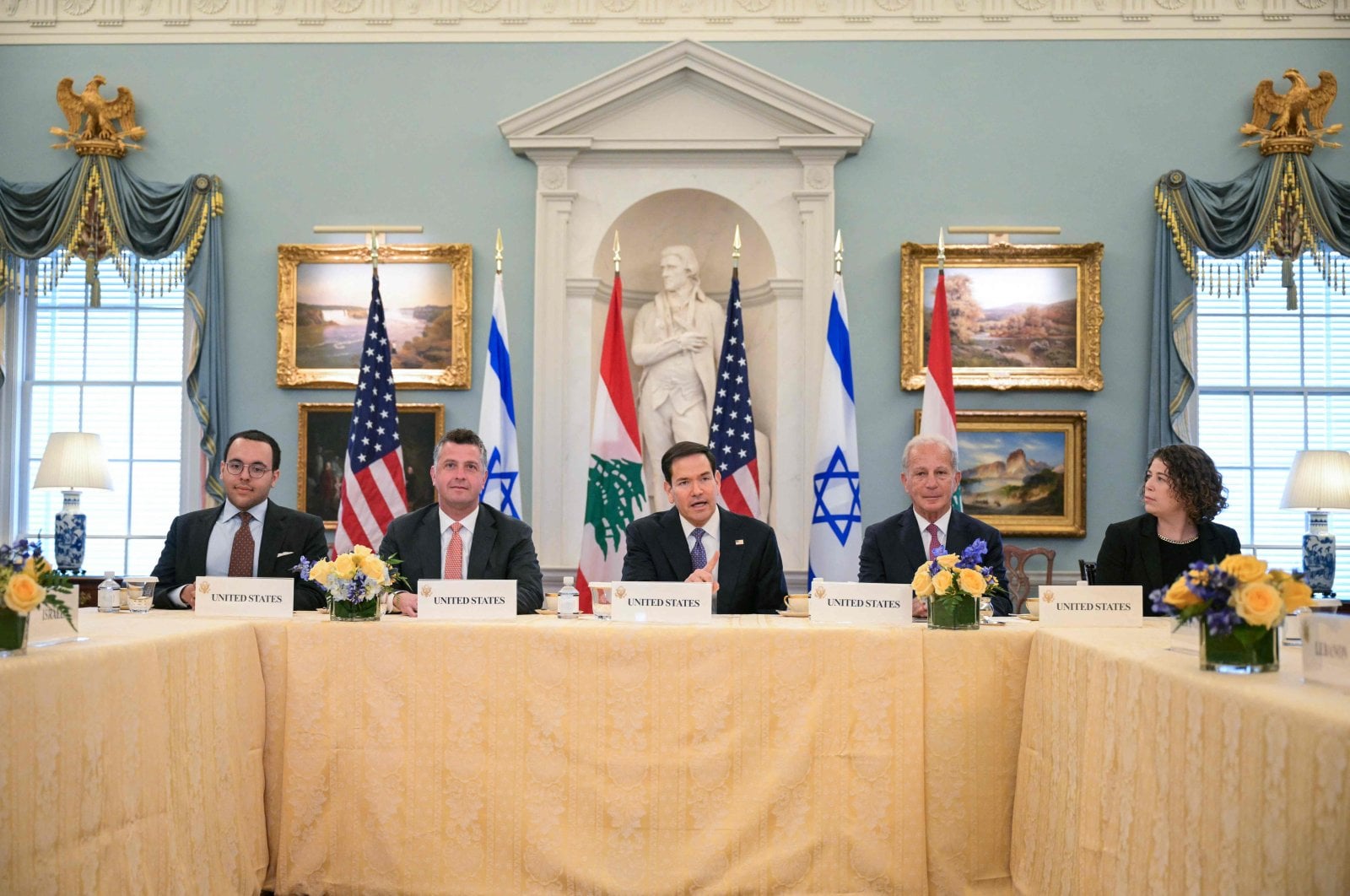
Just a few weeks ago, the idea of Israeli and Lebanese ambassadors sitting down together would have seemed far-fetched. Yet, on Tuesday, they did just that at the US State Department, marking the first high-level talks between the two nations in over thirty years. While the two-hour meeting didn’t yield a sweeping peace treaty or an immediate ceasefire, it did ignite something perhaps even more valuable in this troubled region: a real sense of optimism and a commitment to keep the lines of communication open.
As the working-level talks approached, Marco Rubio conveyed a sense of cautious optimism, suggesting that this moment might set the stage for something more lasting. He emphasized the importance of establishing a framework that could yield a “very positive” and potentially permanent result—one that enables Lebanon to progress towards a more stable future while also allowing Israelis to live free from the constant fear of rocket fire. His message struck a careful balance, acknowledging the urgent humanitarian issues on one side of the border and the serious security concerns on the other.
Speaking to reporters ahead of talks with the Lebanese and Israeli ambassadors, @SecRubio said the meeting will begin a process to permanently end Hezbollah’s influence.
“I know some of you are shouting questions about ceasefires. This is a lot more than just about that. This is…
— Kassy Akiva (@KassyAkiva) April 14, 2026
The discussions, described by the State Department as productive, focused on laying the groundwork for formal direct negotiations, with Washington positioning itself not just as host but as guarantor of a structured process.
Meeting between the Governments of the United States, Lebanon, and Israelhttps://t.co/SlLrUMQCmw
— Tommy Pigott (@StateDeputySpox) April 14, 2026
Presided over by Secretary of State Marco Rubio, the session brought together Israeli Ambassador Yechiel Leiter and Lebanese Ambassador Nada Hamadeh Moawad, along with key US officials including Counselor Michael Needham and Ambassador to Lebanon Michel Issa. Both sides emerged from the discussions calling them “productive,” and the State Department quickly framed the day as a “historic opportunity” to set the stage for something lasting — a framework that could finally confront Hezbollah’s influence while giving the people of Lebanon and Israel a real chance at security and stability.
???? #READ At the opening of direct talks between Israel and Lebanon at the U.S. State Department, Secretary of State Marco Rubio described the negotiations as a pivotal moment, framing them as the start of a broader, long-term process rather than a quick diplomatic breakthrough.… pic.twitter.com/aFK8Ys0CAQ
— This Is Beirut (@ThisIsBeirut_) April 14, 2026
Lebanese parliamentarian Fouad Makhzoumi has taken a bold stance, suggesting that achieving real stability in Lebanon means not just containing Hezbollah but completely dismantling it. He emphasizes the need to cut off its financial networks and shadow economy that bolster its power. Makhzoumi is also advocating for a significant political shift in Beirut, which includes expelling Iranian diplomats and, if necessary, reducing ties with Tehran.
Lebanese parliamentarian Fouad Makhzoumi said that Hezbollah must be fully dismantled by cutting its funding networks and cash economy. He stressed that Lebanon should expel Iranian diplomats and, if necessary, sever political ties with Iran to restore state authority.
Via:… pic.twitter.com/sroCw5ABEj
— ME24 – Middle East 24 (@MiddleEast_24) April 13, 2026
He believes these actions are crucial for restoring full state authority and putting an end to what many see as external interference in Lebanon’s internal matters.
????While Hezbollah called these talks “capitulation” and tried to sabotage them, Fouad Makhzoumi stood up within hours and backed Lebanon sitting at the table with Israel in Washington, the first direct talks since 1993. That’s not just a statement, that’s a political bet on… https://t.co/c8xevcwd4v
— Bechara Gerges (@BecharaGerges) April 15, 2026
Lebanese parliamentarian Michel Moawad shared a broader vision, emphasizing that this moment represents a crucial national decision: choosing between state authority and militia power, between war and peace, and between instability and a sovereign future rooted in Beirut—not dictated by outside forces. He expressed strong support for President Joseph Aoun and the government, endorsing efforts to consolidate all arms under state control and striving for a “disarmed Lebanon” as a cornerstone for lasting stability.
خيارنا واضح????
• بين الدولة والميليشيا: الدولة
• بين الحرب والسلام: السلام
• بين الفتنة والاستقرار: الاستقرار
• بين لبنان وأي نظام أو محور أو خط: لبنان دائماً أبداً ????????????????????????
ـــــ– إلى جانب الدولة
• زيارتي اليوم إلى فخامة الرئيس جوزاف عون تأتي لتأكيد دعمنا الكامل له،… pic.twitter.com/OtEU5366RG
— Michel Moawad (@michelmoawad) April 14, 2026
Importantly, Moawad advocated for direct negotiations with Israel, framing it as a responsible move rather than a concession. He argued that diplomacy, no matter how challenging, is the only realistic way to break the cycle of war, regain decision-making power, and create a future characterized by peace and prosperity instead of ongoing conflict.
Lebanese political figure Jowelle Michel Howayeck recently took to X to describe a pivotal moment for the nation—one that presents a choice between reclaiming sovereignty or getting stuck in endless cycles of proxy conflict. She challenged the long-standing narratives, arguing that Lebanon can’t afford to shy away from diplomatic opportunities due to outdated fears. She emphasized that much of the instability we face is often fueled from within rather than being imposed from outside.
Lebanon’s Choice: Sovereignty or Perpetual Proxy War
As Lebanon’s ambassador meets Israeli officials in Washington to explore potential talks, a familiar narrative resurfaces: warnings of hidden agendas and calls to resist peace.
This narrative is outdated. And Lebanon can no… pic.twitter.com/VOm2giqRjd
— Jowelle Michel Howayeck | جوال ميشال الحويك (@JowelleHowayeck) April 14, 2026
By contrasting Lebanon with other regional examples, she highlighted countries that opted for peace and stability instead of constant confrontation, cautioning that Lebanon could worsen its crisis by not making similar choices. For her, this isn’t just an abstract debate; it’s about political will—whether Lebanon is ready to put its future first, viewing peace not as a defeat, but as a conscious act of sovereignty.
A lot of that optimism is tied to the timing. These talks are happening in a fragile regional context, with changing alliances, recent military escalations, and tentative ceasefires shaping the overall situation. For Washington, this meeting is a golden opportunity to turn diplomatic momentum into something more sustainable. For Israel, it offers a path—albeit uncertain—toward addressing long-standing security issues along its northern border. For Lebanon, it’s a chance to relieve immediate humanitarian pressures while reestablishing state authority.
Announcing the Lebanon-Israel Peace Alliance! We are so excited for what's to come ✌????????????????????????????❤️ pic.twitter.com/mbZaHyz2IZ
— Hagar Hajjar Chemali (@HagarChemali) April 14, 2026
Diplomacy doesn’t usually kick off with everyone on the same page. Instead, it often starts with small, sometimes fragile steps that help create room for more significant progress later on. What’s really important at this stage isn’t whether Israel and Lebanon can solve their issues overnight, but if they can keep a process going that prevents those issues from flaring up into conflict again.
It’s no surprise that these discussions are being labeled as “historic.” Across the globe—and on various digital platforms—there’s a noticeable wave of cautious optimism. Many people see this as a unique diplomatic opening in a region where tensions often escalate quicker than conversations can unfold. The fact that both parties came out of the meeting calling it “productive” and agreed to keep talking shows a shared understanding: no matter how deep their disagreements run, there’s real merit in staying engaged.
Dans @IndyArabia, @deniserf_123 la journaliste Denise Rahmé met en lumière les coulisses de la première rencontre libano-israélienne à Washington.
Principaux points:
•Rencontre directe historique initiée sous médiation américaine, signe d’ouverture diplomatique.
•Israël cherche…— Maya Khadra (PdV) (@MayaKhadra) April 14, 2026
There’s a glimmer of hope that this process, even if it’s a bit tentative, could grow. The United States is likely to stay heavily involved, using a blend of pressure and incentives to keep both sides engaged. Things like reconstruction aid, security arrangements, and gradual commitments could all be part of a larger framework if the talks continue. Much will depend on whether the situation on the ground—especially the violence—starts to align with the diplomatic efforts.
The worldwide reaction, particularly the optimistic framing we see online, indicates a strong desire for progress. In a region often characterized by difficulties, even small steps toward dialogue can ignite hope. This hope, although fragile, is far from trivial. It shapes what people anticipate, impacts political narratives, and can sometimes create its own momentum.