
Historian, Librarian, Educator, and Artist
Hollywood’s Boycott Double Standard over Israel
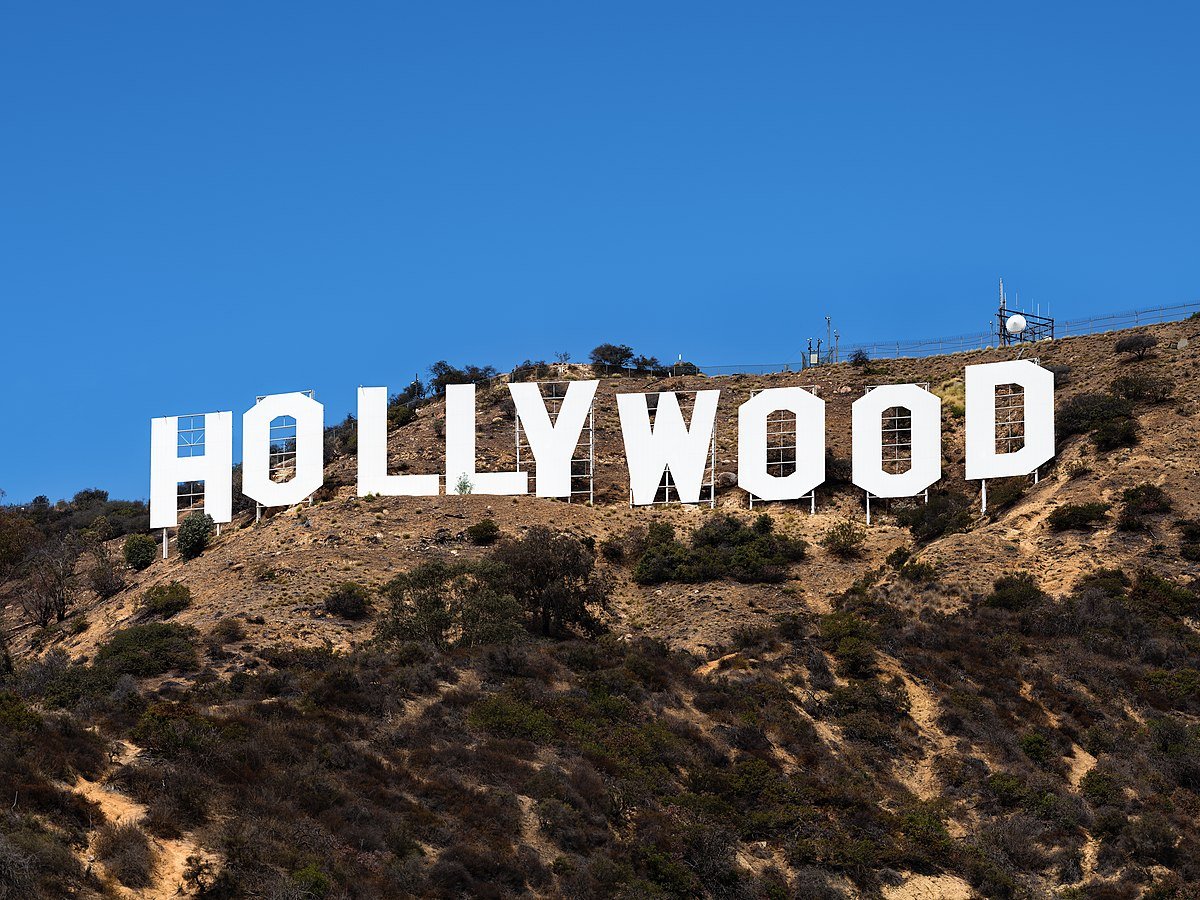
Over 4,000 Hollywood actors signed a letter boycotting the Israeli film industry. Source: Wikipedia Commons
Boycotts, Hamas, Gaza, and the Betrayal of Morality
A Pledge Gathers Force
What began with roughly 1,200 signatories has now swelled into a campaign of over 4,000 actors, directors, and film professionals. The pledge, organized by Film Workers for Palestine, commits its signatories to boycott Israeli film institutions deemed “implicated in genocide and apartheid against the Palestinian people.”
The letter specifically names festivals such as the Jerusalem Film Festival, Haifa International Film Festival, Docaviv, and TLVfest, as well as production companies, distributors, cinemas, and publicly funded agencies. It insists that “despite operating in Israel’s system of apartheid, and therefore benefiting from it, the vast majority of Israeli film production and distribution companies, sales agents, cinemas and other film institutions have never endorsed the full, internationally-recognized rights of the Palestinian people.”
The language is sweeping, the accusation severe: “In this urgent moment of crisis, where many of our governments are enabling the carnage in Gaza, we must do everything we can to address complicity in that unrelenting horror.”
A Who’s Who of Hollywood
The list of names gives the boycott cultural heft. It includes Emma Stone, Ayo Edebiri, Olivia Colman, Joaquin Phoenix, Lily Gladstone, Riz Ahmed, Ava DuVernay, Javier Bardem, Jonathan Glazer, Elliot Page, Rooney Mara, Guy Pearce, Rebecca Hall, Ilana Glazer, Debra Winger, Abbi Jacobson, Fisher Stevens, Eric Andre, Harris Dickinson, Nicola Coughlan, Bowen Yang, Emma D’Arcy, and many more.
That roster is significant: Oscar winners, rising stars, and influential directors. Hollywood’s A-list has not merely whispered solidarity — it has attached its names to an enforceable pledge, which some advocates propose be written into contracts.
And yet: do these stars understand what they are actually endorsing? Do they truly know the facts of October 7, 2023 — a day when Hamas terrorists murdered, raped, and abducted Jews in the worst pogrom since the Holocaust?
October 7: A Crime Against Humanity
On October 7, Hamas-led armed groups killed around 1,200 people in Israel and kidnapped approximately 250 hostages. Human Rights Watch documents “numerous violations of international humanitarian law… that amount to war crimes,” including mass murder and hostage-taking.
The United Nations’ Special Representative on Sexual Violence in Conflict concluded there were “reasonable grounds to believe” that rapes and gang rapes occurred, and “clear and convincing information” that hostages endured sexualized torture — with “reasonable grounds” to believe such abuse was ongoing.
This is not contested: it is documented. The violence was not resistance, nor a clash of armies — it was terror against civilians.
For Americans, the closest analogy is 9/11. And yet, unlike the unified moral outrage that followed September 11, Israel’s tragedy met with equivocation. Instead of solidarity, came suspicion. Instead of empathy, came boycotts.
Terror Continues: The Ramot Junction Attack
The brutality of Hamas and its allies did not end on October 7. On September 8, 2025, gunmen opened fire at Jerusalem’s Ramot Junction, killing at least six people and wounding over twenty. Hamas praised the massacre as a “natural response” even while avoiding direct responsibility.
These are the “poor people” whom the pledge implicitly defends, without qualification or distinction. Compassion for Palestinian civilians is essential; erasing Hamas’s agency in terror is complicity.
The Boycott’s Logic
The pledge is careful to say it targets institutions, not individuals. An accompanying FAQ concedes that “a few Israeli film entities are not complicit,” but insists the “vast majority” are.
Yet in Israel’s small, publicly funded film ecosystem, institutions are the bloodstream. To boycott the Jerusalem Film Festival or Docaviv is not to boycott “the government”; it is to boycott nearly every Israeli filmmaker, including those who produce films critical of the state or amplify Palestinian narratives.
The Israeli Producers Association condemned the pledge as “deeply troubling,” warning it risks silencing “the very voices striving… for reconciliation and understanding.” This is not rhetoric. Israeli cinema has long produced films that critique the occupation, highlight Palestinian suffering, and challenge official policy. Those films will now be casualties of Hollywood’s moral purge.
Hollywood’s Jewish Roots, Hollywood’s Amnesia
It is worth remembering: Hollywood was built by Jewish immigrants who fled antisemitism in Europe. The Warner brothers, Louis B. Mayer, Samuel Goldwyn — these names created an industry out of exile, building an empire of stories that championed democracy against fascism.
Today, Hollywood has turned against Jewish sovereignty in its ancestral homeland. A town once called a “Jewish empire of dreams” is now an epicenter of anti-Zionism, where diversity and inclusion stop at the borders of Israel.
This is not progressivism; it is selective solidarity. The industry that demands representation for all has decreed that Israelis — Jewish Israelis above all — are uniquely undeserving of cultural inclusion.
Antisemitism Disguised as Human Rights
The tactic is not new. Cultural boycotts of Jews have a long, sordid history. From Nazi Germany’s “Don’t buy from Jews” to the Soviet Union’s suppression of Jewish culture, isolation has always been a mask for exclusion.
Today, the rhetoric has changed — “apartheid,” “genocide,” “complicity” — but the effect is the same: Jewish culture is shunned, Jewish voices silenced.
Of course, one can criticize Israeli policy. One can mourn Palestinian suffering. But when Hollywood signs on to a pledge that erases Hamas’s atrocities, equates a film festival with “genocide,” and declares nearly every Israeli artist tainted, the line between political critique and antisemitism is crossed.
What Moral Clarity Would Require
True moral clarity would look different. It would:
· If you signed because you care about human rights, consider a more balanced, concrete ask:
· Support joint Israeli-Palestinian productions that foreground non-combatants’ stories.
· Fund survivor-and-hostage testimony projects across languages and audiences.
· Press for unfettered access for independent investigators and journalists on all sides.
· Elevate principled human-rights reporting (even when it complicates your chosen narrative). For example, cite HRW’s finding that Hamas-led groups committed war crimes on October 7, and also cite credible allegations of violations by Israeli forces in Gaza — without letting one absolve the other.
A Word to the Signatories
Emma Stone, Ayo Edebiri, Joaquin Phoenix, Rooney Mara, Olivia Colman, Lily Gladstone: if you signed out of a genuine concern for human rights, consider this — your pledge is being celebrated by Hamas propagandists as validation. Your refusal to work with Israeli festivals does not liberate Palestinians; it isolates Israelis, many of whom are among the loudest voices for peace.
Do you know the stories of the hostages still underground in Gaza? The families still identifying the bodies of loved ones killed on October 7? The parents of children shot at Ramot Junction?
If you did, would you still equate film festivals with “genocide”?
Exclusion Cuts Both Ways
If Hollywood chooses to exclude Israeli culture, then it cannot expect unfettered access to Israeli audiences. Cultural exchange is a two-way street. Why should Israeli theaters showcase the films of stars who have declared their very existence “complicit in genocide”? If Emma Stone, Joaquin Phoenix, or Ayo Edebiri believe that Israeli cinema is beyond the pale, then they should not be surprised if Israeli festivals and cinemas decline to roll out the red carpet for their projects. Exclusion cannot be a one-sided demand.
Conclusion: History Will Judge
History will ask who stood with truth and who succumbed to fashionable hatred.
Hollywood once rallied the free world against fascism. It produced films that defined moral clarity for generations. Today, too many of its stars have chosen the easier path: boycott, exclusion, and silence.
But history is watching. So are the victims of October 7, the hostages in Gaza, and the Jewish artists whose culture is once again under siege.
Hollywood must decide: will it tell the story of truth, or will it repeat the oldest story of all — Jewish exclusion disguised as moral virtue?
—
Sources
“Over 4,000 Actors, Filmmakers Sign Pledge to Boycott Israeli Film Industry over Gaza.” Times of Israel, 11 Sept. 2025.
“Israeli Film Industry Calls Boycott Pledge ‘Deeply Troubling.’” The Guardian, 9 Sept. 2025.
“Actors and Directors Pledge Not to Work with Israeli Film Groups ‘Implicated in Genocide.’” The Guardian, 8 Sept. 2025.
“Emma Stone, Ayo Edebiri, and 1,200 Others Pledge Boycott of Israeli Film Institutions.” Vanity Fair, 8 Sept. 2025.
“Gunmen Kill 6 at Jerusalem Bus Stop; Hamas Applauds Attack.” AP News, 9 Sept. 2025.
“6 Killed, Dozens Injured in Terror Shooting at Jerusalem’s Ramot Junction.” CBS News, 8 Sept. 2025.
“Palestinian Armed Groups: Atrocities of October 7.” Human Rights Watch, 10 July 2024.
United Nations. “Report on Sexual Violence during the 7 October 2023 Attacks and Their Aftermath.” Office of the Special Representative of the Secretary-General on Sexual Violence in Conflict, 2024.
Related Topics
Related Posts