
Hormuz Is Not About Oil Anymore
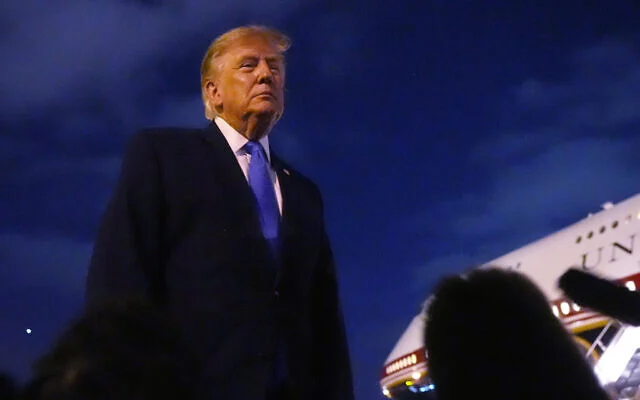
Hormuz: who really wins when a strait reopens?
When discussing the possible reopening of the Strait of Hormuz, attention naturally turns to oil markets. Crude oil prices, maritime flows and insurance are the first indicators observed. Yet the real question may be elsewhere.
The reopening of Hormuz will not only be an economic event; it could become a major political event.
Since the beginning of the crisis, the strait has been presented as a maritime security issue. The United States defends freedom of navigation. Iran, on the other hand, argues that Gulf security can no longer be organized without its consent. Behind this opposition lies a much deeper question: who will now have the legitimacy to organize one of the planet’s main energy passages?
At first glance, an agreement might seem beneficial for everyone. The ships would start to move normally again. Insurance costs would fall. Hydrocarbon exports would regain their momentum. Markets would see a return to stability.
But geopolitics is never limited to appearances.
In an international negotiation, the rules that frame an agreement often matter more than the agreement itself.
If Iran obtains a role, even a limited one, in the organization of maritime traffic entering the Gulf, it will not only gain a practical advantage. Above all, he will obtain a form of political recognition. Tehran can then argue that, despite sanctions, military pressure, and diplomatic isolation, no lasting solution could be found without him.
In other words, its capacity for nuisance would gradually transform into a negotiating capacity.
It is precisely this type of evolution that deserves the attention of analysts.
For several months, Iran has demonstrated that it can disrupt one of the main gateways to global trade. If this capability is now given a recognized place in future maritime security mechanisms, then the initial balance of power will have produced lasting political effects.
The US can of course present an agreement as a success.
Washington could point out that freedom of navigation has been restored, energy flows are resuming and a regional war has been avoided. These would be important results. In a logic of international stability, they would even constitute perfectly legitimate objectives.
But this reading does not answer another question.
What will remain of this agreement in five or ten years?
If the new rules implicitly enshrine the fact that Hormuz’s security can no longer be organized without Iran, then the strategic center of gravity will have changed.
So the real issue may not be vessel traffic.
It is the definition of authority.
Indeed, history shows that great powers do not seek only military victory. They also seek to write the rules that will follow the conflict. It is often this second victory that lasts the longest.
Conversely, weaker powers sometimes use a crisis to achieve something that they could not achieve through negotiation alone: a place in the new regional order.
This may be what is at stake today around Ormuz.
Here we find a well-known mechanism of strategic thinking. Coercion is not necessarily aimed at defeating the adversary militarily. It sometimes aims to change the balance of power sufficiently to become a key player in negotiations.
In this scenario, Iran would not need to beat the US. It would be enough for him to ensure that any lasting solution now passes through him.
This would not mean an Iranian military victory.
It could, however, be a political victory.
Of course, this reading remains an analytical hypothesis. The exact outlines of a possible agreement remain unknown. Discussions can still fail. Washington can refuse any provision that would appear to be an acknowledgment of a particular right granted to Tehran over Ormuz. The Gulf states themselves will have a say, so several scenarios remain possible.
This is precisely what imposes caution.
The analyst does not seek to announce the result before the negotiators. It seeks to identify what will actually be at stake when the text appears.
And what will be at stake will probably go beyond the mere reopening of a strait.
The real question will be whether this agreement has only made it possible to put the ships back in motion… or whether he will also have redefined the rules of maritime safety in the Gulf.
Because in geopolitics, the most important crises do not end when the fighting stops.
They end when the new rules become sufficiently accepted to structure durably the behavior of the actors.
A war never really ends when the guns fall silent; it ends when the new rules are accepted.