
Entrepreneur
How an attorney turned entrepreneur is bringing AI receptionists to businesses
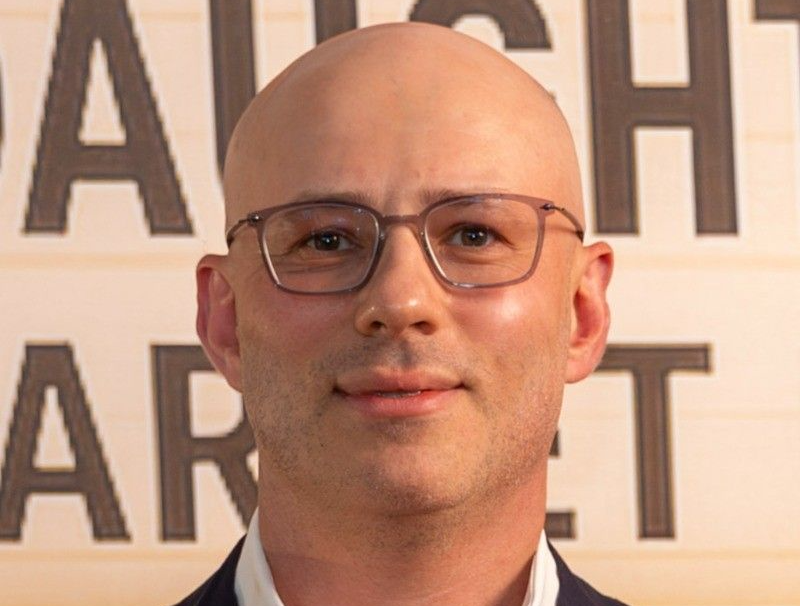
Gene Sigalov (image free for use on a commercial platform in accordance with copyright law, courtesy of Gene Sigalov)
Israel has been writing a new chapter in the future of work story, and it isn’t just about skills or job titles. Increasingly, it’s about how companies operate day to day.
While international tech firms retreat from remote and hybrid arrangements, Israeli companies are moving the other way. 70-85% of firms in the country’s tech sector alone still require two or three office days a week, bucking a trend that’s taken hold elsewhere.
The appetite for flexible structures goes beyond hybrid work, however. Regus, a Brussels-founded global provider of flexible workspace solutions, for example, is tapping Israel’s innovation economy with virtual office services, letting remote companies rent a physical address to build local trust.
Meanwhile, Mindspace Beyond, a 10,000-square meter development opening in early 2027 on the border of Tel Aviv and Givatayim, is betting on the same demand, combining flexible offices with a large-scale conference venue.
A virtual office buys a business the credibility of a physical address and basic administrative support, like call handling, without the overhead. That’s opened doors for entrepreneurs and small enterprises in ways that would once have been out of reach.
But it’s not just remote companies benefiting from this shift. Physical businesses are finding their own use for the same underlying idea.
Whereas outsourcing has traditionally been the preserve of companies with deep pockets, that is starting to change with a new generation of AI-powered virtual services that make it viable for startups, small ventures alike, and big firms alike.
That’s precisely the opportunity Jewish entrepreneur Gene Sigalov is chasing with Upfirst, an AI-powered virtual receptionist built for small businesses.
How a licensed attorney saw the potential in virtual receptionists
Sigalov’s path to Upfirst ran through his own law practice. He couldn’t always answer the phone, but missing calls meant missing clients, and traditional answering services, charging $10 a call, didn’t make financial sense for a business that size.
It’s a frustration the entrepreneur knew well. Before Upfirst, he co-founded SimpleTexting, a business texting platform that grew to more than 17,000 customers, including Starbucks, DHL, and FedEx, before its acquisition by Sinch in 2021.
The experiences shaped how he saw the opportunity. The volume of calls, follow-up emails, endless calendar bookings, all made the case for automated reception. And, in the meantime, a wave of breakthroughs in AI voice technology, now convincing and reliable enough to serve as a genuine front-of-house agent, made the timing right.
Upfirst started as a vertical AI tool for law firms before Sigalov saw how much further the idea could go. The virtual receptionist market, in fact, is now set to reach a market valuation of $49.55 billion by 2035, and the global AI voice agent market will hit $3.51 billion by the end of this year.
Large enterprises can afford round-the-clock call centers. Small businesses can’t. A solo dentist, a two-person law firm, a family-run property management company, for example, have the staff or the budget for a dedicated phone team, nor can afford to lose leads to an unanswered call.
For small business owners in Israel, the stakes have rarely been higher. More than 60,000 businesses shuttered in the country last year, and that number is expected to climb to 80,000 by the end of 2026.
Here, cost isn’t the only pressure businesses face, however. Keeping overhead in checks is a constant one, too, and a virtual receptionist means fewer lost clients from an unanswered phone. According to Upfirst’s own data and the company’s Co-Founder Alfredo Salkeld, 23.9% of the calls its software picks up come from outside core business hours, and up to 10% arrive when the line is already engaged.
Without a virtual receptionist, those calls would likely go unanswered altogether.
Traditional firms and the future of work
High-tech startups tend to get the credit for embracing the future of work, but traditional industries aren’t far behind.
In law, solo practitioners are increasingly keen to adopt AI to stay competitive. A Thomson Reuters survey of 150 general counsels, in fact, found that 86% expect to maintain or increase their spend on AI-related tech this year.
For Ira Grolman of Grolman LLP, for example, this took the shape of a virtual receptionist. Prior to this, the team was juggling a busy schedule, often in and out of court or deep in client meetings, making it hard to juggle calls. After hours, the messages could last for minutes due to the complex and sensitive nature of legal enquiries.
By switching to Upfirst, every call reaches a knowledgeable, polite receptionist around the clock without waiting or feeling rushed, all the while lawyers get messages and call summaries to their inbox with full transcripts.
That’s the advantage voice AI is now positioned to deliver: not replacing the human touch, but making it affordable for businesses that could never staff for it.
The power of voice
Success with a virtual receptionist often comes down to something simple: how comfortable customers are talking to AI in the first place. By Upfirst’s own account, fewer than 1 in 100 callers ever ask if they are speaking to a machine when conversing with one of the company’s AI receptionists.
Part of that comes down to voice. While a bespoke voice profile is normally out of reach for a small business, Upfirst lets owners choose from a range of accents, tones, ages, and languages, building something that actually matches the business; laid-back and easygoing, or buttoned-up and professional.
It’s a small design choice with an outsized payoff. Callers who hear a voice that matches the business are far less likely to feel like they’ve been routed to a machine. And here, the feeling, rather than the fact, is what matters for both customer service and acquisition.
Language adds a second layer of value. 52.7% of Upfirst businesses received at least one call in a language other than English, while 27.5% received five or more.
Where some businesses turn to virtual offices to expand internationally, a multilingual receptionist offers a quieter path to the same goal: reaching new markets without the overhead of new offices.
Closing the availability gap
For decades, round-the-clock availability was a luxury reserved for companies large enough to staff it; a genuine, competitive advantage that smaller and service-based companies couldn’t compete with.
The current wave of voice AI is now closing that gap. It’s not a story about AI outperforming humans, but about a basic level of reliability finally becoming affordable and accessible for the businesses that need it the most.
Done right, voice AI doesn’t replace the human touch. It just makes sure the attention to detail is there every time the phone rings.
Related Topics
Related Posts