Hadassah National Advocacy Team Liaison
Where History Meets Hope – A Bar Mitzvah in Germany
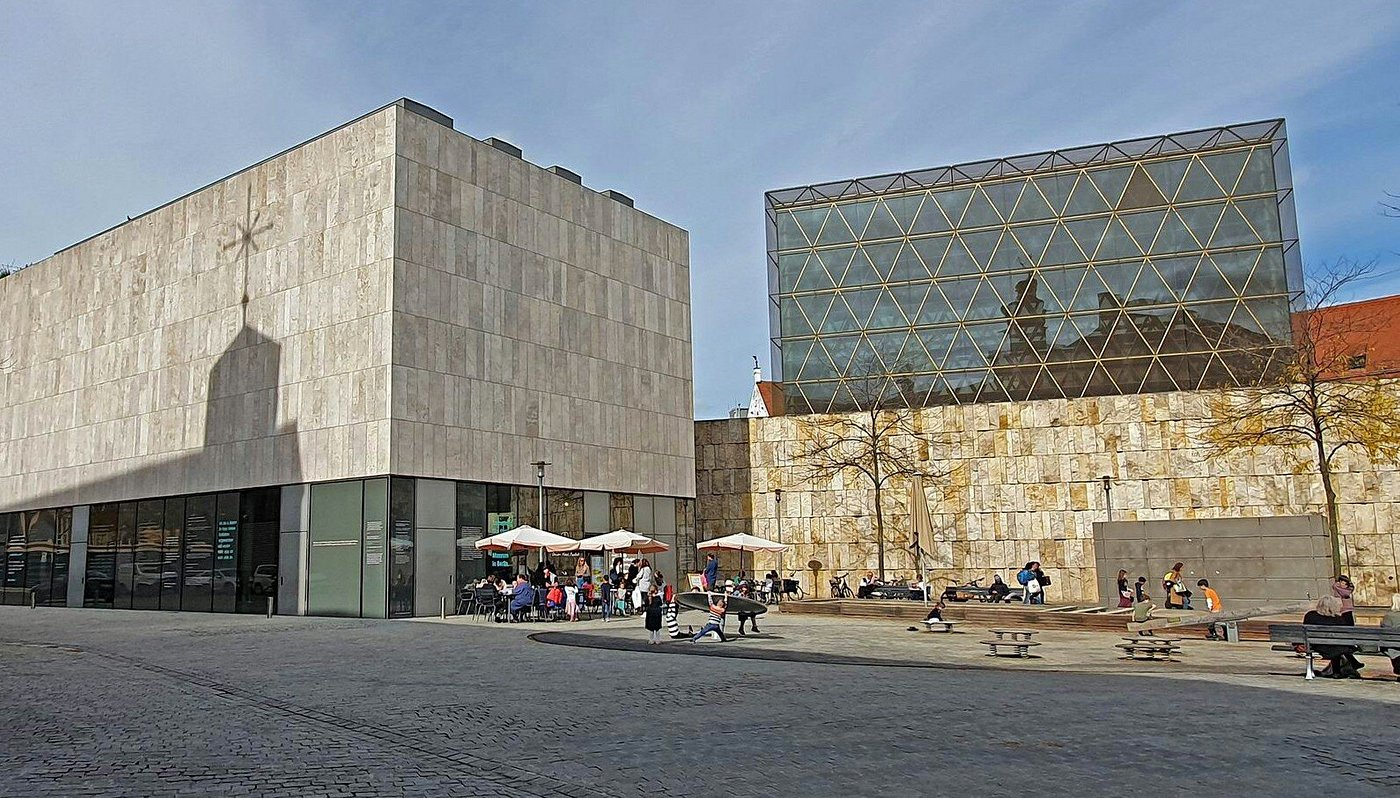
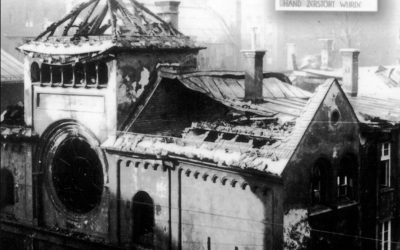
Ohel Jakob Synagogue 2026. Photo courtesy of the author.
As I write this, my husband and I are traveling with our small family and several good friends to Munich, Germany, to celebrate the bar mitzvah of my absolutely adorable 13-year-old grandson Gilad.
In case the enormity of this is lost on anyone, let me share a small but telling encounter. I casually mentioned our trip to a colleague who is not Jewish and lives in Berlin. He became tearful and asked me, “Is there a synagogue in Munich?” I assured him that Munich has four synagogues and a Chabad House.
The Ohel Jakob Synagogue, where the bar mitzvah will take place, is exquisite. It is part of an extraordinary Jewish Community Center, which includes a childcare center, elementary school, bookstore, kosher restaurant and museum, as well as an underground Aisle of Remembrance. This 32-meter, glass-paneled corridor connects the community buildings and bears the names of more than 4,500 Munich Jews who were murdered during the Holocaust.
According to the Conference of European Rabbis, today, approximately 130,000 Jews live in Germany, about 10,000 of them in Munich. Roughly 75 percent of Munich’s Jewish community is of Russian origin. As counterintuitive as it may sound, many Russian Jews sought refuge in Germany during the 1990s.
Families have also immigrated from throughout Europe, the Baltics, South America, South Africa, the United States, Israel and elsewhere. The reasons are multifaceted. Some Jews whose families experienced the Holocaust are eligible to obtain German citizenship, which also provides freedom of movement throughout the European Union. And, perhaps most strikingly, many Jews currently feel safer living in Germany than in a number of other countries.
That is a powerful statement.
Statistics notwithstanding, I can tell you from personal experience that my grandchildren are growing up in a Jewish community that is thoughtful, vibrant and dynamic. I watch them living in an open society, walking safe streets, spending time with Jewish friends whose identities span the spectrum from Orthodox to secular. They attend remarkable Jewish schools and embrace their Jewish identities with an ease that is both wonderful and, frankly, astonishing to me.
Germany has enacted strict laws criminalizing antisemitism, hate speech and the display of Nazi symbols. I suspect the children take much of this for granted. I do not.
There is something profoundly moving about watching a new generation of Jewish children grow up in Germany – learning, celebrating, building friendships and embracing their Jewish identity in a country whose history is so deeply intertwined with the destruction of European Jewry.
For me, it feels like healing. Not forgetting, not minimizing and certainly not suggesting that history can simply be undone. Rather, it is a reminder that hatred did not have the final word. It helps me believe in the healing power of humanity, in the resilience of the Jewish people and in the extraordinary truth that we prevailed.
When I sit in the synagogue next Shabbat and listen to my sweet grandson read from the Torah and chant his haftarah, I will feel unlimited pride. I adore this child. And for a million reasons, I will also have tissues ready. Not just for myself, but for anyone who may find themselves suddenly and unexpectedly overcome by the remarkable irony, history and sheer emotion of the moment: a Jewish boy, standing proudly at the Torah in Munich, surrounded by family and friends, embracing a tradition that so many once tried to destroy. I suspect there won’t be a dry eye in the room.
–
The author does not speak on behalf of Hadassah and the views expressed herein are the author’s own and not necessarily those of Hadassah.
Gail is a member of the Hadassah Writers’ Circle, a dynamic and diverse writing group for leaders and members to express their thoughts and feelings about all the things Hadassah does to make the world a better place. It’s where they celebrate their personal Hadassah journeys and share their Jewish values, family traditions and interpretations of Jewish texts. Hadassah members are proud of their Zionist mission and their role as keepers of the flame of Jewish values, traditions and beliefs as well as advocating for women’s empowerment and health equity for all. Since 2019, the Hadassah Writers’ Circle has published nearly 800 columns in The Times of Israel Blogs and other Jewish media outlets. Interested in writing? Please contact hwc@hadassah.org.
Related Topics
Related Posts