How Israel Turns Memory Into Innovation
From digital memorials to new startups, Israelis are transforming the pain of October 7 into purpose, resilience, and renewal
Some websites I visit for information. Others I visit for inspiration. But there is one digital memorial I visit for neither – I visit it for reverence. It is Those We Have Lost on The Times of Israel, a living memorial to the men, women and children murdered on October 7, 2023, and in the long, bitter war that followed.
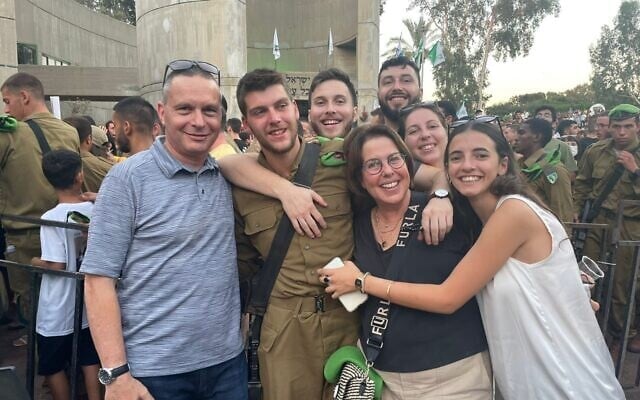
I find myself returning to it again and again, unable to stay away for too long. Each time I look at those faces, young men and women in uniform, many barely 19 to 22 years old, I feel the same quiet awe. Their smiles leap off the screen. Their eyes seem alive. And their stories, often told in just a few paragraphs, carry a lifetime of courage.
I whisper a thank you each time. Thank you for your life. Thank you for your service. Thank you for your love of your country, Israel. These are not abstract heroes; they are the reason Israel exists as a free nation.
Israel is a country that has learned to remember while it builds, and to build while it mourns. From the earliest days after October 7, the question was not only how to commemorate but how to continue. Memorials are sacred, but in Israel, memory is not static. It is kinetic. It moves forward. It creates.
And so, when I first heard about the Next October initiative, I immediately thought: this is Israel at its most profound.
Launched by entrepreneur and former science minister Izhar Shay, the father of fallen IDF soldier Staff Sgt. Yaron “Noni” Shay, Next October is one of the most moving ideas to emerge from the ashes of that day. Each startup that joins the initiative commemorates one of the victims of October 7 – learning their story, carrying their name, and dedicating part of their mission to keeping that memory alive.
It is remembrance through renewal.
I read Shay’s story in The Times of Israel and found it almost impossible not to cry. Yaron was only 21 when he was killed fighting Hamas terrorists at Kibbutz Kerem Shalom on the morning of October 7. He and his unit stopped dozens of terrorists from entering the kibbutz, saving families, children, and elderly residents. The price was devastating: Yaron and several of his comrades were killed.
His father could have turned inward, consumed by grief. Instead, he turned outward. “For every fallen soldier, for every murdered civilian, we will help build a startup that makes the world better,” he declared.
That is an extraordinary sentence. Out of unbearable pain, he articulated a vision, not of vengeance, but of vitality.
Next October now includes more than 450 startups, each linked to a fallen hero. One company named its product after its commemorated victim. Another adopted the family and sponsors annual community projects in their memory. One particularly beautiful example: Avertto, a biotech startup, named its first life-saving device after Amit Mann, a 22-year-old paramedic murdered while treating the wounded in Kibbutz Be’eri. The device detects early signs of stroke, and each time it saves a life, it is as if Amit saves one more.
In the Next October initiative, remembrance becomes creation. It is one of the most Israeli ideas I have ever encountered – where grief meets grit, and mourning fuels momentum.
This is not charity. It is not symbolic. These startups are real enterprises; enterprises that are raising capital, hiring teams, developing technologies in AI, health, agriculture, cyber, and defense. They are the very embodiment of Israel’s resilience and renewal.
The project is also deeply personal. Before each startup is assigned a memorial name, its founders meet the bereaved family. They learn who their commemorated hero was – their passions, their dreams, their quirks. One founder recalled listening to the favourite songs of the fallen soldier he commemorates, playing Leonard Cohen’s Hallelujah while writing his business plan.
That detail, that tenderness, says everything about the soul of this project.
It is easy to think of innovation and remembrance as opposites: one looks ahead, the other looks back. But in Israel, they form a perfect circle. Next October proves that to honor the fallen is to continue what they stood for: courage, creativity, contribution.
Yaron Shay’s father said something that has stayed with me: “After Hamas came to destroy everything we stand for, we continue building a better world through Israeli innovation.”
That sentence should be carved into stone.
Because it captures the moral defiance of Israel, a country that refuses to let evil have the last word.
In just two years, Next October has gained international attention. Giants like Meta, OurCrowd, Pitango, and Silvertech Ventures have partnered with it. British investors welcomed the team in London to raise capital for Israeli startups commemorating the fallen.
What I love about this initiative is that it turns remembrance into a universal language. It tells the world: Israel’s response to terror is not despair, but determination. Its tribute to the dead is to build for the living.
Each startup is a story. Each innovation is a candle of defiance.
In parallel, projects like Those We Have Lost serve as the nation’s collective heart. Every name on that site – soldier, civilian, rescuer, child – reminds us what was at stake on October 7, and what continues to be at stake now.
Scrolling through the photos, I often find myself pausing over the faces of young medics, musicians, and students. Their stories reflect an entire generation that believed in life – that laughed, created, volunteered, dreamed. And now, through Next October and countless other initiatives, their dreams continue to live.
I find it deeply moving that Israel’s high-tech community, the same one that gave the world Waze, Mobileye, and Iron Dome’s algorithms, is now dedicating its genius to the act of remembering. These entrepreneurs are ensuring that memory is not only archived, but also activated.
In many ways, Next October is not only about startups. It is about a startup nation reinventing itself through pain. For two years, the war has tested Israel’s economy and morale. Thousands of reservists left their offices for the front lines. Venture funding fell. Uncertainty clouded everything.
And yet, even in this atmosphere, Israelis did what they always do – they adapted. They built. They started over.
That is the secret of this nation’s strength: Israelis do not just rebuild walls; they rebuild purpose.
Next October and Those We Have Lost are two sides of the same coin: one preserves memory, the other propels it. Together, they tell the world that Israel’s story is not only about survival but about moral creativity.
Every country commemorates its fallen. But Israel does it differently. Here, remembrance becomes a form of innovation, a way to transform sorrow into strategy, absence into achievement.
There is a Hebrew phrase, zichronam livracha – may their memory be a blessing. Next October adds a new dimension: may their memory be a beginning.
The blessing is not only in words; it is in the startups that hire, the technologies that heal, the solutions that save lives.
This is what resilience and renewal look like; not denial of pain, but a refusal to let pain define the nation.
When I think of the faces on Those We Have Lost, and of the hundreds of startups now carrying their names into boardrooms and labs, I am reminded of something enduring: Israel’s greatest power is not its weapons or its wealth, but its will.
A will to remember. A will to rebuild. A will to keep innovating the future of Israel, even when the night is darkest.
So yes, I keep returning to Those We Have Lost. It hurts, but it heals. Because every story, every photograph, reminds me that while Hamas sought to erase life, Israel chose to multiply it; to multiply it in code, in creativity, in compassion.
And that is how we will remember them — not only in silence, but in the hum of creation, in the light of new beginnings.