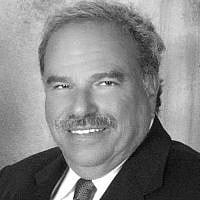
Published author, Jewish educator and scholar
How to Live in the Diaspora without Losing Sight of the Return to the Land

canva
Parshiot Behar–Bechukotai, which we read this week, present the covenant between God and Israel in stark and dramatic terms. The Torah promises blessing, prosperity, security, and divine presence if the nation remains faithful to God’s commandments, while warning of devastation, suffering, destruction, and exile should it abandon them. Because these curses are described with such intensity and detail, Jewish tradition developed the custom of reading them quickly and in a subdued tone.
Yet despite the severity of these warnings, the section concludes with a message of hope. If Israel confesses its sins and returns to God, He will remember His covenant with the patriarchs and the Land (Leviticus 26:42). Since the covenant with the patriarchs includes both the promise of descendants and the promise of the Land , remembrance of the Land necessarily implies the eventual return of the people from exile. Indeed, the ingathering of the exiles becomes one of the Bible’s great recurring themes (see, for example, Deuteronomy 30:4; Isaiah 11:12, 43:5–6, 56:8; Jeremiah 3:14, 16:14–15, 30:10–11, 31:7–24, and others).
But this raises a fundamental question. For a nation whose identity, history, and religious life revolved around its land, how were the Jews meant to survive spiritually and nationally in exile? What would repentance and return to God look like in practical terms while living far from their homeland?
Surprisingly, most biblical passages that speak of exile and return do not address this issue directly.
The first biblical figure to articulate a coherent vision for Jewish life in exile was the prophet Jeremiah, who lived through the destruction of the Kingdom of Judah and witnessed the Babylonian exile firsthand. At a time when false prophets assured the people that the exile would last only two years and that the exiles, Temple vessels, and deposed king would soon return to Jerusalem, Jeremiah delivered a far harsher message: the exile would endure for seventy years.
It was in this context that Jeremiah sent his famous letter to the Babylonian exiles:
“Build houses and dwell in them; plant gardens and eat their fruit. Take wives and beget sons and daughters… And seek the welfare of the city to which I have exiled you and pray to the Lord in its behalf; for in its prosperity you shall prosper” (Jeremiah 29:5–7).
Recognizing that the exile would span a few generations, Jeremiah understood that Jewish life could not remain suspended in anticipation of an immediate return. The exiles would need to build homes, raise families, establish communities, and even pray for the welfare of Babylonia, because their own wellbeing would depend upon the wellbeing of the society in which they lived. Indeed, this passage constitutes the earliest source for the Jewish practice of praying for the welfare of the state.
And yet Jeremiah’s guidance contains within it a profound dilemma.
If Jews are to build homes, communities, institutions, and stable lives in exile, what will happen when the time comes to return? After seventy years, many would inevitably become rooted and comfortable in Babylonia. Why would they willingly uproot themselves, leave behind everything they had built, and begin anew in the Land of Israel?
It should therefore come as little surprise that when Cyrus the Great later invited the Jews to return and rebuild the Temple, only a relatively small minority chose to do so.
In many ways, I believe this same tension continues to challenge the Jewish diaspora—and its rabbinic leadership—today.
When Jewish families choose neighborhoods in which to settle and invest enormous resources in building homes, schools, synagogues, and vibrant communal institutions, they naturally do so with the expectation of permanence. Likewise, when congregations hire rabbis, they expect them to strengthen and expand the community through religious leadership, education, pastoral care, and outreach. The rabbi’s role thus becomes largely defined in terms of ensuring the community’s long-term stability and growth.
And yet, if these same communities pray regularly for the ingathering of the exiles, and if they genuinely believe that the State of Israel represents the beginning of God’s answer to those prayers, then they must also view diaspora existence as inherently temporary (see my article: https://blogs.timesofisrael.com/are-american-jews-traitors/). Thus, rather than strengthening diaspora communities, rabbis should be preparing their congregants—spiritually and practically—for their eventual Aliyah.
How, then, can these two aspirations be reconciled?
I believe the answer lies in a synthesis of both approaches—and that this synthesis was embodied most powerfully by Shlomo Riskin, the founding chief rabbi of Efrat, where I have lived for the past twenty-five years.
Rabbi Riskin devoted nearly two decades to building Lincoln Square Synagogue into one of the most dynamic and influential centers of Modern Orthodoxy in America. Yet his Aliyah was never a sudden or belated decision. From the earliest years of his rabbinate, the aspiration to live in Israel formed an integral part of his worldview and leadership. That is precisely why many of his congregants eventually made Aliyah along with him.
I find it deeply gratifying that, in recent years, an increasing number of Modern Orthodox rabbis have followed a similar path. After dedicating decades to building Jewish communities in the United States, they have chosen to make Aliyah and establish English-speaking religious communities in Israel that preserve many of the educational, spiritual, and communal strengths they cultivated abroad.
Perhaps, then, this is the proper model moving forward: rabbis should help build strong and flourishing Jewish communities in the diaspora while simultaneously making it unmistakably clear that the ultimate destination—according to the Torah and thousands of years of Jewish tradition—is the Land of Israel. And when the time comes, they should lead the way through personal example.
And when these rabbis and their communities finally come home, we, in Israel, will welcome them with open arms.
Shabbat Shalom.
–
For more articles, or to sign up for my newsletter, visit my website: https://davidharbater.com/
Related Topics