How We Can Heal Our Broken People
To some degree, we all feel broken these days. And how could we not? As the Days of Awe approach, many of us find ourselves humming Avinu Malkeinu or bracing for the shofar’s shevarim — those haunting, broken notes. And this year, more than ever, those sounds feel painfully apt. The Jewish people are fractured in ways we have not seen in decades. And the worst? The breaking point is Israel — its policies, its future, and its meaning for each of us.
As co-founders of Wisdom Without Walls, we have spent countless hours in dialogue with Jews of widely divergent views. Our work has taught us how deep the divisions run, and what leaders and community members alike can do at this moment.
Lead and listen with humility
Most rabbis and educators are not foreign-policy insiders. They read the same reports their congregants do. Moreover, many of those reports are confused, conflicted, and delivered in the haze of war.
Clergy’s true expertise lies in teaching, in pastoral care, and in holding up the spiritual and ethical frame. The Talmud counsels us to, “Accustom your tongue to say: ‘I do not know’.” (Berachot 4a). With this in mind, rabbis and cantors can offer their un-knowingness as a gift to their congregants.
Congregants look up to clergy and expect them to have something brilliant to say. That is one reason why they come to services. But, their clergy do not have all the answers. And sometimes they have an answer, but it is not to the congregant’s liking. Rabbis and community leaders can listen to congregants and get insights they did not have before; do not shut yourself out of the conversation because of disagreements.
Name the disagreement
Some in our communities embrace Israel without reservation, others love her deeply and are concerned for her moral direction, and still others feel their love for the Jewish state waning.
The areas of division include the way that Israel is waging the war against Hamas in Gaza; the status of humanitarian aid to Gaza; Palestinian statehood; the attacks on Palestinians by West Bank settler youth – and how vocal the American Jewish community should be in naming and addressing those issues. The result: painful divides within many synagogues. We can pretend that the divide isn’t there, but that pretense will neither address it nor begin to heal it. Naming these disagreements is an act of intellectual and emotional stewardship. It signals respect for the diversity of beliefs within our Jewish communities.
Acknowledge the grief
Something has died: a pristine view of a Jewish state that would unfailingly balance power with compassion and justice. We are sitting shiva for that idealized vision of Israel. Let us take the usual etiquette of the shiva house and move it into our institutions: listening without
judging, naming those feelings, and mourning together. Don’t respond by naming the facts, as necessary as they might be.
The ancient sages say: “Make for yourself a heart of many rooms.” (Tosefta, Sotah 7:12). We are all sitting in rooms labeled “sadness,” “anger” and a room labeled “disappointment,” and a room labeled “numbness.” Many Jews have hearts that are as broken as the blasts of the shofar. Imagine that you are dealing with a mourner, which in some ways, you are. Listening without rushing to persuade honors the dignity of the other.
Choose hope — without illusions
Hope is not denial. The shofar’s cry may come this year from our very broken hearts, calling us toward repair. Shalom is not the absence of struggle; it is the gathering of the pieces. As Rabbi Kook once suggested in his commentary on the Jewish prayer book, “Olat Reiyah,” shalom, wholeness, happens because of differences.
All of us are responsible for healing the Jewish people
These same principles apply beyond the bimah. At holiday tables and community gatherings, we can practice humility, name the divisions, and make space for grief. We may not change each other’s minds, but we can preserve each other’s humanity.
This High Holy Day season, let’s hold one another’s sorrow alongside one another’s faith. May broken images find healing. And may we continue to be worthy of the name Yisrael — those who wrestle, persist, and bless.
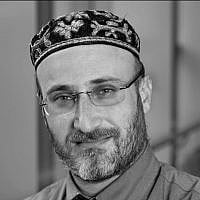
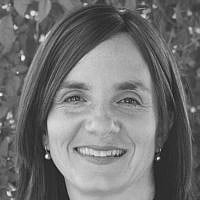
This article was co-authored by Dr. Sandra Lilienthal and Rabbi Jeff Salkin, two of the co-founders of Wisdom Without Walls.