How we treat people is who we are: A tale of two bus drivers
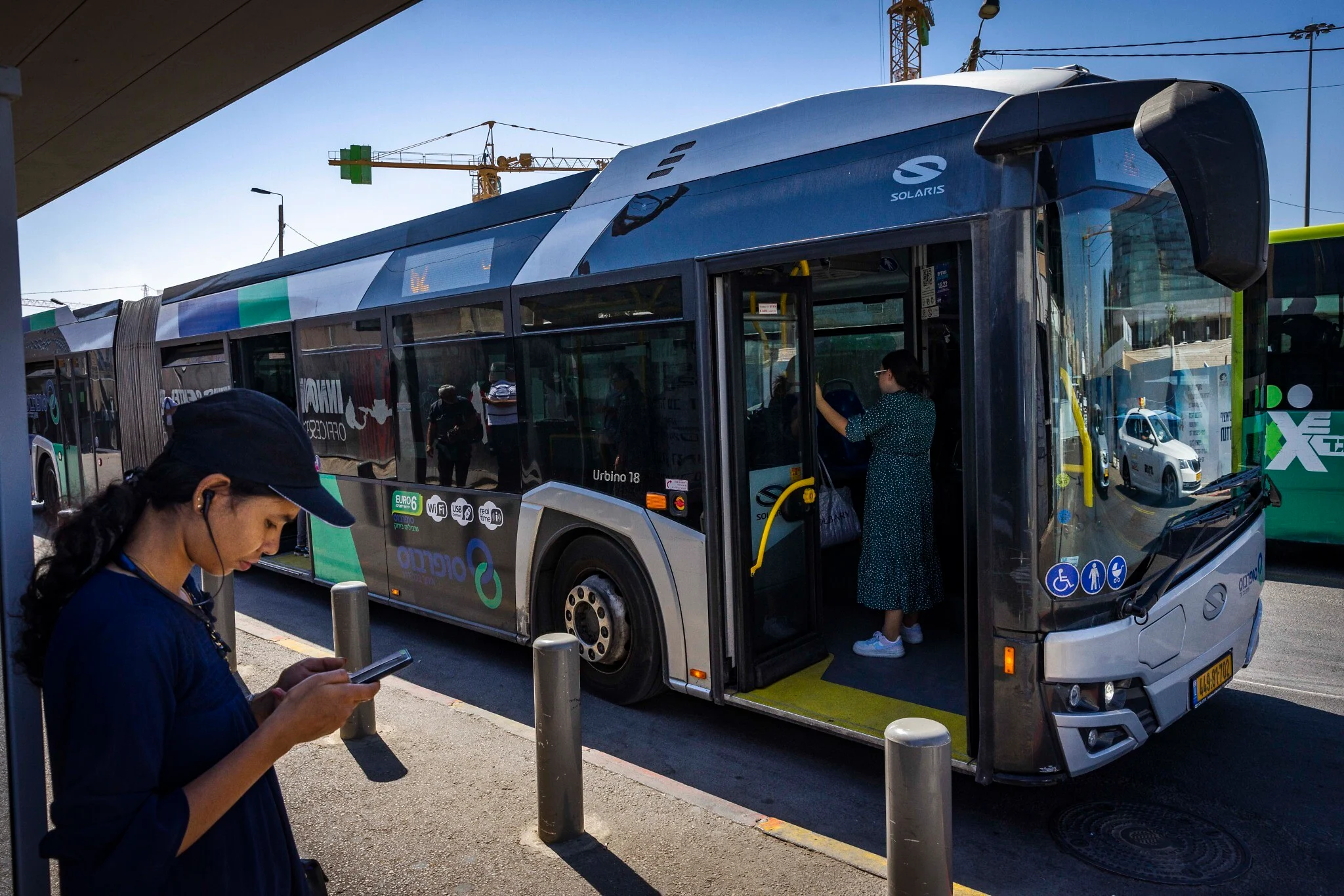
I was riding home on the bus late at night. It was near the end of the route, and the only other passenger, an older Moroccan Jewish woman with a chic bob, sat chatting with the young Arab driver. When we arrived at her stop, she stood slowly and gathered up her large purse and several plastic shopping bags.
“Thank you darling,” she said to the driver. “Good night darling, may it be a good night for you and a good week, darling.” She paused by the driver’s seat before she exited the bus, reaching into one of her bags with a veiny, beautifully manicured hand.
“Here you go, darling,” she said as she selected a nectarine from the bag and gave it to the driver. “It’s not a plum, darling, it’s a different fruit. Enjoy it. Be healthy and well, darling.” she called out as she stepped down onto the sidewalk, the doors closing behind her.
I noticed how the driver kept smiling as he proceeded on his route, and I thought about a different bus encounter that I witnessed a few years ago, just months after October 7, in 2023.
It was late afternoon in the middle of Ramadan, and a recording of Arabic liturgical chanting blasted over the speakers of the packed bus. Between stops, a woman approached the driver and asked him to turn off the music.
I watched the front mirror, curious how the driver would react. He just glanced at the woman briefly and raised his eyebrows, then turned his eyes back to the road without saying anything.
“We’re Jewish,” the woman went on in halting, Russian-accented Hebrew. She gestured behind her to the rest of the passengers. “We don’t want to hear this music.”
This assertion activated the crowd. Several passengers immediately registered their opposition to her request. A debate broke out, the kind of loud public outburst that startled me when I first moved to Israel, and now just seems like a normal part of daily life. So normal that on this occasion, I added my voice to the chorus.
It wasn’t right to impose on the driver in this way, we shouted. We didn’t agree that the music should be turned off. It wasn’t bothering anyone except her, and anyway, who appointed this woman as Official Passenger Spokesperson?
She ignored our yelling and persisted in making her case to the driver with an awkward blend of entitled declarations and apologetic pleading.
Finally, he responded. “The music is bothering you?” he asked, glancing up at the passengers in the mirror.
“I feel afraid,” the woman said. “I have no idea what you’re thinking about us.”
“I don’t know what you’re thinking about me, either,” the driver said, reaching over to push a button, plunging the bus into awkward silence. “Maybe I should also be afraid,” he said.
It took a while for the attacks on Arab bus drivers in Jerusalem to begin. Or perhaps it’s more accurate to say that it took a while for these verbal and physical assaults to become so common that they made the news.
The drivers’ union organized Arab and Jewish drivers to advocate for increased governmental action and police protection. Activists gathered to provide protective presence on the buses. My daughter’s youth group distributed small goodwill packages to drivers with notes of appreciation and solidarity. The girls and their teenage counselors hung posters at bus stops to raise awareness about violence against drivers, and included envelopes with supplies for passengers to make their own care packages.
One late night in August, a group of Jewish teenagers attacked a driver on the number 2 route while he was stopped at a traffic light. The boys beat Moatasem al-Qaq unconscious and knocked out his front teeth.
Following the attack, I visited Mr. Qaq’s home in East Jerusalem with a group of Jewish and Arab activists. We went to offer comfort and support to Mr. Qaq and his family, and to demonstrate solidarity in the face of rising hostility and intimidation.
The family received us with gracious hospitality as the shaken driver described his ordeal. Mr. Qaq, whose route brings Jews to pray at the Western Wall, spoke of the pride he had felt in carrying out this important role. He struggled to make sense of how and why he had been assaulted.
Sitting in the family’s front room, sipping sweet hot tea from a small paper cup, I remembered words I heard more than 20 years ago.
“Don’t fool yourself,” my seminary teacher said. We were studying mitzvot bein adam lechavero, the vast corpus of laws governing interpersonal relationships. Someone had asked whether these laws apply only to our fellow Jews, or were we obligated to treat all human beings with the same generosity, justice and compassion.
Our teacher explained that there are distinctions, strictly speaking, in how the laws are applied within our community and with the rest of humanity. There are also specific statutes for different members of the community, for family members, for vulnerable outsiders living in our midst, for the poor and isolated among us.
“But it’s mostly irrelevant,” she concluded, “because that’s not how being a good person actually works. Don’t deceive yourself by thinking you can split yourself down the middle. You can’t really be kind and merciful and honest while treating some people with cruelty and indifference. You’re only one human being. How you act is who you are.”
Ten years ago, a wave of lone-wolf attacks terrorized Israel, especially Jerusalem. For months and months, random Palestinians stabbed random Jews in supermarkets and drug stores with kitchen knives and scissors, rammed their cars into bus stops and shot the fleeing passengers.
With sudden horror erupting in the most ordinary places, I felt unsafe everywhere. Each time I left my home, I tried to prepare emotionally for the possibility that I might not return.
I learned from survivors that being stabbed just feels like being punched, which gave me some small comfort. I could handle being punched, right? Or if I could run fast enough, I wouldn’t be stabbed at all. Maybe I could stay alert to incongruous behavior and help stop an attack in progress. Maybe I could keep being lucky.
The violence seemed unpredictable, and this made it more terrifying. I was constantly on high alert, searching strangers’ faces for signs of menace. It went beyond the normal attentiveness one adopts in public. I found myself looking at all Palestinians with vigilant suspicion.
Exhausted and demoralized, I knew I was terrorizing myself. I tried to go back to viewing others with friendly neutrality regardless of their identity. It didn’t work. A switch had been flipped, and I couldn’t seem to lose the habit of anxiously scrutinizing everyone around me.
Neutrality was no match for fear and peril. I needed something equally powerful, and so I chose love.
I continued to cautiously observe people around me, mentally sorting them into categories of “probably safe” or “potentially sketchy.” But each time I did this, I also tried to imagine sending them indiscriminate love and prayers for their well-being.
Every person I set my eyes upon became a target of my stubborn goodwill. Love gradually overpowered hypervigilance. I stopped noticing so much. I found a way to tolerate the precariousness of existence without destroying my equanimity and my moral core.
“You’re just making up stories in your head and scaring yourself,” a passenger said to the woman who successfully petitioned the driver to turn off his music. He couldn’t resist getting in one more point as she passed him on her way back to her seat.
She just shrugged and responded quietly, “We’re in a war.”
We’re still in a war. Many idealistic people have stopped resisting the temptations of fear and distrust, and who can blame them. Some of our worst fears have materialized in unspeakable ways. Maybe it’s irrational, or even reckless, to give anyone the benefit of the doubt.
Following the attack on Moatasem al-Qaq, one of his regular passengers was interviewed on the news. This man, a settler who lives in a Jewish compound on the Mount of Olives, spoke of how it pained him to hear of Mr. Qaq’s assault, and described the driver he knew as a good-hearted civil servant.
The charming older woman who gave the driver the nectarine (not a plum, darling, something else) struck me as extraordinary precisely because I encounter doting Jewish grandmothers all the time, but I don’t always catch them spreading their nurturing to everyone in their path no matter who they are.
Choosing to love people, to oppose cruelty, to comfort all victims and mourn every loss, both “ours” and “theirs,” is not only a matter of building the kind of society we want to live in. It is also about who we want to be, as individuals, as a community, as a nation.
Love doesn’t mean not having boundaries. It doesn’t mean not having security. It doesn’t mean that we can’t have a hierarchy of priorities. But we shouldn’t fool ourselves that the imperative to be safe requires us to tolerate brutality and terror in our midst.
Rosh Hashanah is almost here. As we prepare to face judgement and account for our behavior in the past year, we must know that how we treat people is who we are. We are meant to be a holy nation and a light to the world. We can’t be whole people split down the middle.