
How WhatsApp Runs Israeli Small Business
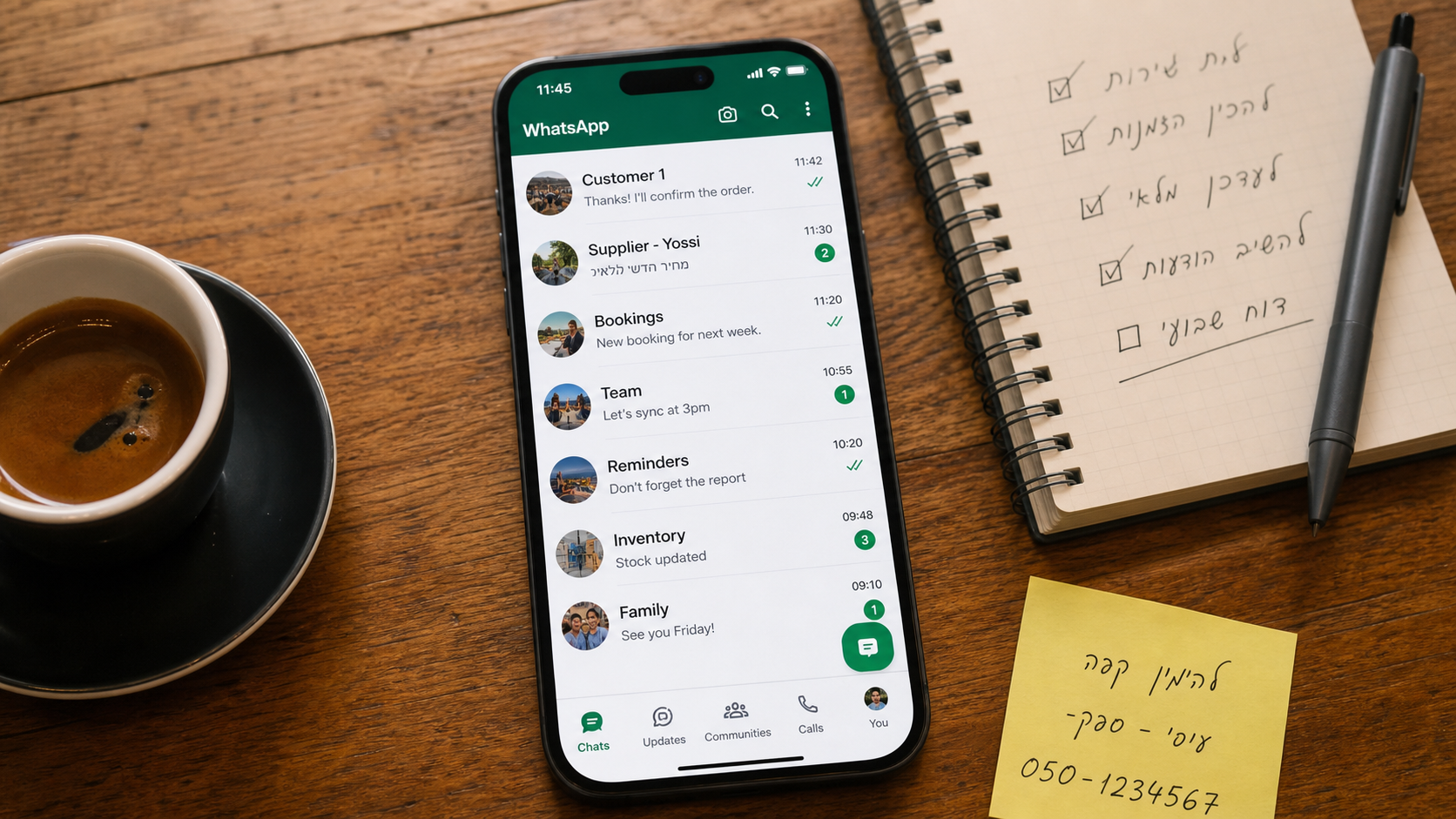
In most countries, businesses communicate with customers through email, SMS, or dedicated apps. In Israel, there’s really only one channel that matters: WhatsApp.
With 99% of the population actively using the platform (according to the Israel Internet Association), WhatsApp isn’t just a messaging app here — it’s the infrastructure layer for nearly every business interaction. Your dentist confirms appointments on WhatsApp. Your electrician sends quotes on WhatsApp. Your favorite restaurant takes reservations on WhatsApp.
Over the past two years, I’ve been building automation solutions for these businesses — dental clinics, fitness studios, real estate agencies, restaurants, and online stores. Here’s what I’ve learned about what works and what doesn’t when you bring automation to Israel’s most personal communication channel.
The Speed Problem
Research from HubSpot shows that 82% of consumers expect a response within 10 minutes of reaching out to a business. According to Lead Connect, 78% of customers choose the first business that responds.
Think about what this means for a solo dentist managing their own WhatsApp. A potential patient messages at 9 PM asking about teeth whitening availability. If the dentist responds the next morning, there’s a good chance that patient has already booked with a competitor who had some form of automation in place.
This is the core problem automation solves: being available when your customers need you, even when you physically can’t be.
What Good Automation Looks Like
The best WhatsApp automation doesn’t feel like automation. It feels like a helpful, responsive business.
Appointment reminders are the highest-impact starting point. Medical studies consistently show automated reminders reduce no-show rates by 40-60%. But the key isn’t just sending a reminder — it’s making it interactive. When patients can confirm, reschedule, or cancel with a single tap, and cancelled slots automatically go to the next person on the waitlist, everyone wins.
After-hours response is the second priority. A well-designed bot handles the 10-15 questions that account for 80% of all inquiries — hours, location, pricing, cancellation policy — instantly, 24/7. When the question falls outside the bot’s knowledge, it seamlessly hands off to a human agent with full conversation context.
Order updates round out the picture. For any business with a delivery component, proactive status messages at each stage reduce “where is my order?” inquiries by up to 70%.
The Line Between Helpful and Annoying
Here’s where most businesses get it wrong: they confuse automation with broadcasting.
WhatsApp is deeply personal in Israeli culture. It’s where you message your family, your friends, your kids’ school groups. When a business enters that space, it needs to earn its place. Every automated message should provide clear, immediate value. The moment a business starts sending promotional blasts or irrelevant updates, customers don’t just ignore them — they block them. And on WhatsApp, a block is permanent.
The businesses that succeed with automation follow a simple rule: respond, don’t broadcast. They use automation to answer faster, confirm smarter, and update proactively — not to push marketing messages.
Privacy as a Feature
Israel has strict data protection requirements, and consumers are increasingly aware of where their data goes. One advantage of modern open-source automation tools is that everything can run on infrastructure you control. Customer conversations, contact information, and interaction history stay on your servers — not scattered across third-party cloud platforms.
For businesses in healthcare, legal, or financial services, this isn’t just a nice feature — it’s a compliance requirement.
The ROI Question
Small business owners always ask: “Is this worth it?” The math is usually straightforward.
A dental clinic losing 3-4 appointments per week to no-shows at an average of ₪300-500 per appointment is losing ₪4,000-8,000 monthly. Cutting no-shows by even 40% recovers most of the automation investment in the first month.
A service business that responds to leads within minutes instead of hours typically sees a significant increase in conversion rates. When you’re the first to respond — and 78% of customers choose the first responder — faster response time directly translates to more customers.
What’s Next
The technology is moving fast. AI is making bots better at understanding context, handling edge cases, and knowing when to involve a human. But the fundamental principle hasn’t changed: the businesses that communicate fastest and most consistently win.
For Israeli businesses, WhatsApp automation isn’t about replacing human interaction — it’s about making sure no customer message goes unanswered, no appointment gets forgotten, and no lead goes cold overnight.